[IMAGE: Black Square, by Kazimir Malevich]
![[IMAGE: Black Square, by Kazimir Malevich]](https://upload.wikimedia.org/wikipedia/commons/thumb/d/dc/Kazimir_Malevich%2C_1915%2C_Black_Suprematic_Square%2C_oil_on_linen_canvas%2C_79.5_x_79.5_cm%2C_Tretyakov_Gallery%2C_Moscow.jpg/1280px-Kazimir_Malevich%2C_1915%2C_Black_Suprematic_Square%2C_oil_on_linen_canvas%2C_79.5_x_79.5_cm%2C_Tretyakov_Gallery%2C_Moscow.jpg)
Black Square
Kazimir Malevich, 1915
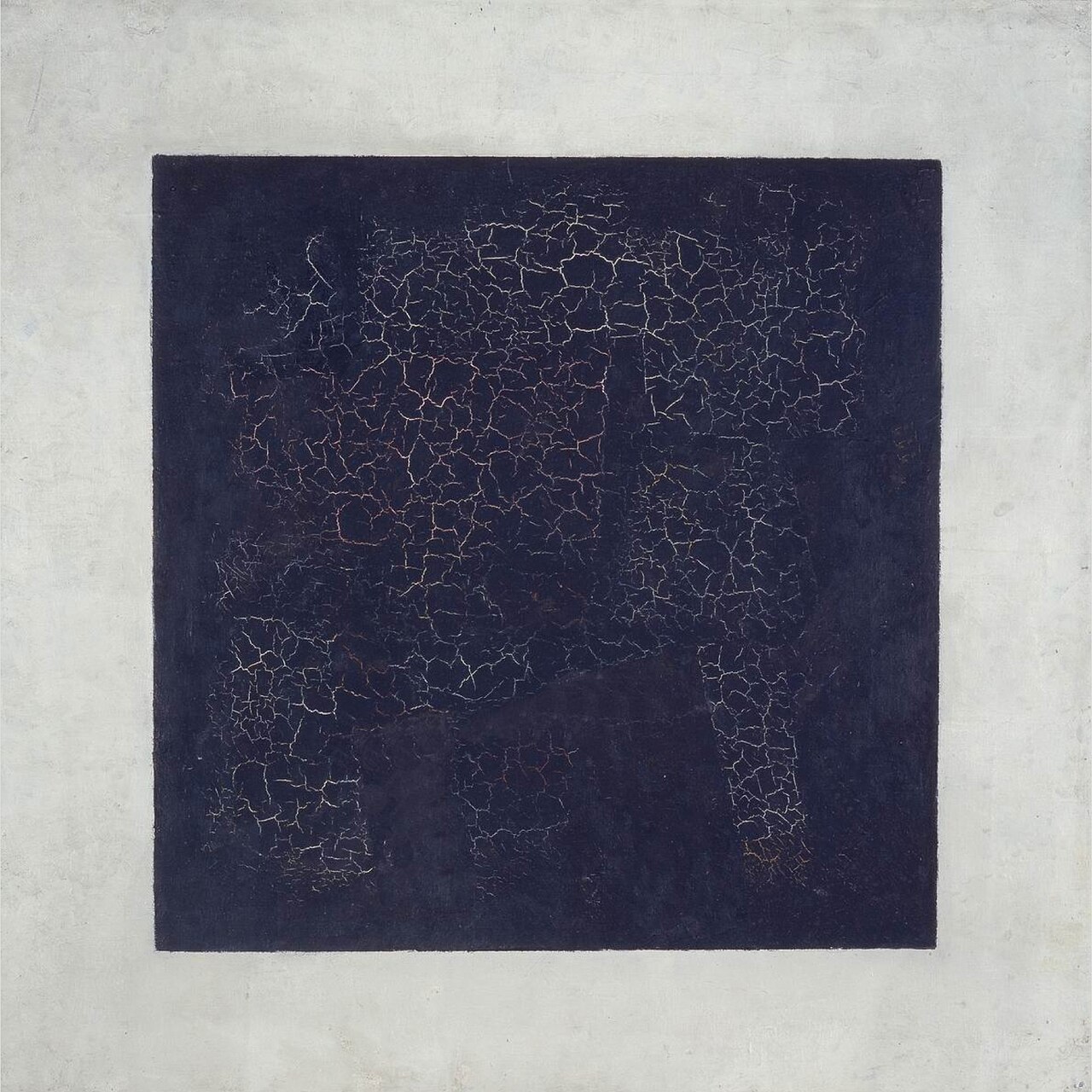
A black square. On a white background. That's it.
When Kazimir Malevich exhibited it in Petrograd (now St Petersburg) in 1915, he hung it high in the corner of the room — the place where, in a traditional Russian home, a religious icon would hang. The message was clear: this was a new kind of icon for a new age.
Malevich called his movement Suprematism: art freed from depicting anything at all, reduced to pure form and feeling. The black square was his "zero point" — the end of painting as a picture of the world.
The original has cracked with age, and you can see traces of other colours underneath. People still argue about whether it's a masterpiece or a joke. Either way, it's hard to forget.
Look for
- A black square on a white field — that’s all
- A web of fine cracks across the black paint
- A thin white border that seems to make the square float