Today's ReadNEW! TODAY'S FEATURE
Weird The Strange Case
The Bat-People on the Moon
In 1835 a New York newspaper announced that a famous astronomer had seen unicorns, beavers and winged humans on the Moon. Thousands of readers believed it.
On 25 August 1835, readers of The Sun, a cheap new daily paper in New York, found an extraordinary headline. It promised "Great Astronomical Discoveries", made by Sir John Herschel at the Cape of Good Hope.
Herschel was real, and very famous. He was the son of William Herschel, the astronomer who discovered Uranus, and he had gone to southern Africa to map the stars of the southern sky. Almost nobody in New York could check what he was doing there. A letter took weeks to arrive.
The Sun said it was reprinting a report from a supplement to the Edinburgh Journal of Science. Over the following days, in six instalments, the report described what Herschel had supposedly seen through a gigantic new telescope.
It was the Moon. And it was full of life.
Unicorns, beavers and man-bats
The articles began cautiously, with lenses and optics and plenty of scientific-sounding detail. Then the wonders came. Dark red flowers and forests. A lake of deep blue water. Herds of small bison-like creatures with a fleshy flap over their eyes. Blue, goat-like animals with a single horn. Beavers that walked upright and lived in huts with smoke rising from them.
Then, in the fourth instalment, the best part: flocks of winged humanoids, about four feet tall, covered in short copper-coloured hair, with wings like a bat's. The articles gave them a scientific name: Vespertilio-homo, the man-bat. They were seen talking and gesturing in a valley beside a strange temple.
It was science fiction before science fiction had a name — printed as news.
Life on other worlds was a serious idea
It helped that, in 1835, life on the Moon did not sound absurd to many educated people. Respected writers argued that a wise Creator would hardly make whole worlds and leave them empty. The Scottish minister and popular astronomer Thomas Dick wrote bestselling books estimating how many inhabitants the planets and moons might hold. Even Herschel's own father, William, one of the greatest astronomers who ever lived, had speculated that the Sun itself might be inhabited, beneath its glowing outer layer.
Telescopes were also improving fast, and newspapers loved to report on them. A bigger lens that could finally show the Moon's surface in detail was exactly the kind of breakthrough readers expected to hear about. The hoax didn't ask people to believe something impossible. It asked them to believe that the thing they half-expected had finally happened.
Who fell for it?
A lot of people, at least at first. The story was reprinted by other newspapers, discussed in the streets and argued over in colleges. The Sun's circulation soared, and the paper briefly became one of the most-read in the world.
Part of the trick was the detail. The articles were full of the language of real science, with measurements, lens specifications and a respectful tone. Herschel's reputation did the rest. If anyone could see life on the Moon, it was him.
The man behind it
The articles are generally credited to Richard Adams Locke, a Cambridge-educated reporter at the Sun. Locke seems to have intended at least partly to satirise the popular religious astronomers of the day, who wrote earnestly about life on other worlds. If so, most readers missed the joke.
The paper never really issued a full retraction. When the truth came out, many readers took it with good humour, and the Sun kept its new audience.
And Herschel? When he eventually heard about it, far away in southern Africa, he is said to have been amused at first. Later, he grew tired of being asked about his lunar discoveries.
FACT Established by documentary or physical evidence.
What we know
The articles, their dates and their content survive. They are widely regarded as one of the first great mass-media hoaxes.
HYPOTHESIS A credible explanation that some experts support, not proven.
Why it worked
Historians point to new, cheap "penny papers", a public hungry for science, and the impossibility of checking a story from the other side of the world. Some argue the hoax shows how the modern newspaper business was born out of sensation.
You learned this today!!! YOU LEARNED THIS TODAY !!!
- In August 1835, The Sun newspaper in New York published a series of articles claiming that life had been discovered on the Moon.
- The articles falsely attributed the discoveries to the real astronomer Sir John Herschel, who was working at the Cape of Good Hope.
- They described lunar forests, blue unicorns and winged humanoids called "Vespertilio-homo", or man-bats.
- The supposed source, a supplement to the Edinburgh Journal of Science, did not exist; the journal had stopped publishing.
- The author is generally believed to have been the Sun reporter Richard Adams Locke.
One more thing
The fingerprints of identical twins are not identical.
→ Read something elseSources & further reading
- Great Moon Hoax, Wikipedia
- Goodman, Matthew. The Sun and the Moon, Basic Books, 2008
StoneRed separates fact, hypothesis and speculation. Spotted an error? We'd genuinely like to know.
If you liked this…
 Nature · The Rabbit Hole
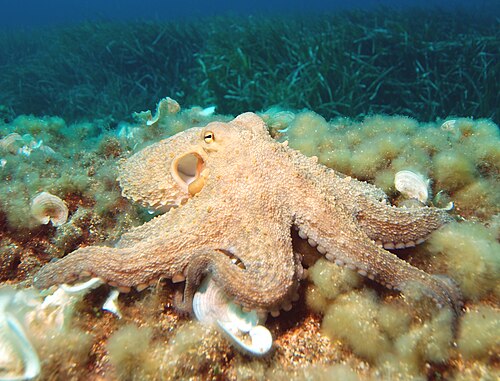
The Alien in the Aquarium
Octopuses have three hearts, blue blood and most of their neurons in their arms. They solve puzzles, recognise faces and escape from tanks. They might be the closest thing to an alien intelligence on Earth.
The connection: Another creature that sounded too strange to be real.
 Space · The Theory
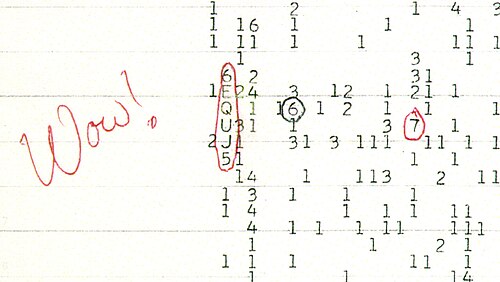
72 Seconds in 1977
A radio telescope in Ohio picked up a signal so striking that the astronomer reviewing it wrote one word in the margin: "Wow!" It has never been heard again.
The connection: A real signal from space that people still argue about.
 Music · The Theory
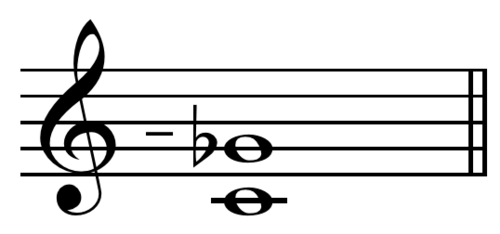
The Devil's Interval That Was Never Banned
You've probably heard that the medieval Church outlawed a certain musical interval as satanic. It's a great story. The truth is better — and you can hear it in The Simpsons.
The connection: A completely different corner of the archive: music.