[IMAGE: Jupiter, by NASA / ESA Hubble Space Telescope (OPAL programme)]
![[IMAGE: Jupiter, by NASA / ESA Hubble Space Telescope (OPAL programme)]](https://upload.wikimedia.org/wikipedia/commons/thumb/e/e2/Jupiter_OPAL_2024.png/1280px-Jupiter_OPAL_2024.png)
Jupiter
NASA / ESA Hubble Space Telescope (OPAL programme), 2024
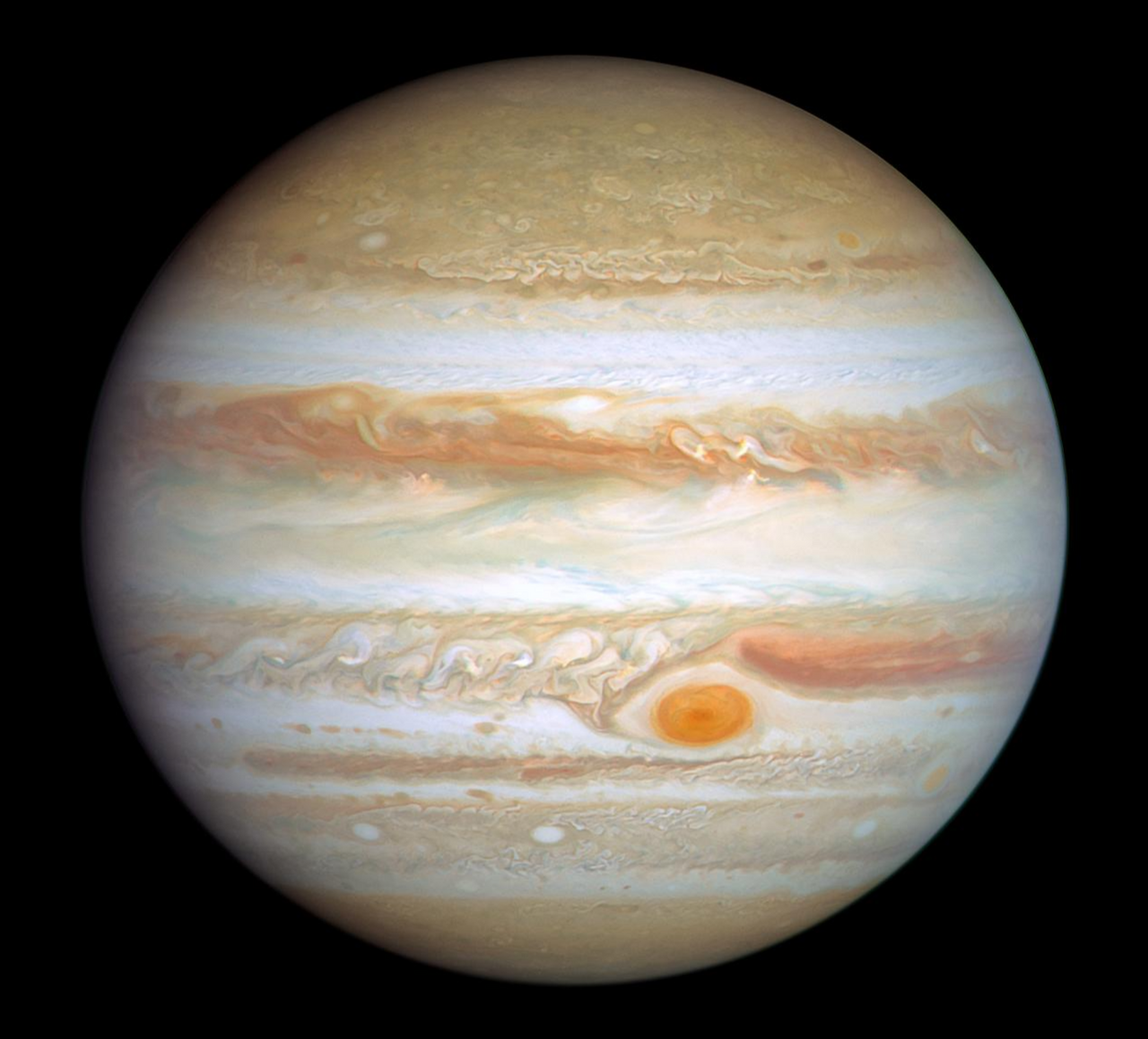
Jupiter is the biggest planet in the solar system — more than eleven Earths would fit across it. What we see are clouds: bands of ammonia ice and other chemicals, coloured cream, orange and brown, whipped by winds of hundreds of kilometres an hour.
The Great Red Spot is a storm larger than Earth that has been raging for at least 150 years, and possibly much longer. It has been shrinking for decades, and nobody knows for certain what will happen to it.
This image comes from the OPAL programme (Outer Planets Atmospheres Legacy), in which the Hubble Space Telescope photographs the giant planets once a year so scientists can follow how their weather changes, year after year.
Look for
- The Great Red Spot — a storm bigger than Earth
- Bands of cloud racing in opposite directions
- Swirls and eddies at the edges of the belts