History The Story
The City Where Politics Went Out the Window
Twice in Prague's history, angry crowds settled a political crisis by throwing officials out of a window. The second time, the victims survived a fall of around twenty metres — and Europe went to war for thirty years.
The word "defenestration" sounds like a joke. It comes from the Latin fenestra, meaning window, and it means throwing someone out of one. It is one of the few words in English that exists mainly because of the history of a single city.
That city is Prague. And it happened there not once, but twice — with consequences that shook Europe.
1419: the first window
In the early 1400s, Bohemia — roughly today's Czech Republic — was in turmoil. The reformer Jan Hus had criticised corruption in the Catholic Church. In 1415 he was tried for heresy and burned at the stake. His followers, the Hussites, were furious.
On 30 July 1419, a procession of Hussites led by the radical priest Jan Želivský marched to the New Town Hall in Prague to demand the release of imprisoned supporters. When a stone was reportedly thrown at them from the building, the crowd stormed the town hall and threw several town councillors out of the windows. Those who survived the fall were killed by the crowd below.
The violence triggered the Hussite Wars, which raged across Bohemia for years.
1618: the famous one
Two centuries later, Bohemia was again divided by religion. It was ruled by the Catholic Habsburg emperors, but many Bohemian nobles were Protestant, and they feared their religious freedoms were being stripped away.
On 23 May 1618, a group of angry Protestant nobles burst into a room in Prague Castle where two royal governors, Vilém Slavata and Jaroslav Bořita z Martinic, were meeting. After a heated argument, accusing them of violating religious rights, the nobles seized the two men and threw them out of the window. For good measure, they threw out their secretary, Filip Fabricius, too.
The window was about twenty metres above the ground. All three men survived.
Fabricius escaped and rode to Vienna to report to the emperor. He was later rewarded with a noble title — von Hohenfall, which roughly means "of the high fall".
The war that followed
The 1618 defenestration was an act of open rebellion. Bohemian nobles went on to reject their Habsburg king and elect a Protestant ruler, Frederick V of the Palatinate. The emperor responded with force. At the Battle of White Mountain, near Prague, in 1620, the Bohemian rebels were crushed.
But the conflict had already spread. Over the next thirty years, it drew in much of Europe — the Holy Roman Empire, Spain, Denmark, Sweden and France — becoming a vast struggle over religion and power. Armies swept across the German lands. Famine and disease followed. Some regions lost a large share of their population.
FACT Established by documentary or physical evidence.
How it ended
The Thirty Years' War ended with the Peace of Westphalia in 1648, a set of treaties often seen as a foundation of the modern system of independent states in Europe.
A third window?
Prague's history with windows has a darker postscript. In 1948, shortly after the Communist takeover of Czechoslovakia, the foreign minister Jan Masaryk was found dead beneath a window of his ministry. The official verdict was suicide. Many people suspected murder, and investigations over the decades have reached different conclusions. It is sometimes called Prague's "third defenestration".
Why a window?
Throwing someone out of a window might seem like a bizarre political tactic, but in Bohemia it had a kind of tradition behind it. The Protestant nobles of 1618 knew about the events of 1419, and some historians think they deliberately copied them to signal that they were continuing an old struggle for religious freedom. It was also a public, symbolic act. Rather than assassinating the governors in private, the nobles staged a dramatic punishment in front of witnesses, as if carrying out a sentence.
The nobles also published a long statement justifying their actions, accusing the governors of persecuting Protestants and breaking agreements that protected them. In their eyes, it was not a crime but a defence of their rights.
FACT Established by documentary or physical evidence.
You can visit
The room in Prague Castle where the 1618 defenestration happened, in the Old Royal Palace, is open to visitors. The New Town Hall, scene of the 1419 defenestration, still stands on Charles Square in Prague's New Town.
The cost of the war
The Thirty Years' War was one of the deadliest conflicts in European history before the 20th century. Battles were only part of it. Armies lived off the land, seizing food and spreading disease. Towns were besieged and sacked. The destruction of Magdeburg in 1631, in which most of the city's inhabitants died, became notorious across Europe. Historians estimate that the war and the famine and plague that came with it killed millions of people, and some parts of Germany lost a third or more of their population.
You learned this today!!! YOU LEARNED THIS TODAY !!!
- "Defenestration" means throwing someone out of a window, from the Latin "fenestra", meaning window.
- In 1419, a crowd of Hussite reformers threw members of Prague's town council from the New Town Hall, starting the Hussite Wars.
- In 1618, Protestant nobles threw two royal governors and their secretary out of a window of Prague Castle.
- All three men of 1618 survived the fall of roughly 20 metres.
- The 1618 defenestration helped trigger the Thirty Years' War, one of the most destructive conflicts in European history.
One more thing
During the solar storm of 1859, some telegraph operators reportedly kept sending messages with their batteries disconnected.
→ Read something elseSources & further reading
- Defenestrations of Prague, Wikipedia
- Wilson, Peter H. Europe's Tragedy: A History of the Thirty Years War, Allen Lane, 2009
StoneRed separates fact, hypothesis and speculation. Spotted an error? We'd genuinely like to know.
If you liked this…
 History · The Strange Case
The War That Lasted Less Than an Hour
On a summer morning in 1896, Britain and Zanzibar fought an entire war before most people had finished breakfast. Then came the bill.
The connection: Another war that began in a strange way.
 History · The Strange Case
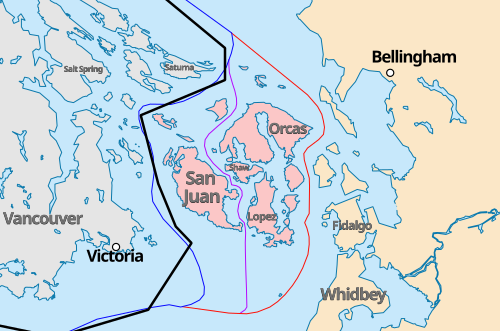
The War Over a Pig
In 1859, an American farmer shot a British pig that was eating his potatoes. Soon, hundreds of soldiers and several warships faced off on a small island. The only casualty was the pig.
The connection: A war that almost started over something absurd.
 Music · The Story
The Band That Let Fans Record Everything
Most bands banned fans from recording their concerts. The Grateful Dead gave them their own section of the arena. The result was a vast, fan-made archive of thousands of live shows — traded through the post for decades and now free online.
The connection: A completely different corner of the archive: music.