Mysteries The Theory
The Colony That Vanished
In 1590, John White returned to the English settlement on Roanoke Island to find everyone gone. The only clue was a single word carved into a post — "CROATOAN".
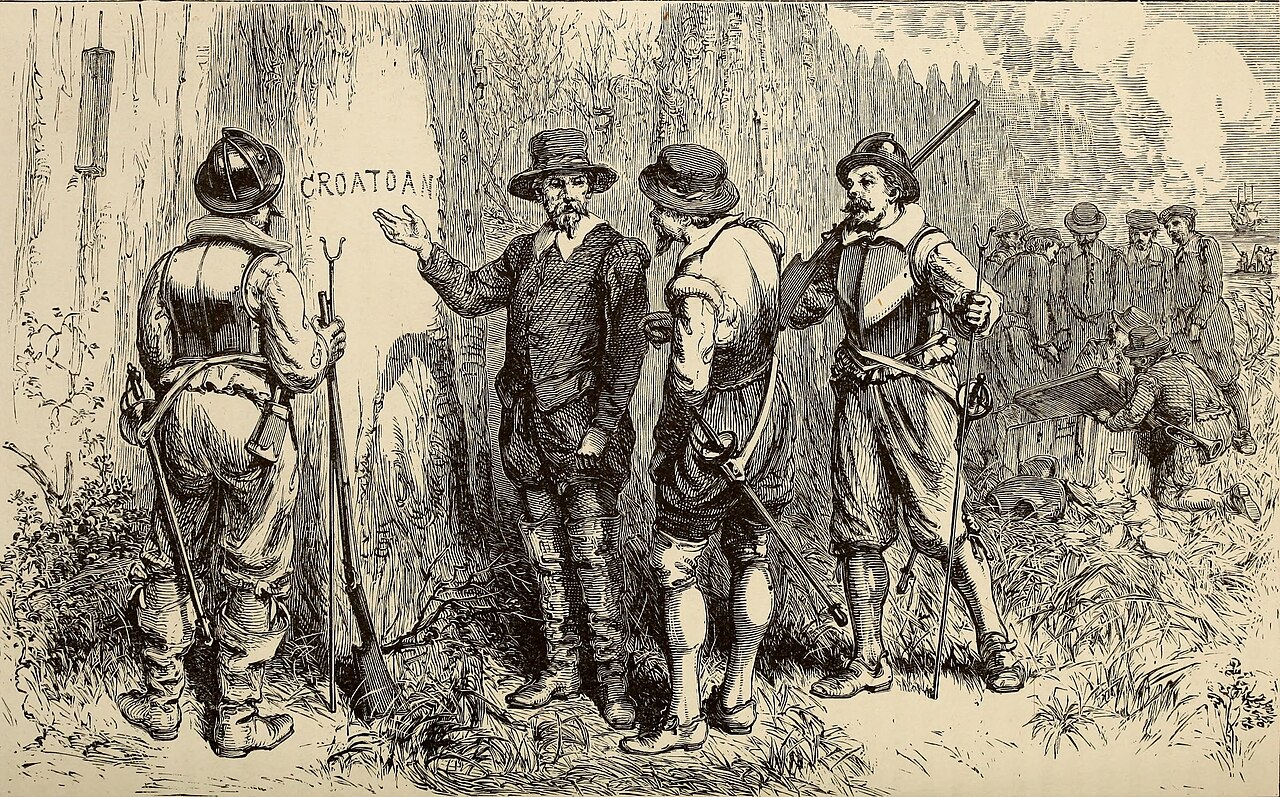
[IMAGE: Nineteenth-century engraving of John White discovering the word CROATOAN carved on a post] (Design by William Ludwell Sheppard, Engraving by William James Linton / Wikimedia Commons, No restrictions; opens as a separate document)
![[IMAGE: Nineteenth-century engraving of John White discovering the word CROATOAN carved on a post]](https://upload.wikimedia.org/wikipedia/commons/thumb/6/64/William_Ludwell_Sheppard_%26_William_James_Linton_-_CROATOAN%2C_The_Lost_Colony_%28John_White%29.jpg/1280px-William_Ludwell_Sheppard_%26_William_James_Linton_-_CROATOAN%2C_The_Lost_Colony_%28John_White%29.jpg)
In 1587, about 115 English men, women and children landed on Roanoke Island, off the coast of what is now North Carolina. They were meant to found a permanent colony.
Their governor was an artist named John White. That August, his daughter Eleanor gave birth to a girl, Virginia Dare — the first English child born in the Americas.
A few weeks later, White sailed back to England for supplies. He meant to be gone a few months.
He didn't return for three years.
The empty settlement
England was at war with Spain, and in 1588 the threat of the Spanish Armada meant ships were needed at home. It wasn't until August 1590 that White finally landed at Roanoke again — on his granddaughter's third birthday.
The settlement was empty. The houses had been taken down. There were no bodies and no graves.
White had agreed with the colonists before he left that if they moved, they would carve the name of their destination somewhere visible, and add a cross if they left in distress.
He found the letters "CRO" carved into a tree. And on a post of the palisade, the word CROATOAN.
There was no cross.
They had told him where they'd gone. He never got there.
Croatoan was the name of a nearby island — today's Hatteras Island — and of the Native American people who lived there, who had been friendly. White wanted to sail there, but a storm, damaged ships and a crew eager to leave forced him to head home. He never saw Roanoke again.
What happened to them?
HYPOTHESIS A credible explanation that some experts support, not proven.
They joined Native communities
The most widely supported idea is that the colonists split up and went to live among nearby Native American peoples, including the Croatoan. Later stories from settlers and travellers mention grey-eyed people or English-speaking individuals among some communities, and archaeologists have found 16th-century European artefacts at sites inland and on Hatteras Island. But the evidence is debated, and no find has yet proved what happened.
SPECULATION Possible, unproven, and labelled so you can enjoy it responsibly.
Darker endings
Others have proposed that the colonists were killed in conflict, died of disease or starvation, or perished trying to sail home. Any of these could have happened to some of them. None is supported by clear evidence.
You learned this today!!! YOU LEARNED THIS TODAY !!!
- In 1587, about 115 English colonists settled on Roanoke Island, in what is now North Carolina.
- Their governor, John White, sailed back to England for supplies and could not return until 1590.
- He found the settlement abandoned and the word "CROATOAN" carved into a post.
- Among the missing was White's granddaughter, Virginia Dare, the first English child born in the Americas.
- The leading hypothesis is that the colonists moved and joined Native American communities, but this is not proven.
One more thing
There is a village in Norway called Hell, and in winter it regularly freezes over.
→ Read something elseSources & further reading
- Roanoke Colony, Wikipedia
- Lawler, Andrew. The Secret Token: Myth, Obsession, and the Search for the Lost Colony of Roanoke, Doubleday, 2018
- Fort Raleigh National Historic Site, U.S. National Park Service
StoneRed separates fact, hypothesis and speculation. Spotted an error? We'd genuinely like to know.
If you liked this…
 Mysteries · The Theory
The Book Nobody Can Read
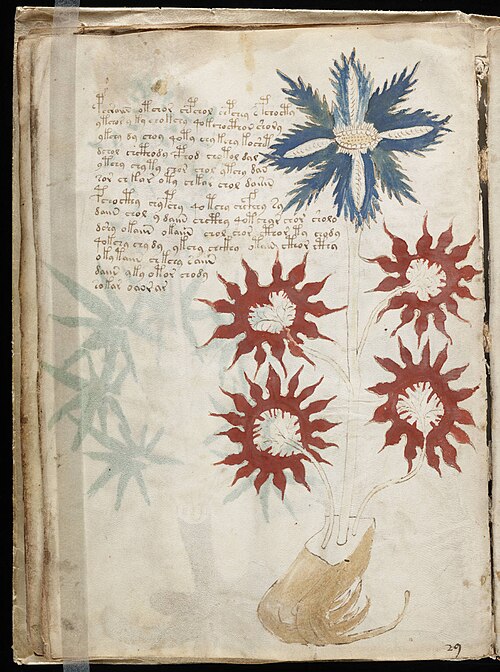
Six centuries old, written in an unknown script, illustrated with plants that don't exist. The Voynich Manuscript has defeated wartime codebreakers, linguists and computers. Here is what we actually know.
The connection: Another mystery with one tantalising clue.
Mysteries · The Theory
The Book Nobody Can Read
Six centuries old, written in an unknown script, illustrated with plants that don't exist. The Voynich Manuscript has defeated wartime codebreakers, linguists and computers. Here is what we actually know.
The connection: Another mystery with one tantalising clue.
 Psychology · The Person
The Man With a Hole in His Head
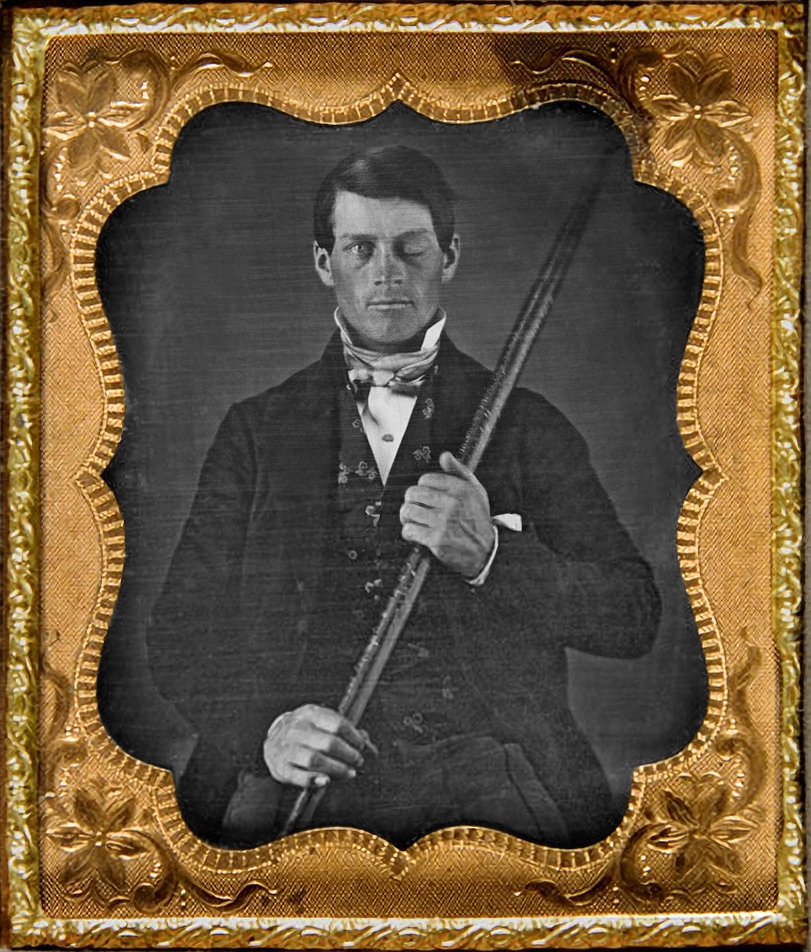
In 1848, an iron rod more than a metre long shot through Phineas Gage's skull. He sat up, talked, and lived for another eleven years — and became the most famous patient in the history of neuroscience.
The connection: History's most famous puzzles often hide more ordinary truths.
Psychology · The Person
The Man With a Hole in His Head
In 1848, an iron rod more than a metre long shot through Phineas Gage's skull. He sat up, talked, and lived for another eleven years — and became the most famous patient in the history of neuroscience.
The connection: History's most famous puzzles often hide more ordinary truths.
 Space · The Theory
Where Is Everybody?
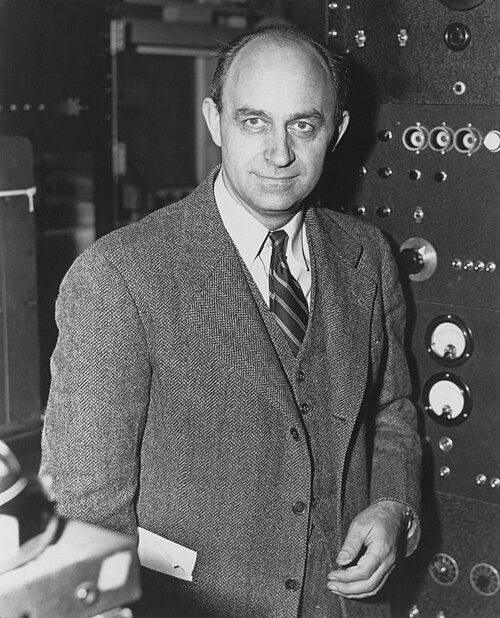
Over lunch in 1950, the physicist Enrico Fermi asked a simple question about aliens. Seventy-five years later, it's still one of the most unsettling questions in science.
The connection: Sometimes the answer to "where did they go?" is the hardest one.
Space · The Theory
Where Is Everybody?
Over lunch in 1950, the physicist Enrico Fermi asked a simple question about aliens. Seventy-five years later, it's still one of the most unsettling questions in science.
The connection: Sometimes the answer to "where did they go?" is the hardest one.