Ancient World The Deep Dive
The Concrete That Heals Itself
Modern concrete starts falling apart within decades. Roman harbour walls have been sitting in seawater for two thousand years. In 2023, scientists finally worked out one of the reasons why.

[IMAGE: Giovanni Paolo Panini’s painting of the Pantheon’s interior, with its coffered concrete dome and open oculus] (Giovanni Paolo Panini / Wikimedia Commons, Public domain; opens as a separate document)
Walk into the Pantheon in Rome and look up.
Above you is a dome more than 43 metres across, with a hole nearly nine metres wide at the top, open to the sky. Rain falls straight through it onto the marble floor. It has been doing so for about nineteen centuries.
The dome is made of concrete. Unreinforced concrete — no steel bars, no mesh, nothing holding it together but the material itself. Nearly two thousand years after it was finished, it is still the largest unreinforced concrete dome on Earth.
Now think about the concrete around you. The overpass that needed repairs after thirty years. The car park with the cracks and rust stains. The pier that had to be rebuilt.
How did the Romans make something that outlasts our concrete by a factor of fifty?
For a long time, nobody really knew.
A material that shouldn't be this good
Romans didn't invent concrete — earlier cultures used lime mortars — but they turned it into something revolutionary. They called it opus caementicium, and it let them build things no one had built before: vast vaults, harbour walls, aqueducts, domes.
The recipe, in broad strokes, was lime, water, chunks of rock and one crucial ingredient: volcanic ash.
The best ash came from around Pozzuoli, near the Bay of Naples, and the material is still called pozzolana after the town. Mixed with lime, it reacts chemically to form a hard, stable binder. The Roman architect Vitruvius, writing in the first century BC, sang its praises.
But many cultures had lime and ash. That alone doesn't explain why Roman concrete is so stubborn about dying.
What Vitruvius wrote down
We know something about how Romans thought about concrete because one of them wrote a manual.
Vitruvius was an architect and engineer who served under Julius Caesar and then dedicated his ten-volume work, De Architectura, to Augustus. In the second book, he describes "a kind of powder which by nature produces wonderful results", found around Baiae and the lands near Mount Vesuvius. Mixed with lime and rubble, he says, it makes structures strong — and it even hardens under water.
He also explains how to choose lime, how to test sand by rubbing it between your fingers, and why you should never use sand from the seashore in walls without care. Some of his advice is excellent. Some is guesswork dressed up as certainty. All of it is recognisably the voice of a working engineer who had watched things fall down and wanted them not to.
What Vitruvius doesn't give us is a modern lab report. He describes ingredients and methods, not chemistry. Which is why, for two thousand years, people knew that Roman concrete worked long before anyone could say why.
Volcanic ash, shipped across the sea
Romans were so convinced of pozzolana's powers that they shipped it enormous distances.
When King Herod built a vast artificial harbour at Caesarea, on the coast of what is now Israel, in the decades before the birth of Christ, his engineers used concrete for its breakwaters. In the early 2000s, an international team of archaeologists and engineers, the ROMACONS project, drilled cores from Roman harbour structures around the Mediterranean, including Caesarea. The analysis pointed to volcanic ash from the Bay of Naples — material that had been carried by ship some 2,000 kilometres to be poured into the sea on the other side of the Mediterranean.
That's not a building material. That's a supply chain.
Romans shipped volcanic ash across the Mediterranean because they trusted it more than anything they could dig up locally.
Stronger in the sea
The first clue came from the water.
Roman engineers built harbours by packing concrete into wooden forms and lowering them into the sea. Modern concrete hates seawater — salt attacks it and corrodes any steel inside. Yet Roman harbour structures around the Mediterranean are still there, battered by waves for two millennia.
Pliny the Elder noticed something odd about this in the first century AD. He wrote that concrete in the sea became "a single stone mass, impregnable to the waves and every day stronger."
"Every day stronger." For centuries, that line read like Roman bragging. It turns out to be chemistry.
In 2017, geologist Marie Jackson and colleagues examined cores drilled from ancient Roman piers. Seawater, they found, had been slowly seeping through the concrete, dissolving parts of the volcanic ash and growing new minerals in the gaps — including aluminous tobermorite, a rare, layered crystal that's notoriously hard to make in a lab, and a mineral called phillipsite.
Those crystals grew inside cracks and pores, reinforcing the material from within. The sea wasn't destroying the concrete. It was helping to build it.
The mystery of the white lumps
Look closely at a broken piece of Roman concrete and you'll often see small white specks and chunks, a few millimetres across, scattered through the mix. They are bits of lime, called lime clasts.
For generations, researchers assumed they were evidence of laziness: lumps of lime that hadn't been properly mixed in. Poor quality control. The ancient equivalent of a builder in a hurry.
But this never quite sat right with a team at MIT led by Admir Masic. The Romans were obsessive about their materials. Why would their concrete be full of mistakes?
Hot mixing
In a study published in January 2023, Masic's team analysed lime clasts from concrete at Privernum, an ancient site south of Rome. The chemistry suggested the lime hadn't been added in the form everyone assumed — lime already combined with water, known as slaked lime — but at least partly as quicklime, a much more reactive form.
When quicklime meets water, it gets hot. Very hot. The team proposed that the Romans used "hot mixing", and that the heat changed the concrete in two useful ways: it allowed chemical reactions that aren't possible at normal temperatures, and it left behind those lime clasts — brittle, porous pockets packed with reactive calcium.
Here's why that matters.
When a crack forms in concrete, it tends to travel through the weakest points. In Roman concrete, the weakest points include the lime clasts. So the crack runs into one. Water gets into the crack. The water reacts with the calcium in the clast and forms a calcium-rich solution, which then recrystallises as calcium carbonate — and fills the crack.
The concrete patches itself.
FACT Established by documentary or physical evidence.
The experiment
The MIT team made concrete samples with and without quicklime, deliberately cracked them, and ran water through the cracks. Within about two weeks, the cracks in the hot-mixed samples had sealed and water stopped flowing. In the samples made without quicklime, it kept flowing.
So why don't we just build like Romans?
Partly, we're starting to. Researchers — including a company spun out of the MIT work — are trying to bring hot-mixing and volcanic-ash ideas into modern concrete.
But it's not a simple swap, for a few reasons.
Strength. Modern Portland cement, invented in the 19th century, is much stronger in compression and sets much faster. That's why we can build skyscrapers and bridges on deadlines.
Steel. Most modern concrete is reinforced with steel bars, which let it carry tension. But steel is also concrete's slow-motion enemy: when water and salt reach it, it rusts and expands, cracking the concrete from inside. The Pantheon has no steel, and so has nothing to rust.
Speed. Roman concrete was often packed and tamped rather than poured, and some of its best properties develop over very long timescales. Our economy is built on things that are finished this year.
Reading the rubble
There's a broader lesson in how this mystery was solved, and it's about humility.
For most of the 20th century, researchers studying Roman concrete were looking for the "secret ingredient" — some lost additive, perhaps blood or milk or animal fat, which some ancient writers do mention for certain mortars. The real answers turned out to be hiding in plain sight: in the ordinary volcanic ash everyone already knew about, in the water that everyone assumed was the enemy, and in the white lumps everyone had dismissed as mistakes.
The breakthroughs came not from finding something new, but from looking again at something old with better instruments and fewer assumptions. Electron microscopes, X-ray diffraction and synchrotron imaging let researchers see crystals growing inside the concrete at a scale Vitruvius could never have imagined.
The city that never stopped building
There's a nice irony in all of this.
We tend to think of ancient ruins as things that survived despite time. But some Roman structures survived partly because of it — because water kept seeping in, minerals kept growing, cracks kept healing.
A Roman harbour wall isn't a frozen object from the past. It's a slow, mineral process that has been running continuously since the time of the emperors, and is still running now.
Next time you see a crack in a pavement, remember: somewhere off the coast of Italy, a two-thousand-year-old wall is quietly fixing one of its own.
You learned this today!!! YOU LEARNED THIS TODAY !!!
- The Pantheon in Rome, finished under Hadrian around 125 AD, still has the world's largest unreinforced concrete dome.
- Roman concrete used volcanic ash from around the Bay of Naples, known as pozzolana.
- In seawater, Roman marine concrete grows rare minerals such as aluminous tobermorite inside its own cracks and pores.
- The white lumps in Roman concrete, once dismissed as sloppy mixing, appear to help it heal its own cracks.
- Cement production is responsible for roughly 8% of global carbon dioxide emissions.
One more thing
Part of the ashes of Fredric Baur, who designed the Pringles can, were buried in a Pringles can.
→ Read something elseSources & further reading
- Seymour, L. M. et al. Hot mixing: Mechanistic insights into the durability of ancient Roman concrete, Science Advances, 2023
- Jackson, M. D. et al. Phillipsite and Al-tobermorite mineral cements produced through low-temperature water-rock reactions in Roman marine concrete, American Mineralogist, 2017
- Riddle solved: Why was Roman concrete so durable?, MIT News, 2023
- Pliny the Elder. Natural History, Book 36, Wikipedia overview
- Roman concrete, Wikipedia
- Pantheon, Rome, Wikipedia
StoneRed separates fact, hypothesis and speculation. Spotted an error? We'd genuinely like to know.
If you liked this…
 Philosophy · The Question
If You Replace Every Plank, Is It Still the Same Ship?
A 2,000-year-old puzzle about a wooden boat turns out to be a question about your body, your memories, and whether you are the same person who woke up this morning.
The connection: Is a building that heals its own cracks still the same building it was?
Philosophy · The Question
If You Replace Every Plank, Is It Still the Same Ship?
A 2,000-year-old puzzle about a wooden boat turns out to be a question about your body, your memories, and whether you are the same person who woke up this morning.
The connection: Is a building that heals its own cracks still the same building it was?
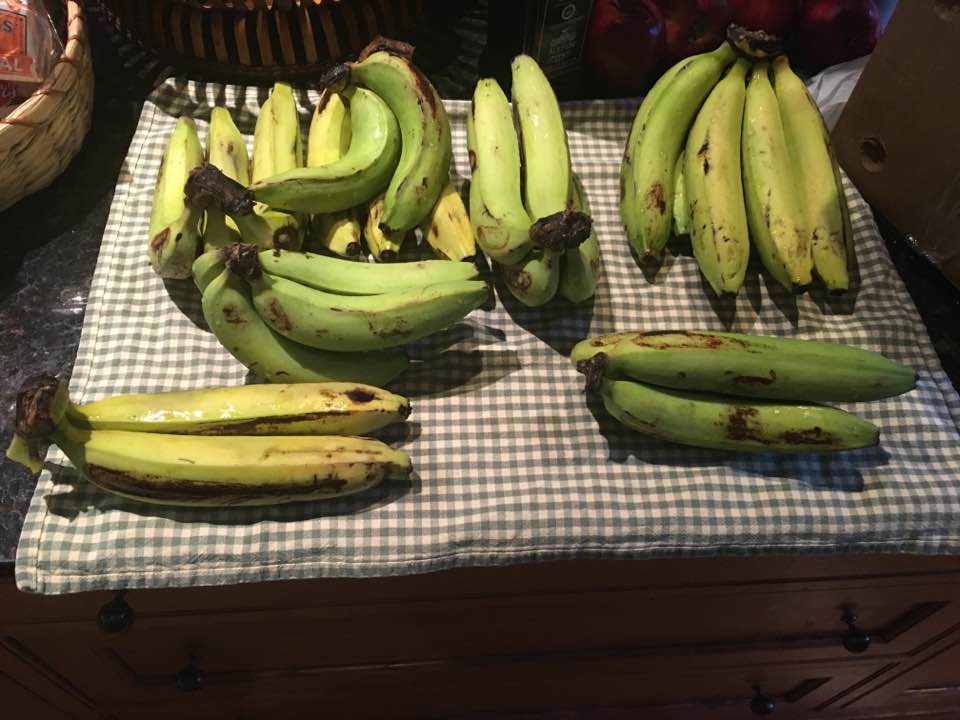 Nature · The Story
The Banana Your Grandparents Ate
The banana in your kitchen isn't the one people ate in 1940. That one was wiped out by a fungus — and the replacement is under threat too.
The connection: A completely different corner of the archive: nature.
Nature · The Story
The Banana Your Grandparents Ate
The banana in your kitchen isn't the one people ate in 1940. That one was wiped out by a fungus — and the replacement is under threat too.
The connection: A completely different corner of the archive: nature.
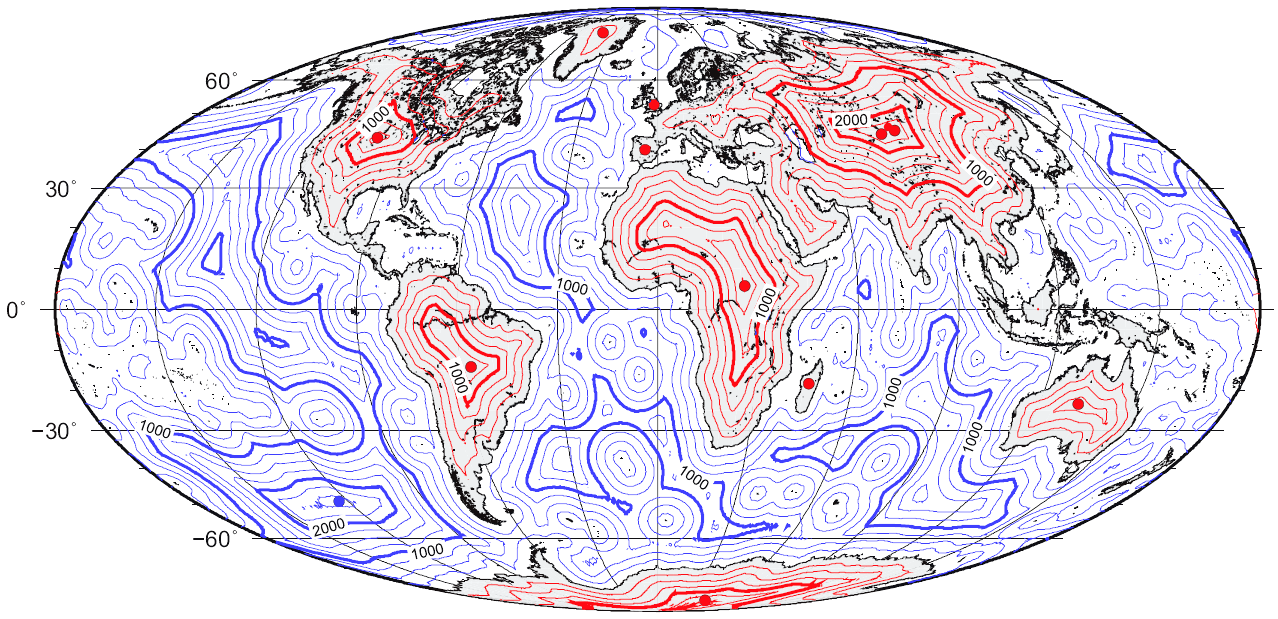 Geography · The Story
The Loneliest Place on Earth
In the South Pacific there's a point so far from land that the nearest humans are often astronauts. It's also where old spacecraft go to die.
The connection: A completely different corner of the archive: geography.
Geography · The Story
The Loneliest Place on Earth
In the South Pacific there's a point so far from land that the nearest humans are often astronauts. It's also where old spacecraft go to die.
The connection: A completely different corner of the archive: geography.