Science The Story
The Deepest Hole Ever Dug
For almost twenty years, Soviet scientists drilled straight down into the Arctic. They reached 12,262 metres, found water where there should be none, and stopped — and a rumour about what they heard down there refuses to die.
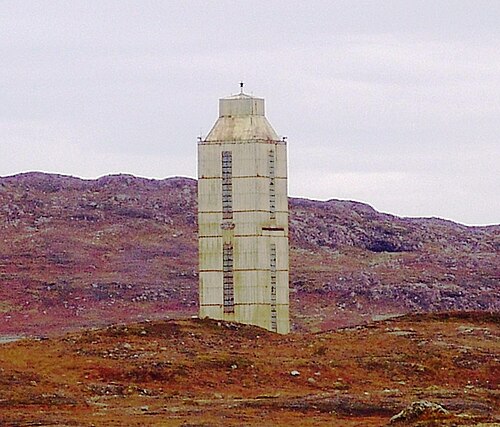
[IMAGE: The welded metal cap sealing the Kola Superdeep Borehole] (Andre Belozeroff / Wikimedia Commons, CC BY-SA 3.0; opens as a separate document)
![[IMAGE: The welded metal cap sealing the Kola Superdeep Borehole]](https://upload.wikimedia.org/wikipedia/commons/thumb/7/74/%D0%9A%D0%BE%D0%BB%D1%8C%D1%81%D0%BA%D0%B0%D1%8F_%D1%81%D0%B2%D0%B5%D1%80%D1%85%D0%B3%D0%BB%D1%83%D0%B1%D0%BE%D0%BA%D0%B0%D1%8F_%D1%81%D0%BA%D0%B2%D0%B0%D0%B6%D0%B8%D0%BD%D0%B0_crop.jpg/500px-%D0%9A%D0%BE%D0%BB%D1%8C%D1%81%D0%BA%D0%B0%D1%8F_%D1%81%D0%B2%D0%B5%D1%80%D1%85%D0%B3%D0%BB%D1%83%D0%B1%D0%BE%D0%BA%D0%B0%D1%8F_%D1%81%D0%BA%D0%B2%D0%B0%D0%B6%D0%B8%D0%BD%D0%B0_crop.jpg)
On the Kola Peninsula, in the far north-west of Russia, near the Norwegian border, there is a rusting metal cap bolted to the ground in the ruins of an abandoned research station.
It's about the size of a manhole cover. Underneath it is the deepest hole humans have ever made.
It goes down 12,262 metres. More than twelve kilometres. If you dropped Mount Everest into it, the peak would be more than three kilometres below the surface.
And yet, on the scale of the planet, it barely scratches the paint.
The race to the bottom
In the 1960s, as the US and the USSR raced into space, a quieter race was going on in the other direction.
Scientists knew a great deal about the stars and almost nothing direct about what was under their feet. Everything we knew about Earth's deep interior came from indirect methods, especially from studying how earthquake waves travel through rock. Nobody had ever actually been down there.
The Americans tried first, with a project to drill through the thin oceanic crust, but it was cancelled in the 1960s. The Soviets took a different approach: drill on land, through the thick continental crust, as deep as they could go.
Drilling began on 24 May 1970.
A very narrow hole
The borehole isn't a shaft you could climb down. Its main branch is only about 23 centimetres wide — roughly the width of a dinner plate.
The drill bit was turned not by spinning the whole kilometres-long pipe, which would have twisted it apart, but by a turbine at the bottom, driven by drilling mud pumped down from the surface. Every time a bit wore out, the entire string of pipe had to be pulled up, section by section, and lowered down again. Near the bottom, a single round trip could take most of a day.
Several branches were drilled from the main hole over the years. In 1989, one of them, known as SG-3, reached 12,262 metres.
It took almost twenty years to drill twelve kilometres. That's roughly the distance you could walk in under three hours.
What they found
The hole was supposed to answer questions. It mostly raised new ones.
The rock was wet. Deep in the crust, where scientists expected solid, dry granite, the drill encountered water. It wasn't from the surface. Researchers concluded it had been squeezed out of minerals by immense pressure and then trapped by an impermeable layer of rock above.
The expected basalt wasn't there. Earthquake data had suggested that below a few kilometres, granite would give way to basalt. The drillers went well past that depth and found no basalt. The change in the seismic signal, it turned out, was caused by granite that had been transformed by heat and pressure — not by a different type of rock.
There were fossils. About six kilometres down, scientists reported microscopic fossils of single-celled plankton — preserved in carbon and nitrogen coatings rather than limestone.
The mud seemed to boil. At great depth, drilling mud came back up thick with hydrogen gas.
FACT Established by documentary or physical evidence.
Why they stopped
The temperature at the bottom was around 180 °C, far hotter than the roughly 100 °C predicted for that depth. At such heat, the rock behaved less like a solid and more like a plastic, slowly flowing back into the hole whenever the drill was pulled out. The target of 15,000 metres was abandoned. Drilling stopped in the early 1990s, and the station was closed later that decade.
The scream from hell
Here's where the Kola borehole took on a second life — as one of the internet's most durable legends.
In 1989 and 1990, a story began circulating through Christian newsletters and broadcasts. Soviet scientists, it claimed, had drilled 14.4 kilometres into the Earth "in Siberia", broken into a cavity with a temperature of 1,100 °C, and lowered a heat-proof microphone. They heard the screams of the damned.
Deep, but not deep
Twelve kilometres sounds enormous, and in human terms it is. It's deeper than the deepest point of the ocean, in the Mariana Trench, at about 11 kilometres.
But Earth's radius is about 6,371 kilometres. The Kola borehole made it about 0.2% of the way to the centre. If Earth were an apple, the deepest hole humans have ever drilled wouldn't break the skin.
The hole today
The research station at Kola is now a ruin of broken windows and rusting machinery, visited by urban explorers and the occasional curious tourist. The hole itself is sealed under its small, bolted metal cap.
It's an oddly modest monument to one of the most ambitious scientific projects of the 20th century: a pinprick in the Arctic that went further into the Earth than anything else ever has.
And, if you put your ear to the cap, you will hear absolutely nothing at all.
You learned this today!!! YOU LEARNED THIS TODAY !!!
- The Kola Superdeep Borehole reached 12,262 metres in 1989, the deepest artificial point on Earth.
- Its main branch is only about 23 centimetres wide.
- Temperatures at the bottom reached around 180 °C, much hotter than predicted.
- Drillers found water deep in the crust and microscopic plankton fossils several kilometres down.
- The story that scientists recorded "screams from hell" in a deep hole is a hoax that spread in 1989–90.
One more thing
During the solar storm of 1859, some telegraph operators reportedly kept sending messages with their batteries disconnected.
→ Read something elseSources & further reading
- Kola Superdeep Borehole, Wikipedia
- Kozlovsky, Ye. A. (ed.). The Superdeep Well of the Kola Peninsula, Springer-Verlag, 1987
- Well to Hell hoax, Wikipedia
- Conrad discontinuity, Wikipedia
StoneRed separates fact, hypothesis and speculation. Spotted an error? We'd genuinely like to know.
If you liked this…
 Ancient World · The Deep Dive
The Concrete That Heals Itself
Modern concrete starts falling apart within decades. Roman harbour walls have been sitting in seawater for two thousand years. In 2023, scientists finally worked out one of the reasons why.
The connection: What rock does when water and time get to work on it.
Ancient World · The Deep Dive
The Concrete That Heals Itself
Modern concrete starts falling apart within decades. Roman harbour walls have been sitting in seawater for two thousand years. In 2023, scientists finally worked out one of the reasons why.
The connection: What rock does when water and time get to work on it.
 Nature · The Story
The Jellyfish That Hits Rewind
When life gets hard, Turritopsis dohrnii doesn't die. It turns back into a baby.
The connection: Life turns up in places nobody expects — and survives in ways nobody predicted.
Nature · The Story
The Jellyfish That Hits Rewind
When life gets hard, Turritopsis dohrnii doesn't die. It turns back into a baby.
The connection: Life turns up in places nobody expects — and survives in ways nobody predicted.
 Mysteries · The Theory
The Colony That Vanished
In 1590, John White returned to the English settlement on Roanoke Island to find everyone gone. The only clue was a single word carved into a post — "CROATOAN".
The connection: A completely different corner of the archive: mysteries.
Mysteries · The Theory
The Colony That Vanished
In 1590, John White returned to the English settlement on Roanoke Island to find everyone gone. The only clue was a single word carved into a post — "CROATOAN".
The connection: A completely different corner of the archive: mysteries.