History The Strange Case
The Girls Who Photographed Fairies
In 1917, two cousins in a Yorkshire village took photographs of themselves playing with fairies. Sherlock Holmes's creator, Arthur Conan Doyle, believed they were real. It took more than sixty years for the cousins to admit how they did it.
In the summer of 1917, a girl named Frances Griffiths kept coming home with wet feet. She had been playing by the beck — a stream — at the bottom of the garden in Cottingley, a village in West Yorkshire. Her mother was annoyed. Frances explained that she went to the beck to see the fairies.
Her cousin Elsie Wright, who was sixteen, backed her up. To prove it, Elsie borrowed her father's camera.
When her father developed the photograph, it showed Frances leaning on her hand, looking at the camera, with a group of small winged fairies dancing in front of her.
The photographs
Elsie's father, Arthur Wright, was an amateur photographer. He suspected a prank. A month later, the girls took a second photograph, showing Elsie with a small gnome-like figure. Arthur thought the fairies looked like paper cut-outs and searched the girls' room for evidence, but found nothing. He banned them from using the camera.
Elsie's mother, Polly, was more open-minded. She was interested in Theosophy, a spiritual movement that included belief in nature spirits. In 1919, she mentioned the photographs at a Theosophical Society meeting.
From there, the pictures began to travel.
The fairies looked like they'd stepped out of a children's book. That turned out to be exactly where they came from.
The experts
The photographs reached Edward Gardner, a leading Theosophist, who became convinced they were genuine. He had them examined by a photography expert, Harold Snelling, who said he could find no evidence of double exposure or of paper or cloth figures. The negatives, he said, showed no signs of tampering.
In 1920, Gardner arranged for the girls to take more photographs, giving them new cameras and marked plates. They produced three more images, including one, often called "Fairies and their Sun-Bath", showing a misty, shadowy shape among the grass.
Conan Doyle
Then the photographs reached one of the most famous writers in the world. Arthur Conan Doyle, the creator of Sherlock Holmes — fiction's greatest detective — was a committed Spiritualist. He believed in communication with the dead and was eager for evidence of a spirit world.
Conan Doyle was writing an article about fairies for The Strand Magazine. In its Christmas 1920 issue, he published the Cottingley photographs, presenting them as evidence that fairies existed. In 1922, he wrote a whole book, The Coming of the Fairies.
Doubts
Many people were sceptical from the start. Critics pointed out that the fairies looked strikingly like illustrations, with fashionable 1910s hairstyles. Some said they looked like paper cut-outs. The photography company Kodak examined the photos and said they showed no obvious evidence of faking, but would not certify that they were genuine.
The girls grew up, married and moved on. For decades, when asked, they gave careful answers that neither fully confirmed nor denied the fairies.
The confession
In the 1970s and early 1980s, researchers took a fresh look. One noticed that the fairies in the first photograph closely resembled illustrations from a children's book published in 1914, Princess Mary's Gift Book.
In 1983, Elsie and Frances finally confessed. Elsie had copied the fairies from the book, drawn them on card, cut them out and fixed them in place with hatpins. The girls had never expected the photographs to become famous. Once figures as eminent as Conan Doyle had staked their reputations on them, they said, they felt too embarrassed to admit the truth.
FACT Established by documentary or physical evidence.
The fifth photograph
The cousins disagreed about one thing. Frances insisted until her death in 1986 that the fifth photograph, the misty "Sun-Bath" image, was genuine and that she really had seen fairies at the beck. Elsie said all five were fakes.
A lasting fascination
The Cottingley Fairies have inspired books, plays and films. In 2019, prints of the photographs and one of the cameras were sold at auction. The story continues to fascinate because it involves so many human elements: childhood play, a prank that got out of hand, grief, hope and the power of a photograph to convince.
It also shows that clever people are not immune to being fooled — especially when they want something to be true.
You learned this today!!! YOU LEARNED THIS TODAY !!!
- The Cottingley Fairies were five photographs taken by two cousins, Elsie Wright and Frances Griffiths, in Cottingley, near Bradford, England.
- The first two photographs were taken in 1917, when Elsie was 16 and Frances was 9.
- Arthur Conan Doyle, the creator of Sherlock Holmes, publicised the photographs in 1920 as evidence of fairies.
- In the early 1980s, the cousins admitted that the fairies were paper cut-outs, copied from a children's book.
- Frances Griffiths maintained until her death that the fifth photograph was genuine.
One more thing
Bananas are botanically berries. Strawberries are not.
→ Read something elseSources & further reading
- Cottingley Fairies, Wikipedia
- Conan Doyle, Arthur. The Coming of the Fairies, Hodder & Stoughton, 1922
- Cooper, Joe. The Case of the Cottingley Fairies, Robert Hale, 1990
StoneRed separates fact, hypothesis and speculation. Spotted an error? We'd genuinely like to know.
If you liked this…
 History · The Strange Case
The Fake History of the Bathtub
In 1917, the journalist H. L. Mencken wrote a newspaper article on the history of the bathtub in America. It was full of dates, names and detail. All of it was made up. Even after he confessed, his fake facts kept turning up as truth for decades.
The connection: Another hoax that outlived its confession.
 Weird · The Strange Case
The Giant in the Farmyard
In 1869, two men digging a well in upstate New York uncovered a petrified giant, ten feet tall. Thousands paid to see it. Then P. T. Barnum made a fake of the fake.
The connection: Another famous fake that fooled the public.
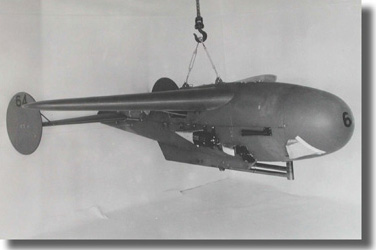 Technology · The Strange Case
The Missile Guided by Pigeons
During the Second World War, the psychologist B. F. Skinner trained pigeons to steer bombs by pecking at a target on a screen. It worked surprisingly well. Nobody took it seriously.
The connection: A completely different corner of the archive: technology.