Technology The Strange Case
The Missile Guided by Pigeons
During the Second World War, the psychologist B. F. Skinner trained pigeons to steer bombs by pecking at a target on a screen. It worked surprisingly well. Nobody took it seriously.
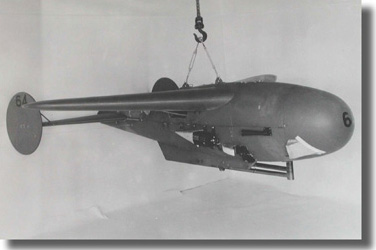
[IMAGE: The Pelican guided bomb, the airframe Project Pigeon was designed to steer] (National Institute of Standards and Technology / Wikimedia Commons, Public domain; opens as a separate document)
![[IMAGE: The Pelican guided bomb, the airframe Project Pigeon was designed to steer]](https://upload.wikimedia.org/wikipedia/commons/0/00/Pelic400_B.jpg)
In 1940, the American psychologist B. F. Skinner was on a train when he saw a flock of birds flying in formation alongside it. He found himself thinking: what if birds could guide a missile?
Skinner was already famous for training animals using rewards. Pigeons, he knew, have excellent eyesight and can learn to peck at specific images with remarkable precision.
So he built a missile guided by pigeons.
How it worked
The idea was this. In the nose of a glide bomb, a lens would project an image of the ground ahead onto a small screen. A pigeon, trained to recognise the target — a ship, for instance — would peck at its image. If the target drifted off-centre, the pecks would move with it, and the movement of the screen would steer the bomb back toward the target.
To be safe, Skinner's design used three pigeons, each with its own screen. The missile would follow the majority vote.
In the age of radar and electronic computers, B. F. Skinner proposed steering bombs by committee — of pigeons.
It worked
Remarkably, the pigeons were very good at it. In tests, they pecked consistently and accurately, even under noise, vibration and changing conditions. In 1943, the project received funding.
But military officials struggled to get past the absurdity of it. In 1944, the project was cancelled; resources went to other guidance systems.
You learned this today!!! YOU LEARNED THIS TODAY !!!
- During the Second World War, psychologist B. F. Skinner developed "Project Pigeon" to use pigeons to guide missiles.
- Pigeons were trained to peck at an image of a target on a screen, which steered the missile.
- The US government gave the project funding in 1943.
- The project was cancelled in 1944; it was briefly revived as "Project Orcon" by the Navy after the war.
- Skinner later said the problem was that no one would take the idea seriously.
One more thing
Nintendo was founded in 1889 — to make playing cards.
→ Read something elseSources & further reading
- Project Pigeon, Wikipedia
- Skinner, B. F. Pigeons in a Pelican, American Psychologist, 1960
StoneRed separates fact, hypothesis and speculation. Spotted an error? We'd genuinely like to know.
If you liked this…
 Technology · The Timeline
The Chocolate Bar That Melted in the Lab
The microwave oven was invented by a self-taught engineer who never finished grammar school, standing next to radar equipment, with a snack in his pocket.
The connection: Another wartime idea that came from an unexpected place.
Technology · The Timeline
The Chocolate Bar That Melted in the Lab
The microwave oven was invented by a self-taught engineer who never finished grammar school, standing next to radar equipment, with a snack in his pocket.
The connection: Another wartime idea that came from an unexpected place.
 Modern World · The Strange Case
The Emus Won
In 1932, Australia sent soldiers with machine guns to fight a flock of flightless birds. It did not go to plan.
The connection: Birds and the military, round two.
Modern World · The Strange Case
The Emus Won
In 1932, Australia sent soldiers with machine guns to fight a flock of flightless birds. It did not go to plan.
The connection: Birds and the military, round two.
 People · The Person
The Man Who Didn't Believe the Computer
Just after midnight on 26 September 1983, a Soviet satellite system reported that American nuclear missiles were on their way. The officer on duty had minutes to decide what to tell Moscow.
The connection: Guidance systems, judgement and who you trust to make the call.
People · The Person
The Man Who Didn't Believe the Computer
Just after midnight on 26 September 1983, a Soviet satellite system reported that American nuclear missiles were on their way. The officer on duty had minutes to decide what to tell Moscow.
The connection: Guidance systems, judgement and who you trust to make the call.