Cold Cases The Story
The House in Villisca
One summer night in 1912, eight people were killed in a small Iowa town. A preacher was tried twice. Nobody was ever convicted, and the house still stands.
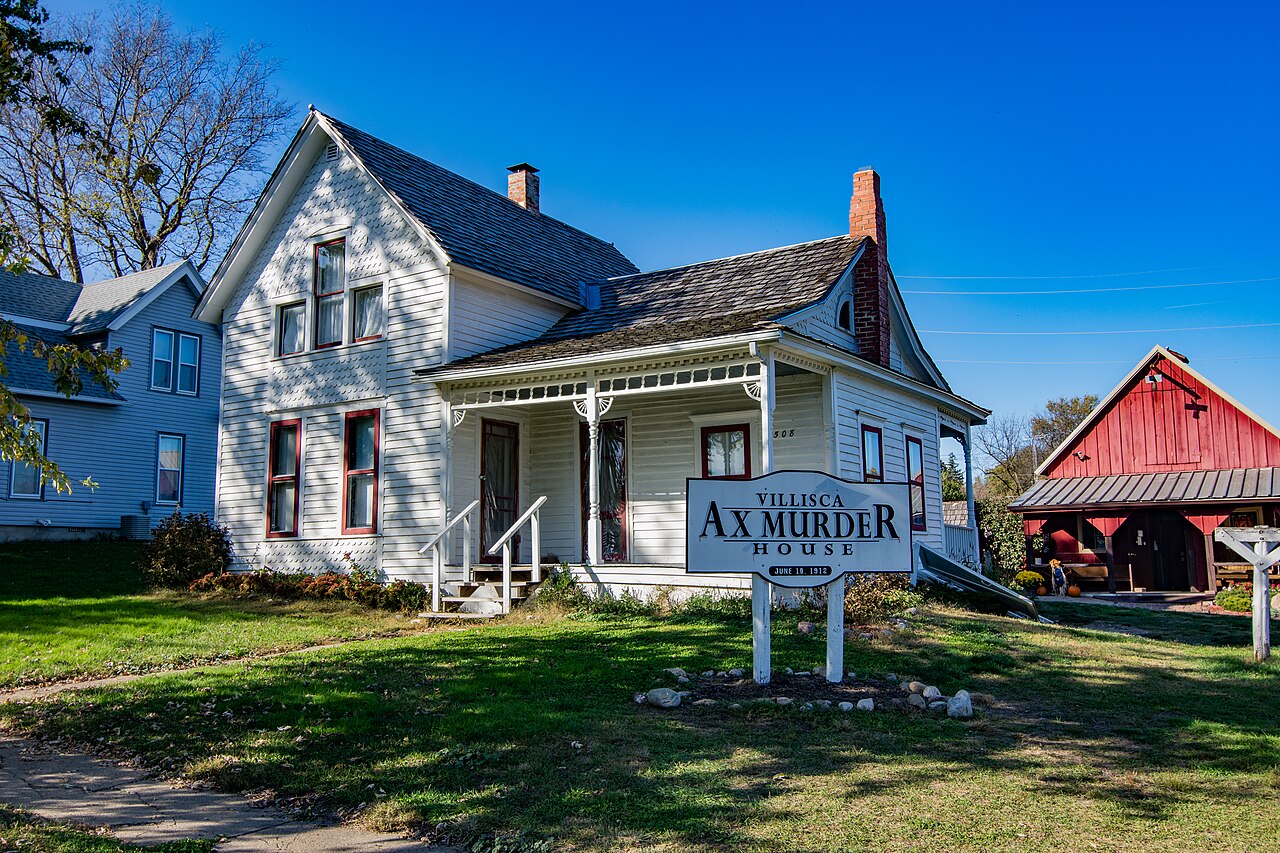
[IMAGE: A small white two-storey wooden house in Villisca, Iowa] (Jason McLaren / Wikimedia Commons, CC BY-SA 4.0; opens as a separate document)
![[IMAGE: A small white two-storey wooden house in Villisca, Iowa]](https://upload.wikimedia.org/wikipedia/commons/thumb/d/d5/Josiah_B._and_Sara_Moore_House_-_NRHP97001471_-_Villisca_-_Montgomery_County_-_Iowa_-10-23-2016.jpg/1280px-Josiah_B._and_Sara_Moore_House_-_NRHP97001471_-_Villisca_-_Montgomery_County_-_Iowa_-10-23-2016.jpg)
Villisca, in south-western Iowa, was a busy little town in 1912: a railway stop with a few thousand residents, shops and churches. Its name is often said to mean "pretty place".
On the evening of Sunday 9 June, the town held a Children's Day programme at the Presbyterian church. Among the families attending were Josiah Moore, a well-known local businessman, his wife Sarah, and their four children: Herman, Katherine, Boyd and Paul, aged between eleven and five. Two young friends of Katherine's, the sisters Lena and Ina Stillinger, came home with them to spend the night.
The next morning, the Moore house was silent. No one came out to do the chores. A neighbour, worried, called Josiah's brother, who unlocked the door.
All eight people inside had been killed during the night, with an axe that belonged to the family.
A ruined crime scene
What happened next made the case almost impossible to solve. As word spread, crowds came to the house. Before the authorities had control of the scene, a great many townspeople — by some accounts hundreds — had walked through it, touching things and, according to some reports, taking souvenirs.
Investigators did record some details: curtains drawn throughout the house, and some windows covered with clothing, as if the killer had wanted no one to see in. The killer seemed to have stayed in the house for some time after the attack.
In an age before fingerprint databases and DNA, a trampled crime scene meant the truth might be lost forever.
Suspects
Many people were suspected. A local businessman and political rival of Josiah's was accused by a private detective, and the accusations divided the town for years. Some investigators suspected a travelling serial killer, pointing to similar attacks in other towns in the Midwest around the same time.
The man who was eventually charged was the Reverend George Kelly, a travelling preacher who had attended the Children's Day service and left town early the next morning. He later gave a confession, which he withdrew, saying it had been obtained under pressure.
He was tried twice, in 1917. The first jury could not agree. The second acquitted him.
FACT Established by documentary or physical evidence.
What's documented
The victims, the date, the trials and their outcomes are on the record.
SPECULATION Possible, unproven, and labelled so you can enjoy it responsibly.
What's unknown
Who committed the crime, and why, has never been established. Theories about a travelling killer are possible but unproven.
The house today
The Moore house still stands. In the 1990s it was bought and restored to how it looked in 1912, without plumbing or electricity, and it was added to the National Register of Historic Places. It is now open for tours — and has a reputation, among some visitors, for being haunted.
It is worth remembering, amid the ghost stories, that eight real people lived and died there, six of them children, and that their families never got an answer.
You learned this today!!! YOU LEARNED THIS TODAY !!!
- On the night of 9–10 June 1912, eight people were killed in a house in Villisca, Iowa: Josiah and Sarah Moore, their four children, and two young sisters who were staying the night.
- Hundreds of people walked through the house before it was secured, destroying evidence.
- A travelling preacher, the Reverend George Kelly, was tried twice; the first trial ended with a hung jury and the second with an acquittal.
- Nobody was ever convicted, and the case remains unsolved.
- The house was restored in the 1990s and is listed on the National Register of Historic Places.
One more thing
The shortest scheduled passenger flight in the world, between two Orkney islands, is often over in under two minutes.
→ Read something elseSources & further reading
- Villisca axe murders, Wikipedia
- Josiah B. and Sarah Moore House, US National Register of Historic Places
StoneRed separates fact, hypothesis and speculation. Spotted an error? We'd genuinely like to know.
If you liked this…
 Cold Cases · The Strange Case
The Footprints at Hinterkaifeck
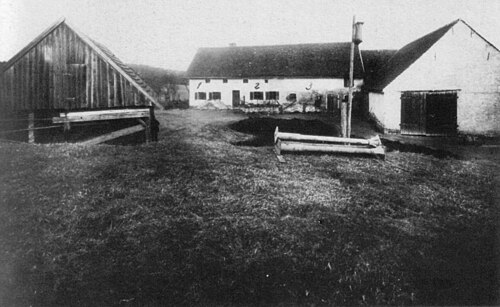
Before six people were killed on a remote Bavarian farm in 1922, the farmer found footprints in the snow leading to his house — and none leading away. The case was never solved.
The connection: A strikingly similar crime, ten years later, on a farm in Germany.
Cold Cases · The Strange Case
The Footprints at Hinterkaifeck
Before six people were killed on a remote Bavarian farm in 1922, the farmer found footprints in the snow leading to his house — and none leading away. The case was never solved.
The connection: A strikingly similar crime, ten years later, on a farm in Germany.
 Mysteries · The Theory
The Colony That Vanished
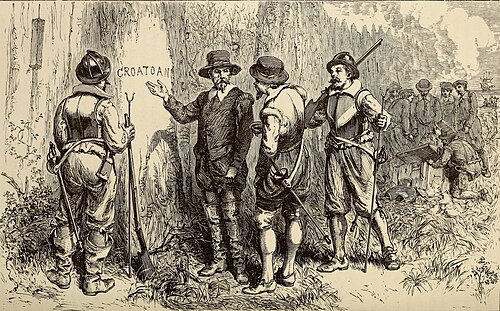
In 1590, John White returned to the English settlement on Roanoke Island to find everyone gone. The only clue was a single word carved into a post — "CROATOAN".
The connection: Another place where the record simply stops.
Mysteries · The Theory
The Colony That Vanished
In 1590, John White returned to the English settlement on Roanoke Island to find everyone gone. The only clue was a single word carved into a post — "CROATOAN".
The connection: Another place where the record simply stops.
 Cold Cases · The Strange Case
The Man on Somerton Beach
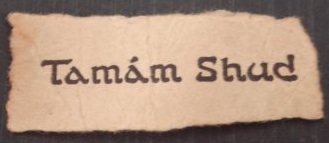
In 1948 a well-dressed stranger was found dead on an Australian beach, with the labels cut from his clothes and a scrap of poetry hidden in his pocket. It took 74 years to learn his name.
The connection: Another case where modern science has tried to reopen a very old file.
Cold Cases · The Strange Case
The Man on Somerton Beach
In 1948 a well-dressed stranger was found dead on an Australian beach, with the labels cut from his clothes and a scrap of poetry hidden in his pocket. It took 74 years to learn his name.
The connection: Another case where modern science has tried to reopen a very old file.