Cold Cases The Strange Case
The Man on Somerton Beach
In 1948 a well-dressed stranger was found dead on an Australian beach, with the labels cut from his clothes and a scrap of poetry hidden in his pocket. It took 74 years to learn his name.
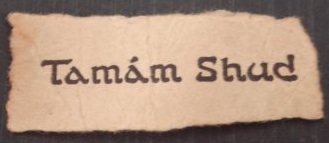
[IMAGE: A small torn scrap of printed paper reading Tamám Shud] (South Australia Police / Wikimedia Commons, Public domain; opens as a separate document)
![[IMAGE: A small torn scrap of printed paper reading Tamám Shud]](https://upload.wikimedia.org/wikipedia/commons/7/7d/Actual-tamam-shud.jpg)
Early on the morning of 1 December 1948, a man was found lying on the sand at Somerton Park beach, south of Adelaide, propped against the sea wall with his legs crossed. He was dead.
Some people had seen him there the evening before and assumed he was drunk or asleep. One witness thought they saw him raise his arm.
He was well dressed, in a suit and tie and polished shoes, fit and in his forties. In his pockets were an unused train ticket, a bus ticket, a comb, chewing gum, cigarettes and matches.
What was missing was anything that told you who he was. No wallet. No identification. And on his clothes, almost every label had been removed.
A death without a cause
The post-mortem found that his organs were congested, which pointed to poisoning. But no poison was ever found. In the 1940s, there were substances that would have been almost impossible to detect, and the pathologist strongly suspected one had been used. He couldn't prove it.
So the man was not only unnamed. Nobody could say how he had died, or whether it was suicide, murder or something else.
Tamám shud
Weeks later, examining his clothes again, investigators found a tiny pocket sewn inside the waistband of his trousers. Inside was a tightly rolled scrap of paper with two printed words: Tamám shud.
The phrase comes from Persian, and it means "ended" or "finished". It is the final phrase of the Rubáiyát of Omar Khayyám, a collection of poems that was hugely popular in English translation — poems about the shortness of life and the pleasures of the moment.
The only thing he carried that might explain him was the word "finished".
In 1949, after the story appeared in the newspapers, a man came forward with a copy of the Rubáiyát. He said he had found it in the back of his car, parked near the beach, around the time of the death. The last page was torn out. The torn edge matched the scrap.
In the back of the book were faint pencil marks: a phone number, and five lines of capital letters.
The phone number belonged to a nurse who lived a few hundred metres from where the man was found. When shown a plaster bust of him, she reportedly appeared shaken. She said she did not know him.
A suitcase left at Adelaide railway station the day before the death was also linked to him. It, too, had labels removed.
Seventy-four years
The man was buried in 1949 under a headstone that read "Here lies the unknown man who was found at Somerton Beach". For decades, people left flowers. Theories multiplied: a spy, a jilted lover, a smuggler.
In 2021, his body was exhumed. Using DNA from strands of hair caught in the plaster bust, the researcher Derek Abbott and the forensic genealogist Colleen Fitzpatrick built a family tree. In July 2022, they announced a name: Carl "Charles" Webb, an electrical engineer from Melbourne, born in 1905.
FACT Established by documentary or physical evidence.
What's known
The circumstances of the discovery, the hidden scrap and the book with the code are well documented. The 2022 identification was based on DNA genealogy and was widely reported; South Australian police said at the time that it had not yet been formally confirmed by them.
SPECULATION Possible, unproven, and labelled so you can enjoy it responsibly.
What's still a mystery
Why he went to Adelaide, how he died, what the code means and what connected him to the woman whose phone number was in the book — all of that remains unknown.
You learned this today!!! YOU LEARNED THIS TODAY !!!
- On 1 December 1948, a man was found dead on Somerton beach near Adelaide, South Australia, with nothing to identify him.
- A tiny scrap of paper reading "Tamám shud" was found in a hidden pocket of his trousers. It had been torn from a copy of the Rubáiyát of Omar Khayyám.
- The matching book was later found, with faint pencilled letters in the back that appear to be a code. It has never been convincingly deciphered.
- How he died has never been established.
- In 2022, researchers announced a DNA-based identification: Carl "Charles" Webb, an electrical engineer from Melbourne.
One more thing
Koalas have fingerprints so similar to human ones that they can be hard to tell apart under a microscope.
→ Read something elseSources & further reading
- Tamam Shud case, Wikipedia
- Abbott, Derek. Research on the Somerton Man, University of Adelaide
StoneRed separates fact, hypothesis and speculation. Spotted an error? We'd genuinely like to know.
If you liked this…
 Cold Cases · The Strange Case
The Woman in Ice Valley
In 1970, hikers in Norway found the burned body of a woman nobody could identify. She had travelled under at least eight false names. Half a century later, we still don’t know who she was.
The connection: Another stranger with the labels removed, and a code in a notebook.
Cold Cases · The Strange Case
The Woman in Ice Valley
In 1970, hikers in Norway found the burned body of a woman nobody could identify. She had travelled under at least eight false names. Half a century later, we still don’t know who she was.
The connection: Another stranger with the labels removed, and a code in a notebook.
 Mysteries · The Theory
The Book Nobody Can Read
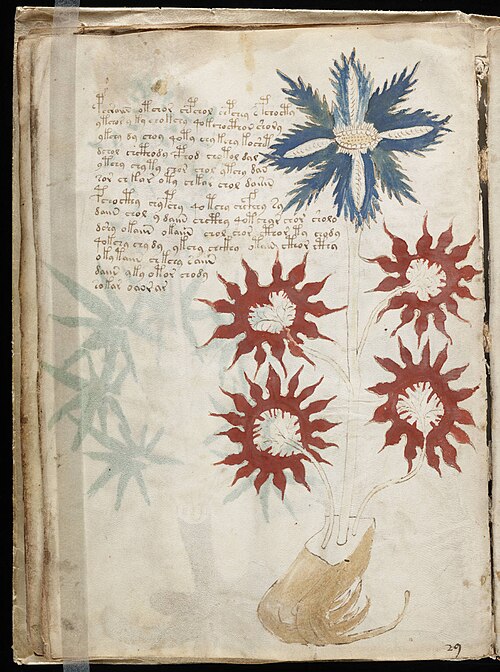
Six centuries old, written in an unknown script, illustrated with plants that don't exist. The Voynich Manuscript has defeated wartime codebreakers, linguists and computers. Here is what we actually know.
The connection: Another text that has defeated every code-breaker who tried.
Mysteries · The Theory
The Book Nobody Can Read
Six centuries old, written in an unknown script, illustrated with plants that don't exist. The Voynich Manuscript has defeated wartime codebreakers, linguists and computers. Here is what we actually know.
The connection: Another text that has defeated every code-breaker who tried.
 Cold Cases · The Story
The Cipher That Took 51 Years
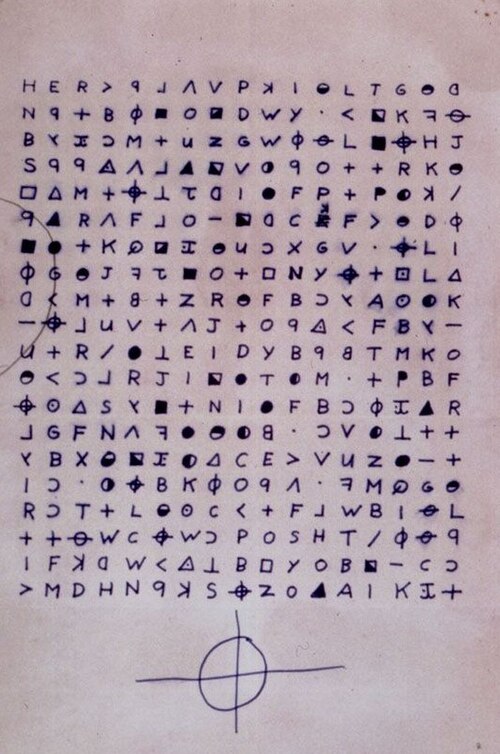
In 1969, a killer mailed a page of 340 strange symbols to a San Francisco newspaper. For half a century, nobody could read it. In 2020, three amateurs finally did.
The connection: A code that did, finally, give up its secret.
Cold Cases · The Story
The Cipher That Took 51 Years
In 1969, a killer mailed a page of 340 strange symbols to a San Francisco newspaper. For half a century, nobody could read it. In 2020, three amateurs finally did.
The connection: A code that did, finally, give up its secret.