Space The Deep Dive
The Invisible Pull on Our Galaxy
Our galaxy, and thousands of others around it, are moving towards a region of space hidden behind the Milky Way. Astronomers call it the Great Attractor. For decades, they couldn't see what was pulling.
Right now, as you read this, you are moving very fast. Earth spins on its axis. It orbits the Sun. The Sun orbits the centre of the Milky Way. And the Milky Way itself is moving through space, along with its neighbouring galaxies, at hundreds of kilometres per second.
Where are we going? For decades, astronomers have been trying to find out. Part of the answer is something called the Great Attractor.
Moving galaxies
In the 20th century, astronomers discovered that the universe is expanding. Galaxies far away are moving away from us, and the further away they are, the faster they recede. This is known as the Hubble flow.
But galaxies don't move only with the expansion. They are also pulled by the gravity of their neighbours. These extra motions are called peculiar velocities. By measuring them, astronomers can map where the mass in the universe is, including mass they can't see directly.
Something out there was pulling on thousands of galaxies. The trouble was, nobody could see it.
The Seven Samurai
In the 1980s, a team of seven astronomers studied the motions of hundreds of elliptical galaxies. They were nicknamed the "Seven Samurai", after the classic Japanese film. In 1986 and 1987, they reported that the galaxies in our region of the universe were streaming in a particular direction, toward a point in the sky in the region of the constellations Centaurus and Norma.
They concluded there must be an enormous concentration of mass in that direction, roughly 150 to 250 million light-years away, pulling the galaxies toward it. The astronomer Alan Dressler called it the Great Attractor.
FACT Established by documentary or physical evidence.
Behind the Milky Way
The Great Attractor lies behind the plane of our own galaxy. From Earth, that region of the sky is crowded with stars and thick clouds of dust, which block the view of galaxies beyond. Astronomers call it the Zone of Avoidance.
Looking through the dust
To see what lies behind the Milky Way, astronomers used X-rays, infrared and radio telescopes, which can see through dust better than visible light.
They found a huge cluster of galaxies in the right area, called the Norma Cluster. It contains thousands of galaxies and is one of the most massive clusters nearby. Other groups of galaxies were found around it. Together, they help explain the Great Attractor's pull.
Laniakea
In 2014, a team led by the astronomer R. Brent Tully published a map of the motions of thousands of galaxies around us. They defined a vast structure, a supercluster of about 100,000 galaxies, stretching around 500 million light-years across. Within it, galaxies flow toward a common centre — the region of the Great Attractor.
They named the supercluster Laniakea, from Hawaiian words meaning "immense heaven", in honour of Polynesian navigators who used the stars to cross the Pacific.
The Milky Way is near the edge of Laniakea.
Beyond the Great Attractor
The Great Attractor is not the end of the story. Further away, about 650 million light-years from us, lies the Shapley Supercluster, the largest concentration of galaxies in our part of the universe. Astronomers think it also pulls on the Milky Way and the Great Attractor.
In 2017, researchers reported finding a "dipole repeller" — a large region with fewer galaxies than average, in the opposite direction. Because it has less mass than its surroundings, it acts as if it is pushing galaxies away. Our motion through space seems to be explained by both a pull toward dense regions and a push away from emptier ones.
FACT Established by documentary or physical evidence.
Fast travellers
The Local Group of galaxies, which includes the Milky Way and the Andromeda Galaxy, is moving at about 600 kilometres per second relative to the cosmic microwave background, the faint glow left over from the Big Bang.
Where are we going?
Will we ever reach the Great Attractor? Probably not. The expansion of the universe is accelerating, driven by a mysterious force called dark energy. Over billions of years, it may pull the larger structures apart, so that the Laniakea supercluster never fully comes together.
But the Great Attractor is still a reminder that we live in a universe of motion. Even when everything seems still, we are part of a vast cosmic flow, pulled by structures we can barely see.
You learned this today!!! YOU LEARNED THIS TODAY !!!
- The Great Attractor is a region of space toward which the Milky Way and thousands of nearby galaxies appear to be moving.
- It lies roughly 150 to 250 million light-years away, in the direction of the constellations Centaurus and Norma.
- It is hard to observe because it lies behind the plane of the Milky Way, where dust and stars block the view.
- Its existence was inferred in the 1980s from the motions of galaxies, by a team nicknamed the Seven Samurai.
- It is now seen as the gravitational centre of a vast supercluster of galaxies named Laniakea.
One more thing
There are hundreds of liquid lakes hidden beneath the ice of Antarctica.
→ Read something elseSources & further reading
- Great Attractor, Wikipedia
- Tully, R. B. et al. The Laniakea supercluster of galaxies, Nature, 2014
- Dressler, A. et al. Spectroscopy and photometry of elliptical galaxies: a large-scale streaming motion in the local universe, Astrophysical Journal Letters, 1987
StoneRed separates fact, hypothesis and speculation. Spotted an error? We'd genuinely like to know.
If you liked this…
 Space · The Theory
Where Is Everybody?
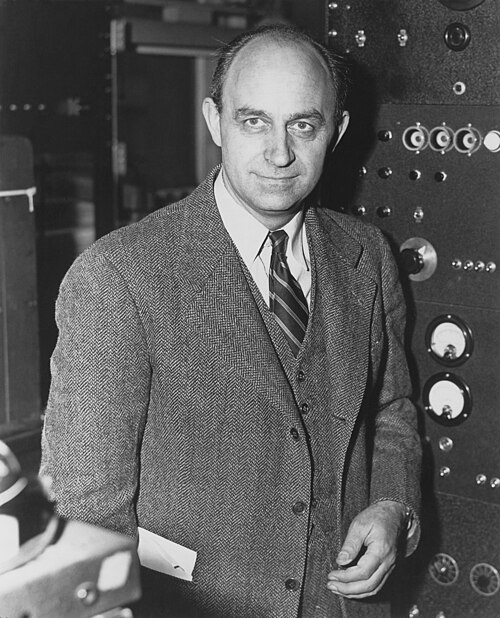
Over lunch in 1950, the physicist Enrico Fermi asked a simple question about aliens. Seventy-five years later, it's still one of the most unsettling questions in science.
The connection: Another big question about the universe.
 Modern World · The Strange Case
Henry Ford's Lost City in the Jungle
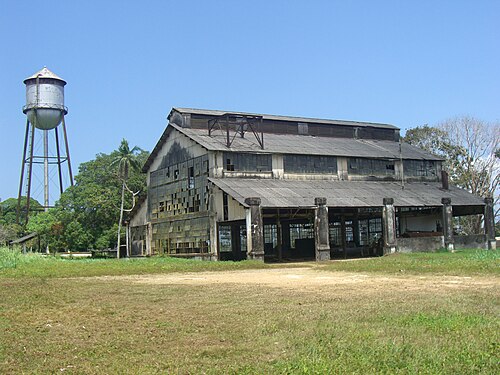
In 1928, the richest industrialist in America tried to build a Midwestern factory town in the Amazon rainforest — complete with square dancing, golf and a ban on alcohol. The rainforest won.
The connection: A completely different corner of the archive: modern world.
 Music · The Story
The Band That Let Fans Record Everything
Most bands banned fans from recording their concerts. The Grateful Dead gave them their own section of the arena. The result was a vast, fan-made archive of thousands of live shows — traded through the post for decades and now free online.
The connection: A completely different corner of the archive: music.