Modern World The Strange Case
Henry Ford's Lost City in the Jungle
In 1928, the richest industrialist in America tried to build a Midwestern factory town in the Amazon rainforest — complete with square dancing, golf and a ban on alcohol. The rainforest won.
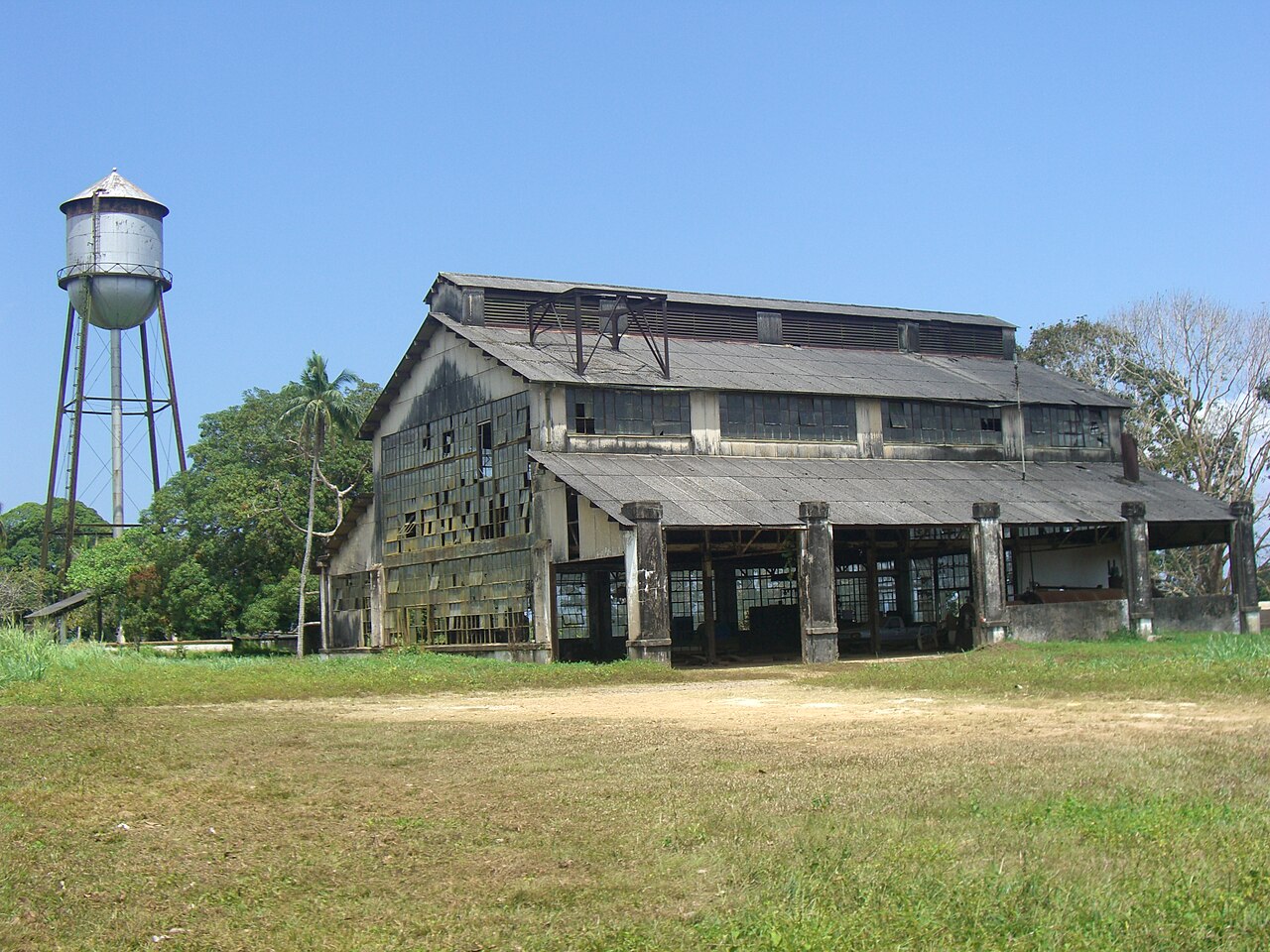
[IMAGE: The water tower and old warehouse at Fordlândia in the Brazilian Amazon] (Amit Evron - User: (WT-shared) Amitevron at wts wikivoyage / Wikimedia Commons, CC BY-SA 3.0; opens as a separate document)

In the 1920s, Henry Ford had a problem. His cars needed rubber — for tyres, hoses, gaskets — and the world's rubber supply was controlled largely by British and Dutch plantations in Asia.
His solution was characteristically enormous. In 1928, the Ford Motor Company acquired a vast area of land along the Tapajós River in the Brazilian Amazon. Ford would grow his own rubber. And he would build a town to do it.
He called it Fordlândia.
A Midwest town in the rainforest
Ford didn't just plan a plantation. He planned a civilisation. Ships brought in materials to build a hospital, a power plant, a water tower, a sawmill, and rows of American-style houses. There was a golf course, a swimming pool and a dance hall.
And there were rules. Alcohol was banned. Workers were expected to eat American-style food — brown rice, whole-wheat bread, canned peaches, oatmeal — and to keep the hours of an American factory, working through the heat of midday. There were organised activities including poetry readings and square dancing.
Henry Ford wasn't only trying to grow rubber. He was trying to grow Michigan in the Amazon.
The rainforest fights back
Things went wrong almost immediately.
Many of the managers knew little about tropical agriculture. Rubber trees, which grow scattered among other species in the wild, were planted close together in neat rows — perfect conditions for disease and pests to spread. South American leaf blight and insects ravaged the plantations.
Workers resented the rules, the food and the conditions. In 1930, a riot broke out in the cafeteria, and workers wrecked parts of the town.
FACT Established by documentary or physical evidence.
The end
In 1945, the Ford Motor Company sold the land back to the Brazilian government, at a large loss. Parts of Fordlândia still stand today: American-style houses, a rusting water tower, and a few hundred residents living among the ruins of an industrial dream.
You learned this today!!! YOU LEARNED THIS TODAY !!!
- In 1928, Henry Ford acquired land in the Brazilian Amazon to grow rubber for his cars.
- The town, Fordlândia, was built to resemble a Midwestern American town.
- Workers were subjected to strict rules, including a ban on alcohol and American-style meals.
- Rubber trees planted close together were devastated by leaf blight and pests.
- Ford never visited, and the project was sold back to Brazil in 1945 at a heavy loss.
One more thing
Wombats produce cube-shaped droppings.
→ Read something elseSources & further reading
- Fordlândia, Wikipedia
- Grandin, Greg. Fordlandia: The Rise and Fall of Henry Ford's Forgotten Jungle City, Metropolitan Books, 2009
StoneRed separates fact, hypothesis and speculation. Spotted an error? We'd genuinely like to know.
If you liked this…
 Nature · The Story
The Banana Your Grandparents Ate
The banana in your kitchen isn't the one people ate in 1940. That one was wiped out by a fungus — and the replacement is under threat too.
The connection: Another monoculture brought down by nature.
 Geography · The Deep Dive
The Land No Country Wants
Between Egypt and Sudan lies a patch of desert larger than many cities that neither country will claim. The reason is a lesson in how borders really work.
The connection: Big plans meet stubborn geography.
 Economics · The Theory
When a Tulip Cost as Much as a House
Tulip mania is the most famous financial bubble in history — a tale of Dutch merchants ruined by flower bulbs. The real story is stranger, smaller, and much more interesting.
The connection: Money can buy almost anything — except reality.