Music The Story
The Mixtape We Sent to the Stars
In 1977, NASA bolted a gold-plated record to each Voyager spacecraft — music, greetings and sounds of Earth, for anyone who might find it. Chuck Berry made the cut. So did a kiss.
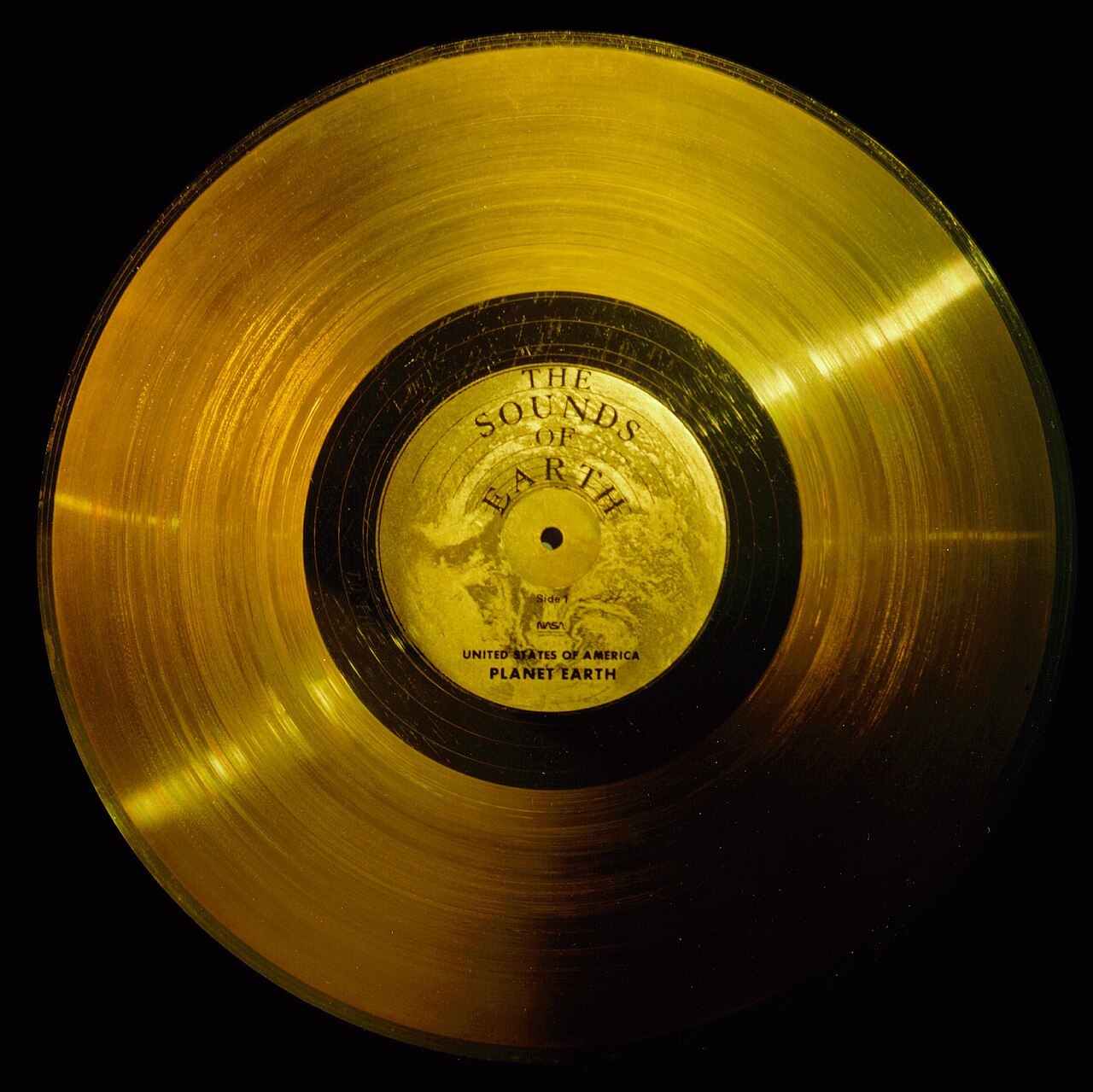
[IMAGE: The gold-plated Voyager record cover engraved with instructions for playing it] (NASA / Wikimedia Commons, Public domain; opens as a separate document)
![[IMAGE: The gold-plated Voyager record cover engraved with instructions for playing it]](https://upload.wikimedia.org/wikipedia/commons/thumb/7/7b/The_Sounds_of_Earth_-_GPN-2000-001976.jpg/1280px-The_Sounds_of_Earth_-_GPN-2000-001976.jpg)
Somewhere beyond the edge of our solar system, two small spacecraft are heading out into interstellar space. Each carries a 12-inch gold-plated copper record, a cartridge and a needle.
It's a message for anyone — or anything — that might one day find it.
The committee
In 1977, NASA asked astronomer Carl Sagan to chair a committee to decide what should go on the record. They had about a year. The record would have to explain who we are to beings who might not have ears, or eyes, or anything resembling a record player.
What's on it
Greetings in 55 languages, from ancient Akkadian to Wu Chinese. The English greeting, spoken by a child, says: "Hello from the children of planet Earth."
Sounds of Earth: wind, rain, surf, thunder, crickets, birdsong, whales, a train, a tractor, laughter, footsteps, a heartbeat — and a kiss.
Music: 27 pieces, about 90 minutes in all. Bach, Mozart, Beethoven and Stravinsky. Javanese gamelan, Peruvian panpipes, Navajo night chant, Indian raga, a Georgian choir, Senegalese percussion. Blind Willie Johnson's haunting Dark Was the Night, Cold Was the Ground. And Chuck Berry's Johnny B. Goode.
If aliens ever play it, one of their first impressions of humanity will be a rock-and-roll guitar riff.
Images: 115 pictures encoded in analogue form, showing everything from DNA to supermarkets to the Golden Gate Bridge — including Ansel Adams's photograph of the Tetons.
FACT Established by documentary or physical evidence.
How to play it
The record's cover is engraved with diagrams explaining how to play it and at what speed, using the timing of a hydrogen atom's transition as a unit. It also shows Earth's location relative to 14 pulsars.
You learned this today!!! YOU LEARNED THIS TODAY !!!
- Each of the two Voyager spacecraft, launched in 1977, carries a gold-plated copper record called the Golden Record.
- The contents were chosen by a committee chaired by Carl Sagan.
- The record includes 27 pieces of music, from Bach and Beethoven to Chuck Berry's "Johnny B. Goode".
- It also holds greetings in 55 languages and sounds such as rain, a kiss and a heartbeat.
- The record's cover has instructions for playing it, written in scientific diagrams.
One more thing
There are more possible games of chess than there are atoms in the observable universe.
→ Read something elseSources & further reading
- Voyager Golden Record, Wikipedia
- The Golden Record, NASA Jet Propulsion Laboratory
- Sagan, Carl et al. Murmurs of Earth: The Voyager Interstellar Record, Random House, 1978
StoneRed separates fact, hypothesis and speculation. Spotted an error? We'd genuinely like to know.
If you liked this…
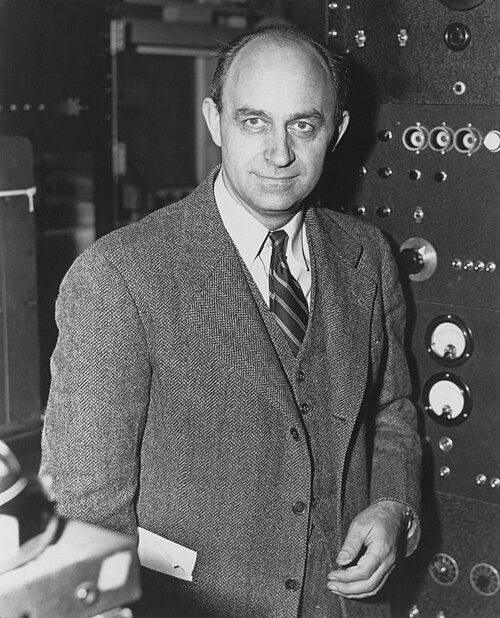 Space · The Theory
Where Is Everybody?
Over lunch in 1950, the physicist Enrico Fermi asked a simple question about aliens. Seventy-five years later, it's still one of the most unsettling questions in science.
The connection: A message in a bottle for a galaxy that may be empty.
Space · The Theory
Where Is Everybody?
Over lunch in 1950, the physicist Enrico Fermi asked a simple question about aliens. Seventy-five years later, it's still one of the most unsettling questions in science.
The connection: A message in a bottle for a galaxy that may be empty.
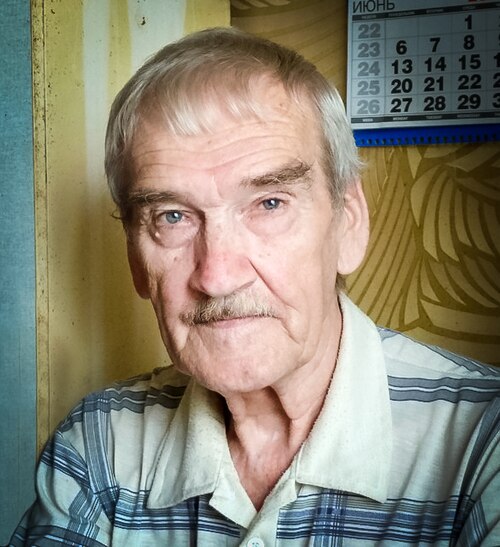 People · The Person
The Man Who Didn't Believe the Computer
Just after midnight on 26 September 1983, a Soviet satellite system reported that American nuclear missiles were on their way. The officer on duty had minutes to decide what to tell Moscow.
The connection: A completely different corner of the archive: people.
People · The Person
The Man Who Didn't Believe the Computer
Just after midnight on 26 September 1983, a Soviet satellite system reported that American nuclear missiles were on their way. The officer on duty had minutes to decide what to tell Moscow.
The connection: A completely different corner of the archive: people.
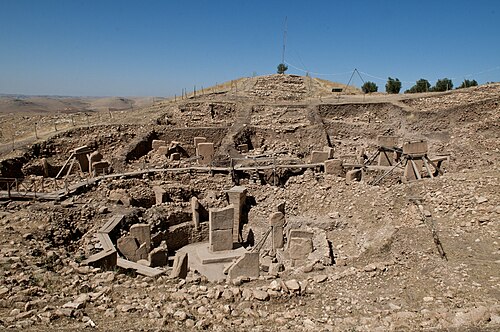 Ancient World · The Deep Dive
The Temple Older Than Farming
On a hilltop in Turkey stand giant carved stone pillars that are around 11,000 years old — older than Stonehenge, older than writing, and possibly older than agriculture itself.
The connection: A completely different corner of the archive: ancient world.
Ancient World · The Deep Dive
The Temple Older Than Farming
On a hilltop in Turkey stand giant carved stone pillars that are around 11,000 years old — older than Stonehenge, older than writing, and possibly older than agriculture itself.
The connection: A completely different corner of the archive: ancient world.