Weird The Strange Case
The Summer Strasbourg Couldn't Stop Dancing
In July 1518, a woman stepped into a street and began to dance. Within weeks, dozens — perhaps hundreds — had joined her, and nobody could make them stop.
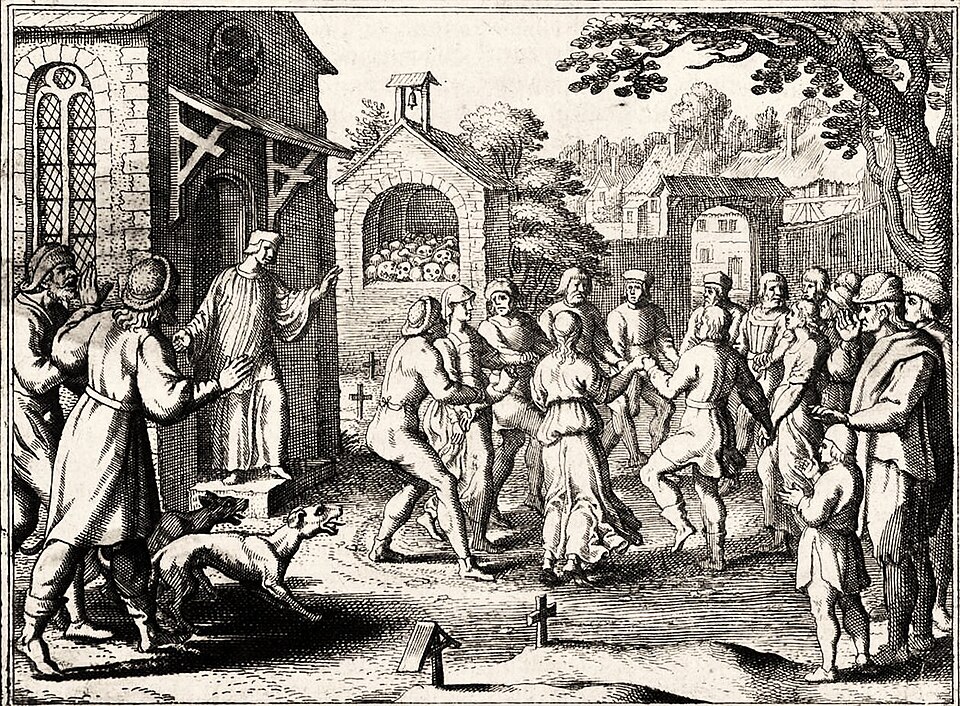
[IMAGE: An early engraving of pilgrims seized by dancing mania, after a drawing by Pieter Bruegel the Elder] (Unknown author / Wikimedia Commons, Public domain; opens as a separate document)
![[IMAGE: An early engraving of pilgrims seized by dancing mania, after a drawing by Pieter Bruegel the Elder]](https://upload.wikimedia.org/wikipedia/commons/thumb/a/a8/Dancingplague2_%28alt%29.jpg/960px-Dancingplague2_%28alt%29.jpg)
Sometime around 14 July 1518, in the city of Strasbourg, a woman known to history as Frau Troffea walked into a narrow street and started to dance.
There was no music. There was no festival. She simply danced — and kept dancing, according to the chronicles, for days.
Within a week, dozens of other people had joined her. By August, contemporary accounts speak of hundreds. They danced in the streets and in the squares, sweating, exhausted, apparently unable to stop.
It sounds like a fairy tale. It isn't. The dancing plague of 1518 is recorded in physicians' notes, sermons, city council records and chronicles. Something really happened in Strasbourg that summer.
The question is what.
A city on the edge
Strasbourg in 1518 was a prosperous free city of the Holy Roman Empire. It was also a city under enormous strain.
The years before had brought crop failures, soaring bread prices and hunger. Smallpox, syphilis and leprosy were circulating. A mysterious and terrifying "sweating sickness" had swept parts of Europe. The poor were desperate, and the desperate were frightened.
And people in the region believed in something specific and terrible: that St Vitus, if angered, could curse sinners with a compulsion to dance.
That belief matters. Keep it in mind.
The cure was more dancing
At first, the city's physicians didn't blame demons or saints. They declared that the dancers were suffering from "hot blood" — a natural condition in the medicine of the day — and that the way to cure it was to let them dance it out.
So the authorities did something that sounds unbelievable now. They encouraged it.
Guildhalls were opened. A wooden stage was reportedly built. Musicians were hired to play drums, fifes and other instruments, and strong men were paid to keep the dancers upright when their legs gave way.
The idea was simple: dance until the fever breaks. Instead, the crowd of dancers grew.
It was the worst possible prescription. If the dancing was spreading through suggestion and spectacle, the city had just built it a stage.
The reversal
As the weeks passed and the dancers collapsed, the authorities changed their minds entirely.
The cause, they decided, wasn't hot blood but a holy punishment. Public music and dancing were banned. Gambling and prostitution were cracked down on as the kind of sin that might have provoked the saint. And the afflicted were loaded onto wagons and taken to a shrine dedicated to St Vitus in the hills above Saverne, where they were given small crosses and red shoes and led around the altar.
Over the following weeks, the epidemic faded.
How many died?
This is where the story gets slippery, and where a lot of retellings go wrong.
You will often read that "fifteen people a day" danced themselves to death. That figure comes from a chronicle written later, and it is not supported by the surviving records of the city council, which describe the epidemic in detail but don't record mass deaths.
It's plausible that some people died — of exhaustion, heart failure or stroke — after days of dancing in summer heat. But we simply don't know how many. Any precise number you see should be treated with suspicion.
FACT Established by documentary or physical evidence.
What we know
Physicians' notes, sermons, city council records and chronicles all describe a dancing epidemic in Strasbourg in the summer of 1518, the authorities' attempts to manage it, and the pilgrimage to the shrine of St Vitus.
So what caused it?
Three explanations come up again and again. They are not equally good.
HYPOTHESIS A credible explanation that some experts support, not proven.
Ergot poisoning
Ergot is a fungus that grows on damp rye and contains compounds chemically related to LSD. Eating contaminated bread can cause hallucinations and convulsions. It's a tempting explanation — but historian John Waller points out that ergot also restricts blood flow to the limbs, making it very hard to see how victims could dance for days. Most researchers now consider it unlikely.
HYPOTHESIS A credible explanation that some experts support, not proven.
Mass psychogenic illness
This is the leading explanation. Under extreme stress, groups of people can develop real physical symptoms that spread by suggestion rather than by germs. In Strasbourg you had famine, disease, despair — and a widespread belief that St Vitus could make sinners dance. Waller argues that the dancers were in something like a trance state, and that the belief itself shaped the symptoms.
SPECULATION Possible, unproven, and labelled so you can enjoy it responsibly.
Deliberate religious ritual
Some have suggested that the dancers were members of an organised heretical sect performing a ritual. There's no documentary evidence for this, and it doesn't explain why the dancers appeared distressed rather than devout.
Why it still matters
It's easy to laugh at the city fathers of 1518 hiring a band to cure a dancing epidemic. But consider how they were thinking: they had a theory, they applied it, it made things worse, and they changed course. That is not so different from how medicine still works.
And mass psychogenic illness didn't stay in the 16th century. It has been documented in schools, factories and towns around the world in modern times, from fainting outbreaks to a laughing epidemic in 1960s Tanganyika.
The summer of 1518 is remembered as a mystery. In a way, it's something stranger: a reminder that the line between mind and body, and between one mind and the next, is far thinner than we like to think.
You learned this today!!! YOU LEARNED THIS TODAY !!!
- In July 1518, a dancing epidemic broke out in Strasbourg, then part of the Holy Roman Empire.
- City authorities first tried to cure it with more dancing, hiring musicians and setting aside guildhalls.
- Afflicted dancers were later taken to a shrine of St Vitus in the hills above Saverne.
- Reports of many deaths come from later chronicles and are not confirmed by surviving city records.
- The leading modern explanation is mass psychogenic illness amid famine, disease and fear of a saint's curse.
One more thing
Saturn is less dense than water.
→ Read something elseSources & further reading
- Waller, John. A Time to Dance, A Time to Die: The Extraordinary Story of the Dancing Plague of 1518, Icon Books, 2008
- Waller, John. A forgotten plague: making sense of dancing mania, The Lancet, 2009
- Dancing plague of 1518, Wikipedia
- Dancing mania, Wikipedia
StoneRed separates fact, hypothesis and speculation. Spotted an error? We'd genuinely like to know.
If you liked this…
 Psychology · The Question
Why Don't We Remember Being Babies?
You learned to walk, talk and recognise your own face — and you remember none of it. Science is finally starting to explain where those years went.
The connection: Both stories are about how the mind can do things its owner never decided to do.
Psychology · The Question
Why Don't We Remember Being Babies?
You learned to walk, talk and recognise your own face — and you remember none of it. Science is finally starting to explain where those years went.
The connection: Both stories are about how the mind can do things its owner never decided to do.
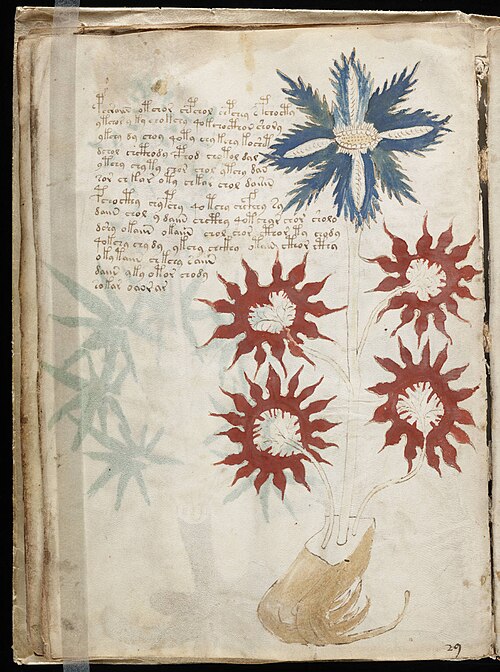 Mysteries · The Theory
The Book Nobody Can Read
Six centuries old, written in an unknown script, illustrated with plants that don't exist. The Voynich Manuscript has defeated wartime codebreakers, linguists and computers. Here is what we actually know.
The connection: Another late-medieval puzzle that has generated far more theories than evidence.
Mysteries · The Theory
The Book Nobody Can Read
Six centuries old, written in an unknown script, illustrated with plants that don't exist. The Voynich Manuscript has defeated wartime codebreakers, linguists and computers. Here is what we actually know.
The connection: Another late-medieval puzzle that has generated far more theories than evidence.
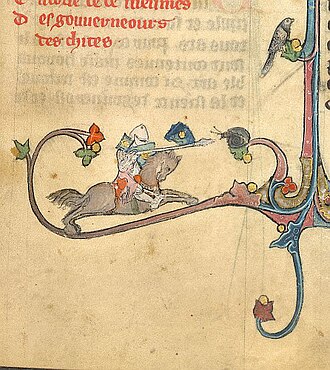 Art · The Rabbit Hole
Why Medieval Knights Keep Fighting Snails
Open certain 13th- and 14th-century manuscripts and you'll find armoured knights in desperate combat with garden snails. It's one of art history's best running jokes — and it goes much deeper than snails.
The connection: A completely different corner of the archive: art.
Art · The Rabbit Hole
Why Medieval Knights Keep Fighting Snails
Open certain 13th- and 14th-century manuscripts and you'll find armoured knights in desperate combat with garden snails. It's one of art history's best running jokes — and it goes much deeper than snails.
The connection: A completely different corner of the archive: art.