Space The Theory
Where Is Everybody?
Over lunch in 1950, the physicist Enrico Fermi asked a simple question about aliens. Seventy-five years later, it's still one of the most unsettling questions in science.
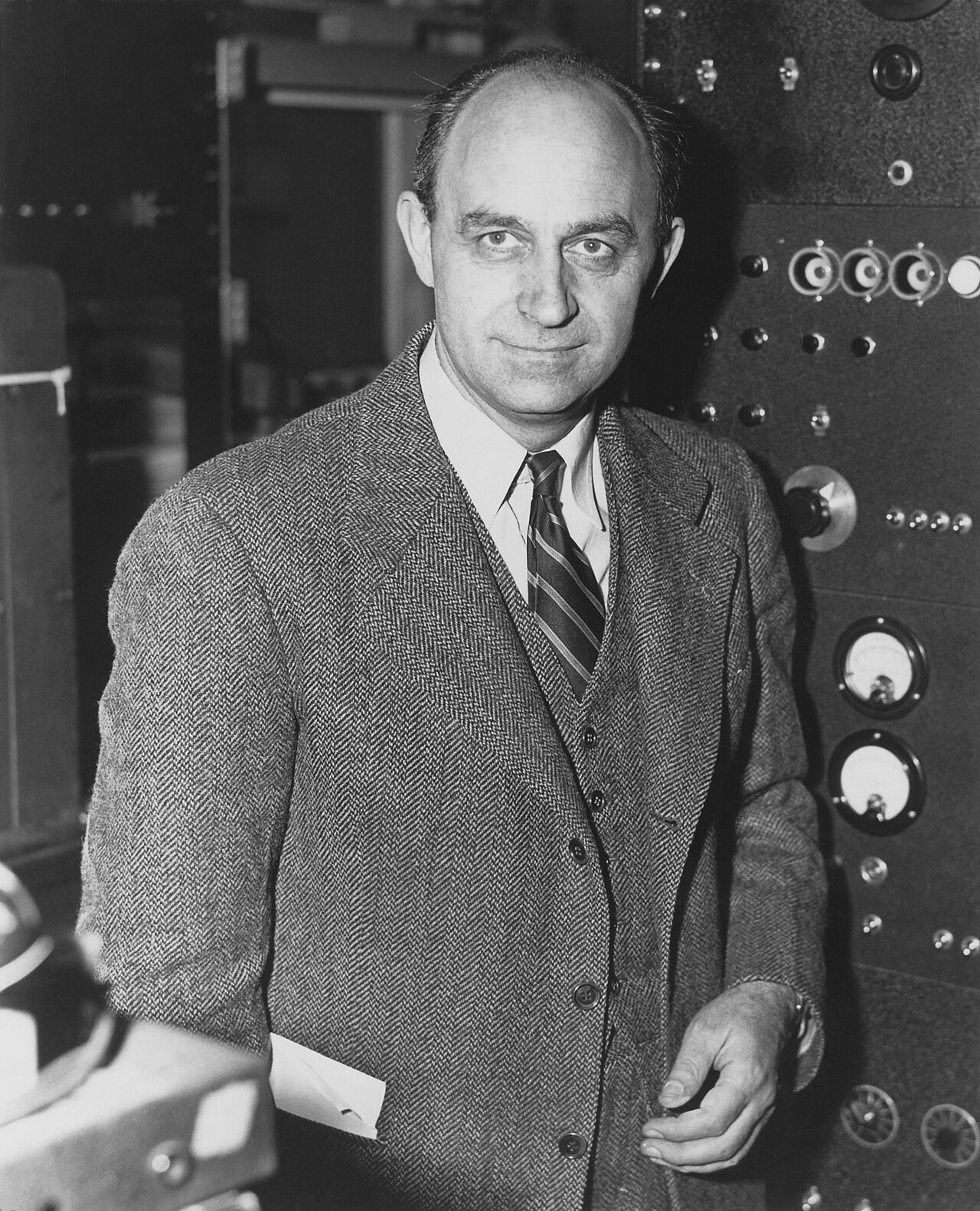
[IMAGE: Portrait of physicist Enrico Fermi] (Department of Energy-Office of Public Affairs, restored by Yann / Wikimedia Commons, Public domain; opens as a separate document)
![[IMAGE: Portrait of physicist Enrico Fermi]](https://upload.wikimedia.org/wikipedia/commons/thumb/d/d4/Enrico_Fermi_1943-49.jpg/1280px-Enrico_Fermi_1943-49.jpg)
In the summer of 1950, a group of physicists at Los Alamos were walking to lunch, chatting about a recent newspaper cartoon blaming aliens for missing rubbish bins. Over the meal, the conversation drifted to whether faster-than-light travel was possible.
Then Enrico Fermi — Nobel Prize winner, architect of the first nuclear reactor — suddenly asked a question that made the table laugh, and then go quiet.
"But where is everybody?"
The argument
Fermi's question can be laid out in a few steps.
Our galaxy contains a few hundred billion stars, and we now know many of them have planets. The galaxy is more than ten billion years old — much older than Earth. If even a small fraction of planets developed intelligent life, and even a small fraction of those built spacecraft or radio transmitters, then over billions of years someone should have spread across the galaxy, or at least left signs.
And yet: silence. No visitors. No confirmed signals. Nothing.
The universe looks big enough and old enough for aliens to be everywhere. So why don't we see anyone?
Possible answers
There are dozens of proposed solutions. They fall into a few families, and none is proven.
HYPOTHESIS A credible explanation that some experts support, not proven.
They're rare
Maybe life, or complex life, or intelligence, is far rarer than we assume. Earth's history includes many lucky breaks — a stable star, a large moon, plate tectonics, the long, strange step from simple cells to complex ones. Perhaps one of those steps almost never happens.
HYPOTHESIS A credible explanation that some experts support, not proven.
The Great Filter
Economist Robin Hanson proposed that somewhere between dead chemistry and galaxy-spanning civilisation, there's a step so hard that almost nothing gets through — a "Great Filter". The unsettling question is whether that filter is behind us (good news) or ahead of us (very bad news).
HYPOTHESIS A credible explanation that some experts support, not proven.
They're there, but we can't tell
Maybe civilisations don't last long, or don't broadcast, or communicate in ways we don't recognise. We've only been listening seriously for a few decades, over a tiny fraction of the sky and radio spectrum.
SPECULATION Possible, unproven, and labelled so you can enjoy it responsibly.
They're hiding — or watching
Ideas like the "zoo hypothesis" suggest advanced civilisations deliberately avoid contact. Fun to think about, impossible to test.
You learned this today!!! YOU LEARNED THIS TODAY !!!
- The Fermi paradox asks why we see no evidence of alien civilisations if the galaxy is old, vast and full of planets.
- It is named after physicist Enrico Fermi, who asked "Where is everybody?" over lunch at Los Alamos in 1950.
- The Drake equation, written by Frank Drake in 1961, lists the factors that would determine how many civilisations we might detect.
- The "Great Filter" idea suggests some step on the path to advanced civilisation is extremely hard to pass.
- There is no scientific consensus on the answer.
One more thing
Saturn is less dense than water.
→ Read something elseSources & further reading
- Fermi paradox, Wikipedia
- Drake equation, Wikipedia
- Hanson, Robin. The Great Filter — Are We Almost Past It?, 1998
- Webb, Stephen. If the Universe Is Teeming with Aliens… Where Is Everybody?, Springer, 2015
StoneRed separates fact, hypothesis and speculation. Spotted an error? We'd genuinely like to know.
If you liked this…
 Space · The Theory
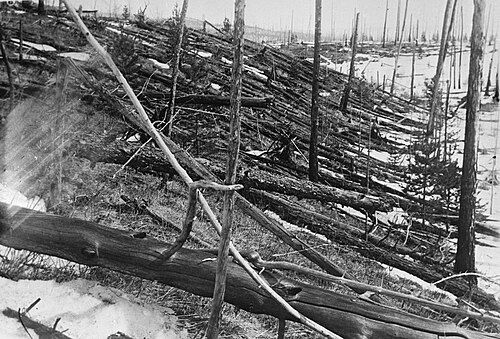
The Explosion That Flattened a Forest
In 1908, something exploded above a remote Siberian forest with the force of a large nuclear weapon. It flattened about 80 million trees. No crater was ever found.
The connection: The universe does send us things — just not messages.
Space · The Theory
The Explosion That Flattened a Forest
In 1908, something exploded above a remote Siberian forest with the force of a large nuclear weapon. It flattened about 80 million trees. No crater was ever found.
The connection: The universe does send us things — just not messages.
 Mysteries · The Theory
The Book Nobody Can Read
Six centuries old, written in an unknown script, illustrated with plants that don't exist. The Voynich Manuscript has defeated wartime codebreakers, linguists and computers. Here is what we actually know.
The connection: Would we even recognise a message if we found one?
Mysteries · The Theory
The Book Nobody Can Read
Six centuries old, written in an unknown script, illustrated with plants that don't exist. The Voynich Manuscript has defeated wartime codebreakers, linguists and computers. Here is what we actually know.
The connection: Would we even recognise a message if we found one?
 Ancient World · The Deep Dive
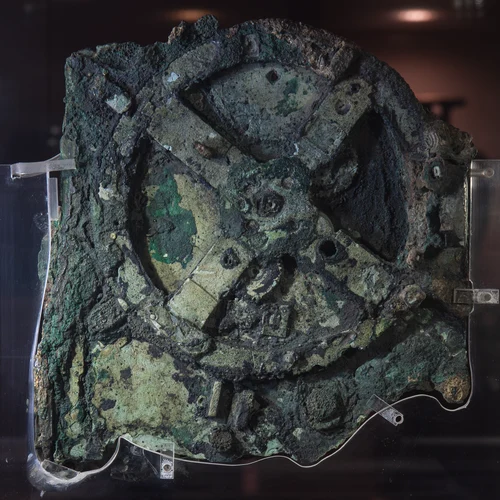
The 2,000-Year-Old Computer
In 1901, divers pulled a corroded lump of bronze from an ancient shipwreck. It turned out to be a geared machine for predicting the heavens — and nothing as complex would be built again for more than a thousand years.
The connection: A completely different corner of the archive: ancient world.
Ancient World · The Deep Dive
The 2,000-Year-Old Computer
In 1901, divers pulled a corroded lump of bronze from an ancient shipwreck. It turned out to be a geared machine for predicting the heavens — and nothing as complex would be built again for more than a thousand years.
The connection: A completely different corner of the archive: ancient world.