Cold Cases The Strange Case
The Hijacker Who Jumped Into the Rain
In 1971 a quiet man in a business suit hijacked a passenger jet, collected $200,000, and stepped out of the back of the plane into a storm at night. Nobody has seen him since.
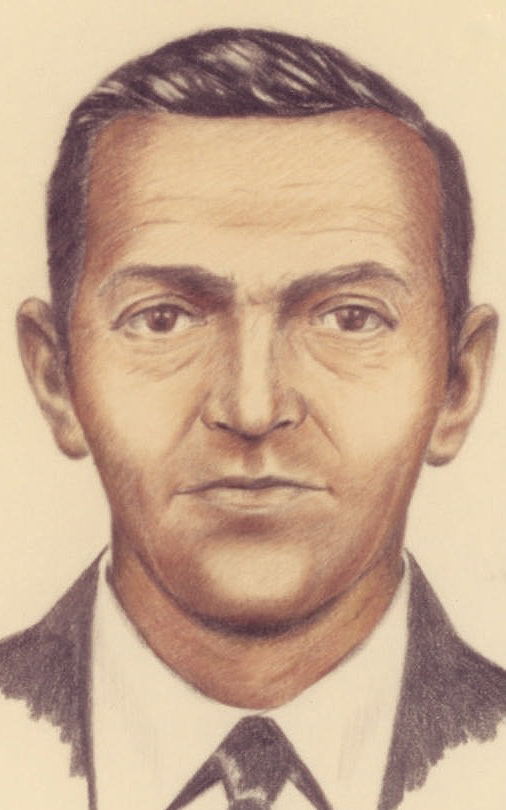
[IMAGE: FBI composite sketch of the hijacker known as D. B. Cooper, a man in a dark suit and tie] (FBI / Wikimedia Commons, Public domain; opens as a separate document)
![[IMAGE: FBI composite sketch of the hijacker known as D. B. Cooper, a man in a dark suit and tie]](https://upload.wikimedia.org/wikipedia/commons/9/99/CompositeB-FBI-1973.jpg)
On the afternoon before Thanksgiving in 1971, a man in a dark suit and a clip-on tie walked up to the Northwest Orient Airlines counter at Portland International Airport in Oregon. He bought a one-way ticket to Seattle, a thirty-minute flight. He paid cash. He gave his name as Dan Cooper.
He took seat 18C, at the back of the plane, ordered a bourbon and soda, and lit a cigarette. Shortly after take-off, he handed a note to a flight attendant.
She assumed he was giving her his phone number, and slipped it into her pocket unread. He leaned over and told her she'd better look at it.
The note said he had a bomb.
The quietest hijacking
He opened his briefcase just enough for her to see red cylinders and wires. Then, calmly, he dictated his demands: $200,000 in cash, four parachutes — two main and two reserve — and a fuel truck waiting in Seattle.
Most of the passengers never knew anything was wrong. The pilot announced a delay for a "minor mechanical difficulty", and the plane circled Seattle for about two hours while the FBI and the airline gathered the money and the parachutes.
Witnesses later described the hijacker as polite, even considerate. He asked for meals to be brought for the crew. He seemed to know a great deal about the aircraft — enough to know that a Boeing 727 had a set of stairs at the back that could be lowered in flight.
He wasn't trying to get to Cuba. He was trying to get out of the plane.
The jump
In Seattle, the passengers were exchanged for ten thousand twenty-dollar bills and four parachutes. The FBI had photographed the serial numbers of every note.
Then the plane took off again, with a skeleton crew, heading for Mexico City by way of a refuelling stop in Reno. Cooper gave precise instructions: fly at around 10,000 feet, slowly, with the landing gear down and the flaps partly extended. He sent the crew into the cockpit and closed the door.
At around 8:13 p.m., somewhere over the forests of south-western Washington, the crew felt a sudden change in pressure. The rear stairs had dropped. When the plane landed in Reno, the cabin was empty — apart from two parachutes he had left behind, and his tie.
He had jumped into the dark, into rain and wind, wearing a business suit and loafers, with a sack of cash.
The search
The FBI called the case NORJAK, for "Northwest hijacking". For years, soldiers and agents searched the area where he might have landed. They found nothing — no parachute, no body, no briefcase.
The name "D. B. Cooper" came from a mistake. Early in the investigation, police questioned a man named D. B. Cooper, who was quickly cleared. A reporter's error attached the initials to the hijacker, and they stuck.
What probably happened
Many investigators believe Cooper didn't survive. He jumped at night, in a storm, over rough, forested country, without proper gear. Some FBI agents have suggested he may not have been an experienced skydiver at all: one of the reserve parachutes he was given was a training dummy that had been sewn shut, and it was missing.
But without a body, no one can be sure.
FACT Established by documentary or physical evidence.
What's documented
The hijacking, the ransom, the jump and the money found at Tena Bar are all on the record. The FBI has published its case files.
SPECULATION Possible, unproven, and labelled so you can enjoy it responsibly.
What's guessed
Cooper's real name, whether he survived and what happened to the rest of the money are unknown. Over the decades, many people have been suggested as suspects; none has been proven.
The Cooper vane
The hijacking did change something permanent. After Cooper — and after several copycat hijackers tried the same trick — the authorities required a simple device on Boeing 727s: a small flap that stops the rear stairs from being lowered while the plane is flying. It's still known as the Cooper vane.
In 2016, after 45 years, the FBI announced it was ending its active investigation. The case, technically, remains open.
You learned this today!!! YOU LEARNED THIS TODAY !!!
- On 24 November 1971 a man calling himself Dan Cooper hijacked Northwest Orient Flight 305 between Portland and Seattle.
- He was given $200,000 in twenty-dollar bills and four parachutes, then had the plane fly south at low speed and low altitude.
- He jumped from the rear airstair of the Boeing 727 at night, in bad weather, over south-western Washington.
- In 1980 a boy found about $5,800 of the ransom money buried in sand on the bank of the Columbia River.
- The FBI ended its active investigation in 2016. The case has never been solved.
One more thing
In Switzerland, animal-welfare rules say social animals such as guinea pigs shouldn't be kept alone.
→ Read something elseSources & further reading
- D. B. Cooper, FBI
- D. B. Cooper, Wikipedia
StoneRed separates fact, hypothesis and speculation. Spotted an error? We'd genuinely like to know.
If you liked this…
 Cold Cases · The Strange Case
Thirteen Empty Frames
In 1990, two men dressed as police officers walked into a Boston museum and left with a Vermeer, three Rembrandts and more. The empty frames are still hanging on the wall.
The connection: Another perfectly planned crime that left investigators with nothing.
Cold Cases · The Strange Case
Thirteen Empty Frames
In 1990, two men dressed as police officers walked into a Boston museum and left with a Vermeer, three Rembrandts and more. The empty frames are still hanging on the wall.
The connection: Another perfectly planned crime that left investigators with nothing.
 Ancient World · The Deep Dive
The Temple Older Than Farming
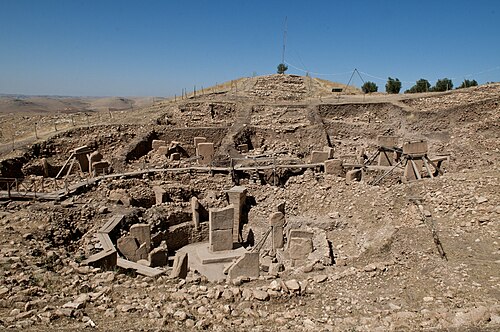
On a hilltop in Turkey stand giant carved stone pillars that are around 11,000 years old — older than Stonehenge, older than writing, and possibly older than agriculture itself.
The connection: A completely different corner of the archive: ancient world.
Ancient World · The Deep Dive
The Temple Older Than Farming
On a hilltop in Turkey stand giant carved stone pillars that are around 11,000 years old — older than Stonehenge, older than writing, and possibly older than agriculture itself.
The connection: A completely different corner of the archive: ancient world.
 Nature · The Story
The Banana Your Grandparents Ate
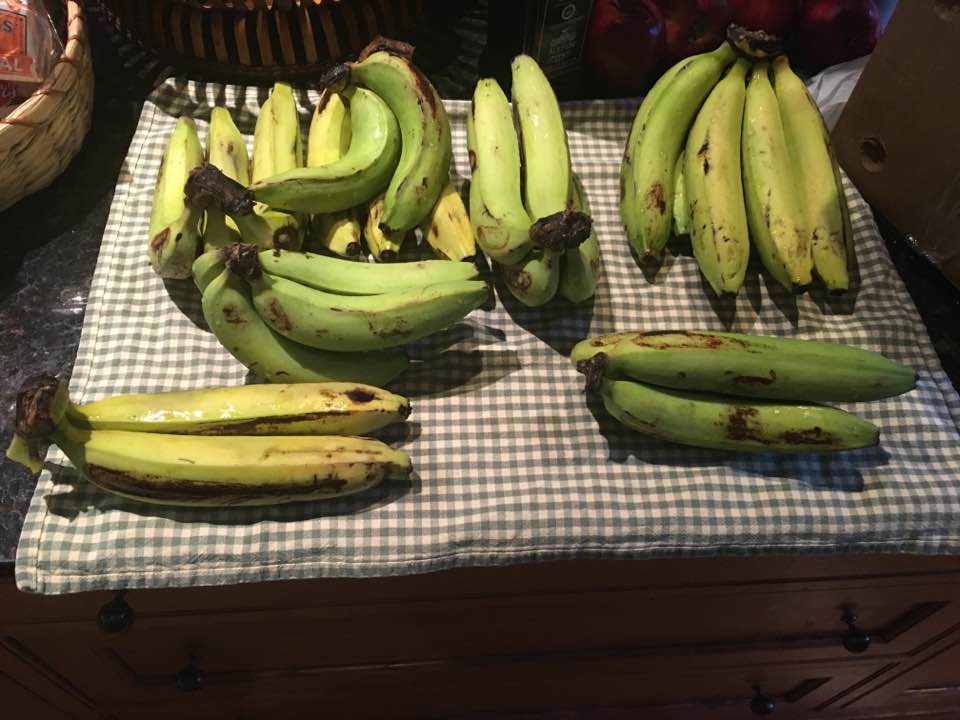
The banana in your kitchen isn't the one people ate in 1940. That one was wiped out by a fungus — and the replacement is under threat too.
The connection: A completely different corner of the archive: nature.
Nature · The Story
The Banana Your Grandparents Ate
The banana in your kitchen isn't the one people ate in 1940. That one was wiped out by a fungus — and the replacement is under threat too.
The connection: A completely different corner of the archive: nature.