Cold Cases The Story
The Summer the Mona Lisa Vanished
In 1911, a handyman walked out of the Louvre with the Mona Lisa under his smock. Nobody noticed for a day — and the theft is a big part of why she became the most famous painting in the world.
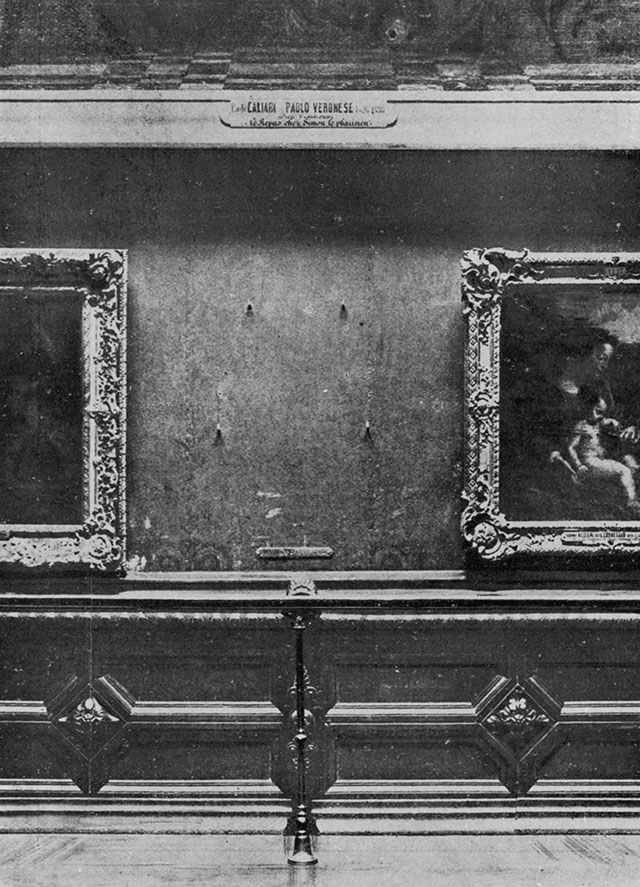
[IMAGE: An old photograph of a museum wall with four metal hooks where a painting used to hang] (Wikimedia Commons, Public domain; opens as a separate document)
![[IMAGE: An old photograph of a museum wall with four metal hooks where a painting used to hang]](https://upload.wikimedia.org/wikipedia/commons/f/f8/Mona_Lisa_stolen-1911.jpg)
Today, the Mona Lisa hangs behind bulletproof glass, and thousands of people a day squeeze into a room in the Louvre to photograph it over each other's heads.
In 1910 it was a respected painting — admired by artists and critics — but it was not a global superstar. It hung in the Louvre's Salon Carré among many other masterpieces.
Then somebody stole it.
A Monday in August
On Monday 21 August 1911, the Louvre was closed to the public for cleaning and maintenance. Workers in white smocks moved through the galleries.
One of them was Vincenzo Peruggia, a 29-year-old Italian handyman who had worked at the museum. He had even helped fit protective glass cases over some of its paintings.
Peruggia lifted the Mona Lisa off its four iron hooks, carried it to a service stairwell, and took it out of its frame and glass case. The painting is on a wooden panel, only about 77 by 53 centimetres. He hid it under his smock and walked out.
The most famous theft in art history required no tools, no weapons and no getaway car. Just a smock, a quiet morning and some confidence.
Nobody noticed
The next day, a painter named Louis Béroud arrived to sketch in the Salon Carré and found only four bare hooks. The guards assumed the painting had been taken away to be photographed. It took hours for anyone to realise it was gone.
The Louvre closed for a week. Police searched the vast building. The story exploded across the world's newspapers, and suddenly, everyone knew the Mona Lisa's face.
When the Louvre reopened, crowds queued to stare at the empty space where it used to be.
Two years in a trunk
For more than two years, the painting sat in Peruggia's room in Paris, hidden in a trunk.
In late 1913, he wrote to an art dealer in Florence, Alfredo Geri, offering to bring the Mona Lisa "home" to Italy. Geri arranged a meeting with the director of the Uffizi Gallery. Peruggia brought the painting to his hotel. The experts checked it, confirmed it was genuine — and Peruggia was arrested.
He claimed he had acted out of patriotism, to return a great Italian painting to Italy. (Leonardo da Vinci had in fact taken it to France himself, and it was acquired by the French king.) Many Italians sympathised. He was sentenced to just over a year in prison, and served less.
FACT Established by documentary or physical evidence.
What's documented
The dates, the method and Peruggia's arrest and trial are all on record.
SPECULATION Possible, unproven, and labelled so you can enjoy it responsibly.
What's debated
Whether Peruggia acted alone, and how much his motive was patriotism or money, is still debated. A popular story claims the theft was part of a scheme to sell forgeries — but there's little evidence for it.
The Mona Lisa was exhibited in Florence, Rome and Milan before returning to the Louvre in January 1914, to enormous crowds. It has never really stopped drawing them since.
You learned this today!!! YOU LEARNED THIS TODAY !!!
- The Mona Lisa was stolen from the Louvre on Monday 21 August 1911, when the museum was closed to the public.
- The thief was Vincenzo Peruggia, an Italian handyman who had worked at the Louvre.
- The theft was not noticed until the next day.
- The poet Guillaume Apollinaire was arrested during the investigation, and Pablo Picasso was questioned; both were innocent of the theft.
- Peruggia kept the painting for more than two years before trying to sell it in Florence in December 1913, where he was arrested.
One more thing
The summit of Mount Everest is made of marine limestone containing fossils of sea creatures.
→ Read something elseSources & further reading
- Mona Lisa, Wikipedia
- Scotti, R. A. Vanished Smile: The Mysterious Theft of the Mona Lisa, Knopf, 2009
StoneRed separates fact, hypothesis and speculation. Spotted an error? We'd genuinely like to know.
If you liked this…
 Cold Cases · The Strange Case
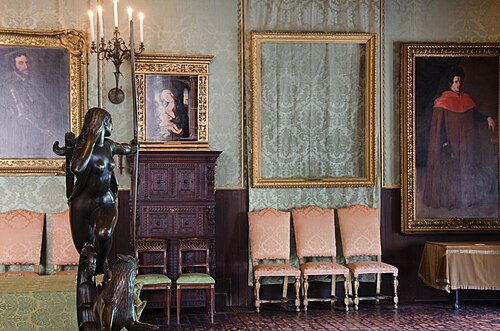
Thirteen Empty Frames
In 1990, two men dressed as police officers walked into a Boston museum and left with a Vermeer, three Rembrandts and more. The empty frames are still hanging on the wall.
The connection: Another art theft — but these paintings never came back.
Cold Cases · The Strange Case
Thirteen Empty Frames
In 1990, two men dressed as police officers walked into a Boston museum and left with a Vermeer, three Rembrandts and more. The empty frames are still hanging on the wall.
The connection: Another art theft — but these paintings never came back.
 Economics · The Theory
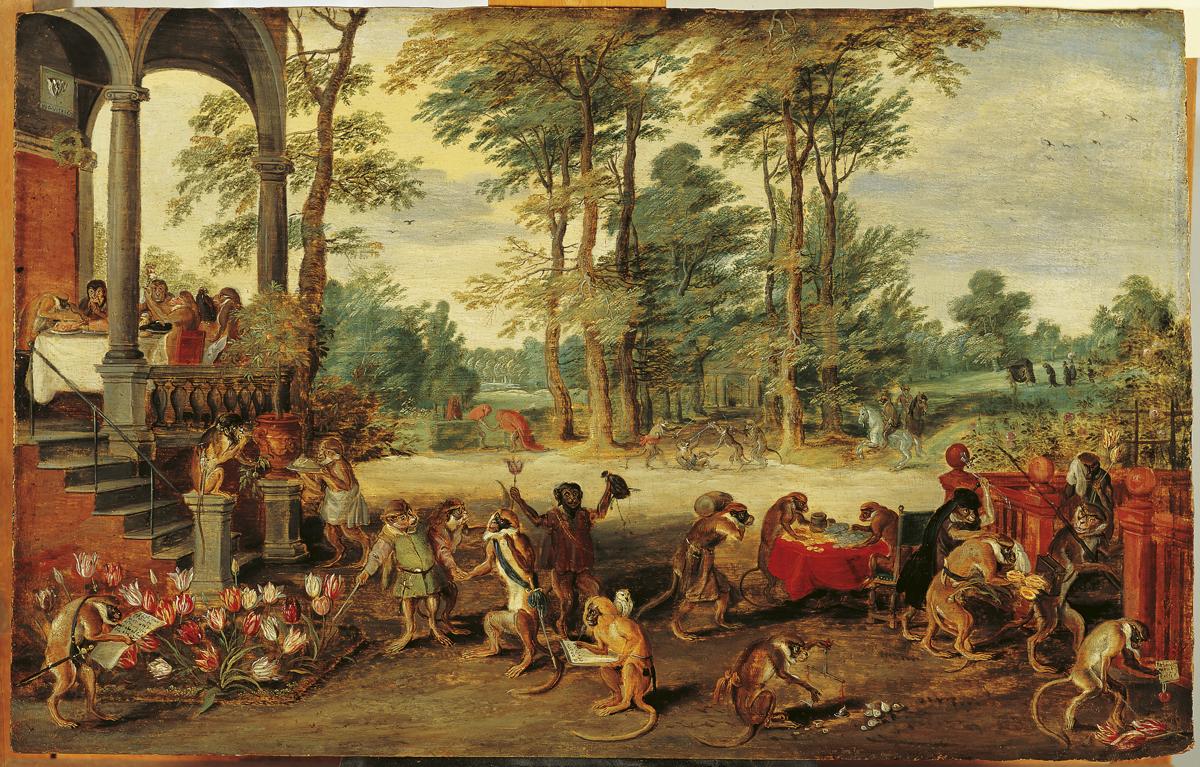
When a Tulip Cost as Much as a House
Tulip mania is the most famous financial bubble in history — a tale of Dutch merchants ruined by flower bulbs. The real story is stranger, smaller, and much more interesting.
The connection: Another story about how value can come from hype.
Economics · The Theory
When a Tulip Cost as Much as a House
Tulip mania is the most famous financial bubble in history — a tale of Dutch merchants ruined by flower bulbs. The real story is stranger, smaller, and much more interesting.
The connection: Another story about how value can come from hype.
 Music · The Theory
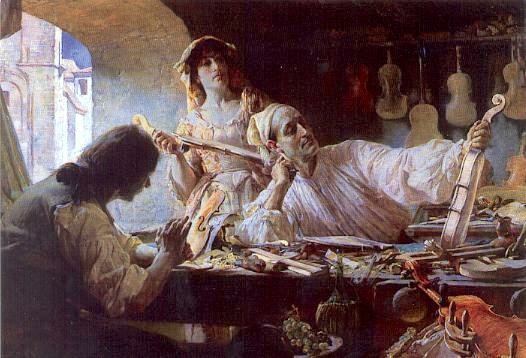
Can Anyone Actually Hear a Stradivarius?
Stradivarius violins sell for millions. But when world-class violinists played them blindfolded alongside modern instruments, most couldn't tell them apart — and many preferred the new ones.
The connection: Another masterpiece whose fame might be part of the magic.
Music · The Theory
Can Anyone Actually Hear a Stradivarius?
Stradivarius violins sell for millions. But when world-class violinists played them blindfolded alongside modern instruments, most couldn't tell them apart — and many preferred the new ones.
The connection: Another masterpiece whose fame might be part of the magic.