Music The Story
Four Minutes Thirty-Three Seconds of Nothing
In 1952, a pianist walked onto a stage, sat at the piano, and played nothing at all for four and a half minutes. The audience was baffled, then angry. John Cage's 4'33" became one of the most famous — and most argued about — pieces of music ever written.
On the evening of 29 August 1952, an audience gathered at the Maverick Concert Hall, a rustic wooden building in the woods near Woodstock, New York. They had come to hear a concert of new music performed by the pianist David Tudor.
Towards the end of the programme, Tudor sat down at the piano with a score. He closed the keyboard lid. He looked at a stopwatch. After some time, he opened the lid, then closed it again. He did this three times, marking three movements. He never played a single note.
After four minutes and thirty-three seconds, he stood up and bowed. The piece was over.
What was that?
The piece was 4'33" by John Cage, and its first audience didn't know what to make of it. Some were puzzled, some amused and some furious. During the performance, they heard the wind in the trees outside. In the second movement, rain began pattering on the roof. In the third, people began whispering and talking, and some walked out.
Cage later said those sounds were the point.
"There's no such thing as silence," Cage said. "What they thought was silence was full of accidental sounds."
According to Cage, 4'33" is not a silent piece. The performer doesn't play, but the music is still there: the sounds of the room, the audience, the world outside. Listening to it means paying attention to things we usually ignore.
The composer
John Cage, born in Los Angeles in 1912, was one of the most influential and controversial composers of the 20th century. He invented the "prepared piano", placing screws, bolts and rubber between the strings to make strange new sounds. He used chance — tossing coins, consulting the ancient Chinese text the I Ching — to make decisions in his compositions. He was fascinated by Zen Buddhism, mushrooms (he was an expert in wild fungi) and the idea that any sound could be music.
Two inspirations
Cage said two experiences helped lead him to 4'33".
The first was a visit to an anechoic chamber at Harvard University around 1951. An anechoic chamber is a room designed to absorb all sound, with no echoes and as little noise as possible. Cage expected to hear total silence. Instead, he heard two sounds, one high and one low. An engineer told him, according to Cage's account, that the high sound was his nervous system and the low one his blood circulating.
FACT Established by documentary or physical evidence.
No escape from sound
Cage concluded that true silence doesn't exist for a living person. Even in the quietest room on Earth, you can hear your own body. That idea became central to his thinking about music.
The second inspiration was the painter Robert Rauschenberg's White Paintings, a series of canvases painted plain white. They looked empty, but Cage noticed that they changed with the light and shadows in the room — and with the shadows of the people looking at them. If a blank painting could be full of changing images, perhaps a "silent" piece could be full of sound.
Playing nothing
The score of 4'33" tells the performer, for each of its three movements, simply "tacet" — a musical term meaning "be silent". It can be performed by any instrument or group of instruments. It has been performed by pianists, orchestras, rock bands and even played on the radio, where stations have worried their emergency systems would detect "dead air".
Silence in court
In 2002, the British musician Mike Batt released an album that included a track called "A One Minute Silence", credited jokingly to "Batt/Cage". The publishers of Cage's works accused him of copying 4'33". The dispute became a news story — could anyone own silence? Batt later said he paid a sum to settle the matter, though he and others treated the episode as a publicity stunt as much as a legal fight.
Joke or genius?
Many people consider 4'33" a joke, or a trick. Others regard it as one of the most important works of modern art, one that changed how we think about music and listening.
Cage himself took it seriously. He called it his most important work. He said that when he listened to the world around him, he found it more interesting than most music. 4'33" was an invitation to listen in that way, even for just four and a half minutes.
You learned this today!!! YOU LEARNED THIS TODAY !!!
- 4'33" is a composition by the American composer John Cage, first performed in 1952.
- The performer does not play their instrument for the whole duration of the piece.
- It was premiered by the pianist David Tudor at Woodstock, New York, on 29 August 1952.
- Cage said the piece is not silent: its music is the sounds of the environment heard during the performance.
- Cage was influenced by Robert Rauschenberg's all-white paintings and by a visit to an anechoic chamber at Harvard University.
One more thing
Tardigrades — microscopic "water bears" — have survived direct exposure to the vacuum of space.
→ Read something elseSources & further reading
- 4′33″, Wikipedia
- Gann, Kyle. No Such Thing as Silence: John Cage's 4'33", Yale University Press, 2010
- Cage, John. Silence: Lectures and Writings, Wesleyan University Press, 1961
StoneRed separates fact, hypothesis and speculation. Spotted an error? We'd genuinely like to know.
If you liked this…
 Music · The Story
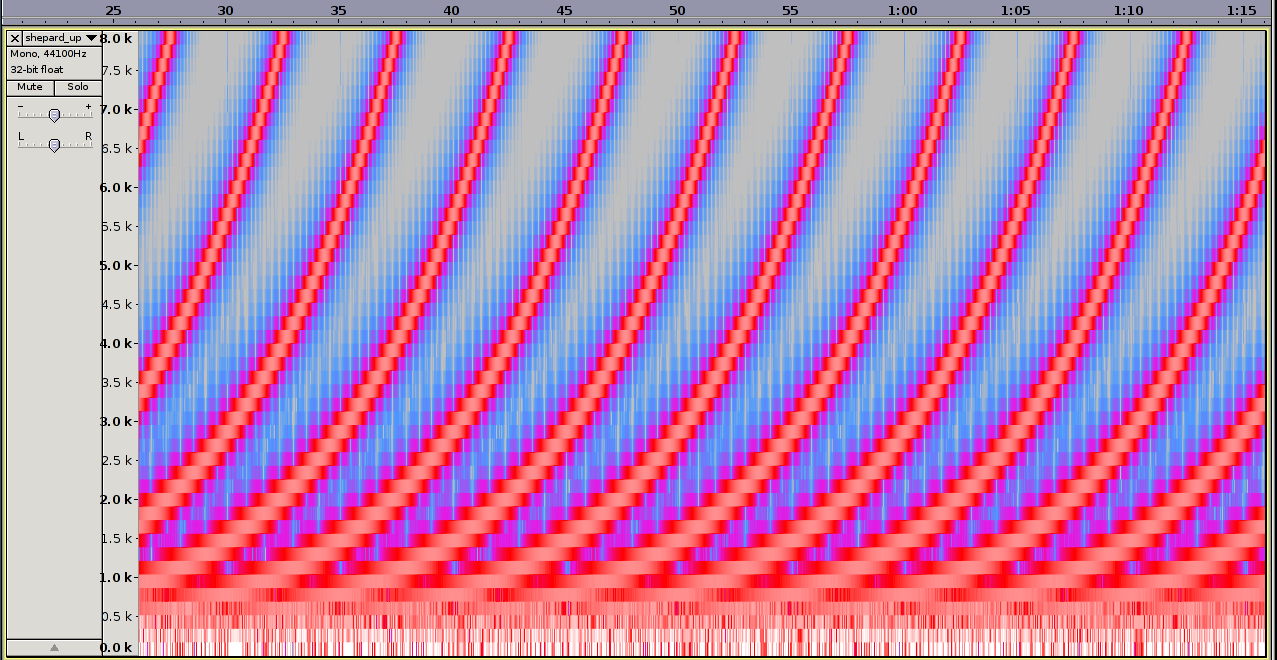
The Sound That Rises Forever
The Shepard tone seems to climb endlessly upwards in pitch without ever getting higher. It's an audio illusion — and filmmakers use it to make your heart race.
The connection: Another strange experiment in how we hear.
 Geography · The Story
The River That Boils
As a boy in Peru, Andrés Ruzo heard his grandfather tell a legend about a river in the Amazon so hot it boiled. Years later, as a geoscientist, he went looking for it. He found it — steaming, sacred and hot enough to kill.
The connection: A completely different corner of the archive: geography.
 History · The Strange Case
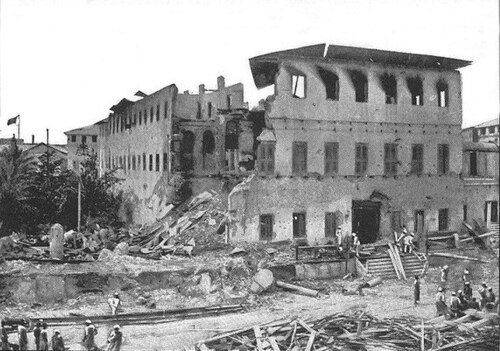
The War That Lasted Less Than an Hour
On a summer morning in 1896, Britain and Zanzibar fought an entire war before most people had finished breakfast. Then came the bill.
The connection: A completely different corner of the archive: history.