Geography The Story
The River That Boils
As a boy in Peru, Andrés Ruzo heard his grandfather tell a legend about a river in the Amazon so hot it boiled. Years later, as a geoscientist, he went looking for it. He found it — steaming, sacred and hot enough to kill.
When Andrés Ruzo was a boy in Lima, Peru, his grandfather told him stories about the Spanish conquest of the Inca. One of the legends was about a river in the Amazon rainforest so hot it boiled. Spanish conquistadors who went into the jungle searching for gold, the story went, came back with tales of terrible things: man-eating snakes, poisoned water and a boiling river.
Years later, Ruzo became a geoscientist, studying heat inside the Earth. He asked colleagues, professors and oil and gas companies whether a boiling river in the Amazon could exist. Most said no. Boiling rivers are found near volcanoes, and there are no active volcanoes in that part of the Amazon.
Then his aunt told him she had been there.
Finding the river
In 2011, Ruzo travelled with his aunt into the jungle of central Peru. After a long drive and a walk through the forest, he heard a roar — the sound of water rushing over rocks. Then he saw steam rising through the trees.
He put his thermometer into the water. It was very hot.
He'd been told a boiling river in the Amazon was impossible. Now he was standing beside one.
The river is called the Shanay-Timpishka, which Ruzo translates as roughly "boiled with the heat of the sun". It runs for about 6.4 kilometres, and in places it is around 25 metres wide and several metres deep. Its temperature varies along its length. In the hottest areas, water temperatures have been measured approaching 100 °C, the boiling point of water.
Deadly water
The river is hot enough to be dangerous. A person who fell into its hottest parts could suffer severe, even fatal burns within seconds. Ruzo described seeing small animals that had fallen in and been cooked alive — frogs, birds and other creatures.
Locals warn visitors not to touch the water in the hottest sections. Yet in some places, the hot water mixes with cooler streams, making pools where people can bathe.
FACT Established by documentary or physical evidence.
Not technically boiling
The river doesn't boil along its whole length. Most of it is hot rather than boiling. But in a few places, hot springs feed water at or near boiling point into the river, and the water can be seen bubbling and steaming.
Why is it hot?
The question that intrigued Ruzo was where the heat comes from. The nearest active volcano is hundreds of kilometres away. So what heats the river?
His research suggests that the answer is geothermal. Rainwater and other water seep deep underground, where it is heated by the natural heat of the Earth's interior. Faults and cracks in the rocks allow the hot water to rise back to the surface, emerging as hot springs that feed the river.
HYPOTHESIS A credible explanation that some experts support, not proven.
A non-volcanic hot spot
Ruzo argues that the Boiling River is an example of a large non-volcanic geothermal system — heated by deep circulation of water, not magma near the surface. If so, it is one of the largest known examples in the world.
A sacred place
The river is not just a geological wonder. It is sacred to local Indigenous people, including the Asháninka. They believe the river is the home of Yacumama, a giant serpent spirit who gives birth to hot and cold water. The river's water is used in traditional medicine.
A healing centre run by a shaman sits on its banks, at a place called Mayantuyacu. Visitors come for traditional healing ceremonies. Another community, Santuario Huistín, also lives along the river.
Under threat
The rainforest around the Boiling River is threatened by illegal logging, cattle ranching and the expansion of farmland. Ruzo has worked with local communities to protect the area and raise awareness. He gave a TED talk about the river in 2014 and wrote a book about it, published in 2016.
He has also argued that the river offers lessons beyond geology: that legends sometimes contain truth, and that science and traditional knowledge can work together to understand the world.
A legend come true
The story of the Boiling River is a reminder that not every legend is just a story. Sometimes, the strange tales passed down for generations turn out to be grounded in real places — waiting for someone curious enough to go and look.
You learned this today!!! YOU LEARNED THIS TODAY !!!
- The Shanay-Timpishka, known as the Boiling River, is a river in the Peruvian Amazon whose water is very hot along part of its length.
- It is about 6.4 kilometres long, and in places its water approaches boiling point.
- The geoscientist Andrés Ruzo studied the river and wrote about it in his 2016 book The Boiling River.
- The heat comes from geothermal water rising through faults in the Earth, not from a nearby volcano.
- The river is sacred to local Indigenous people, and a shaman's village sits on its banks.
One more thing
A day on Venus is longer than a year on Venus.
→ Read something elseSources & further reading
- Shanay-Timpishka, Wikipedia
- Ruzo, Andrés. The Boiling River: Adventure and Discovery in the Amazon, Simon & Schuster / TED Books, 2016
StoneRed separates fact, hypothesis and speculation. Spotted an error? We'd genuinely like to know.
If you liked this…
 Geography · The Strange Case
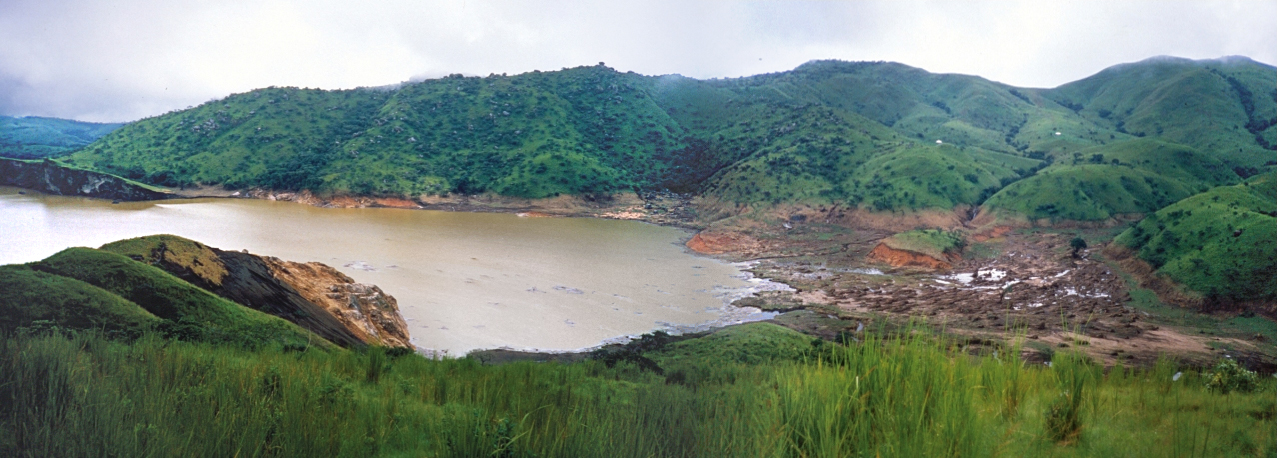
The Lake That Exploded
One night in 1986, a peaceful crater lake in Cameroon released an invisible cloud that rolled down into the valleys and killed 1,746 people in their sleep.
The connection: Another deadly natural body of water.
 Psychology · The Question
Why Don't We Remember Being Babies?
You learned to walk, talk and recognise your own face — and you remember none of it. Science is finally starting to explain where those years went.
The connection: A completely different corner of the archive: psychology.
 Nature · The Story
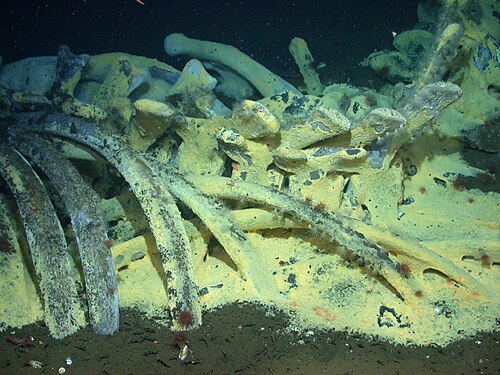
What Happens When a Whale Dies
When a whale sinks to the deep sea floor, its body becomes an oasis that can feed a whole community of strange creatures for decades — including worms that eat bone.
The connection: A completely different corner of the archive: nature.