Geography The Deep Dive
The Land No Country Wants
Between Egypt and Sudan lies a patch of desert larger than many cities that neither country will claim. The reason is a lesson in how borders really work.

[IMAGE: Topographic map of Bir Tawil on the border between Egypt and Sudan] (Maps-For-Free.com / Wikimedia Commons, CC0; opens as a separate document)
Almost every piece of dry land on Earth belongs to someone.
Countries fight over rocks in the sea. They argue over mountain glaciers, river islands and uninhabited reefs. Wars have been fought over strips of land you could walk across in an afternoon.
And yet, on the border between Egypt and Sudan, there is a trapezoid of desert about 2,060 square kilometres in size — larger than many major cities — that neither country wants.
It's called Bir Tawil. And the reason nobody claims it isn't that it's worthless. It's that claiming it would cost too much.
Two lines on a map
The story begins, as so many border stories do, with the British Empire.
At the end of the 19th century, Sudan was under joint British and Egyptian rule. In 1899, the British drew a straight line along the 22nd parallel to mark the boundary between Egypt and Sudan. Neat, simple, and drawn with very little regard for the people who actually lived there.
Then, in 1902, the British drew a second line — an administrative boundary — to reflect how the land was actually used by local nomadic peoples.
The 1902 line placed a small inland area, Bir Tawil, under Egyptian administration, because it was used as grazing land by a group based to the north. It placed a much larger area on the Red Sea coast, the Halaib Triangle, under Sudanese administration, because its people were more closely connected to Sudan.
For decades, the difference between the two lines didn't matter much. Then, when Sudan became independent in 1956, it suddenly mattered a great deal.
The trap
Look at what each line gives each country.
Under the 1899 line, the Halaib Triangle belongs to Egypt, and Bir Tawil belongs to Sudan.
Under the 1902 line, the Halaib Triangle belongs to Sudan, and Bir Tawil belongs to Egypt.
The Halaib Triangle is around ten times larger than Bir Tawil, has a coastline on the Red Sea, has people, and has potential resources. Bir Tawil is landlocked, arid and without permanent inhabitants.
So:
- Egypt claims the 1899 border — which gives it Halaib, and leaves Bir Tawil to Sudan.
- Sudan claims the 1902 border — which gives it Halaib, and leaves Bir Tawil to Egypt.
Each country insists that Bir Tawil belongs to the other. To claim it would be to admit the other side's map is right.
Neither can claim both, because the claims depend on opposite borders. So both countries claim Halaib, and neither claims Bir Tawil. Egypt currently controls Halaib.
FACT Established by documentary or physical evidence.
The rare status
Because neither neighbouring state claims it, Bir Tawil is often described as terra nullius — "nobody's land". It's frequently called one of the only habitable places on Earth that no recognised country claims. Most of the rest of the world's unclaimed land is in Antarctica, where Marie Byrd Land is by far the largest unclaimed territory.
What's actually there
Bir Tawil isn't empty in the way a blank space on a map is empty.
It's part of the vast desert east of the Nile, with rocky mountains and dry valleys. The name means roughly "tall well" or "deep well" in Arabic. Nomadic people, including members of the Ababda, have long moved through the region. In recent years, reports have described informal gold mining in and around the area.
But there are no permanent towns, no government offices, no border posts of its own.
The kings of Bir Tawil
An unclaimed piece of land is, inevitably, an irresistible idea for a certain kind of person.
In 2014, an American farmer named Jeremiah Heaton travelled to Bir Tawil, planted a flag, and declared the "Kingdom of North Sudan" — reportedly because his young daughter had asked if she could be a real princess. The story went around the world.
He was not the first or last. Several individuals have declared their own countries in Bir Tawil, often online and sometimes without ever visiting.
Not the only strange gap
Bir Tawil is the most famous unclaimed land, but border quirks are surprisingly common.
Along the Danube, disputes between Croatia and Serbia have left small pockets of land that each side says belongs to the other. In 2015, a Czech politician declared a micronation called Liberland on one of them. Croatian police have prevented most attempts to settle it.
Elsewhere, there are enclaves inside enclaves, villages split down the middle by borders, and a Belgian town where the national boundary runs through houses and cafés.
The empty quarter
Somewhere in Bir Tawil right now, the wind is moving sand across land that belongs, legally speaking, to no country at all.
It's not a paradise or an opportunity. It's a gap — a place created by two lines that disagreed, and two countries that can't afford to let either of them be wrong.
There's something oddly poetic about that. In a world where nearly every rock has an owner, there is still one stretch of desert that is simply, stubbornly, itself.
You learned this today!!! YOU LEARNED THIS TODAY !!!
- Bir Tawil is a roughly 2,060 square kilometre area between Egypt and Sudan that neither country claims.
- The problem comes from two different British-drawn borders, from 1899 and 1902.
- Each country prefers the border that gives it the much larger and more valuable Halaib Triangle, which leaves Bir Tawil on the other side.
- Bir Tawil is often described as one of the only habitable pieces of land on Earth that no state claims.
- Several people, including an American in 2014, have planted flags and declared their own "kingdoms" there. None is recognised.
One more thing
A group of flamingos is called a flamboyance.
→ Read something elseSources & further reading
- Bir Tawil, Wikipedia
- Halaib Triangle, Wikipedia
- Terra nullius, Wikipedia
- Marie Byrd Land, Wikipedia
StoneRed separates fact, hypothesis and speculation. Spotted an error? We'd genuinely like to know.
If you liked this…
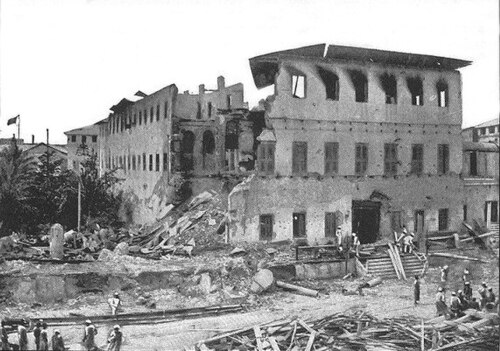 History · The Strange Case
The War That Lasted Less Than an Hour
On a summer morning in 1896, Britain and Zanzibar fought an entire war before most people had finished breakfast. Then came the bill.
The connection: Colonial-era lines on maps had very real consequences.
History · The Strange Case
The War That Lasted Less Than an Hour
On a summer morning in 1896, Britain and Zanzibar fought an entire war before most people had finished breakfast. Then came the bill.
The connection: Colonial-era lines on maps had very real consequences.
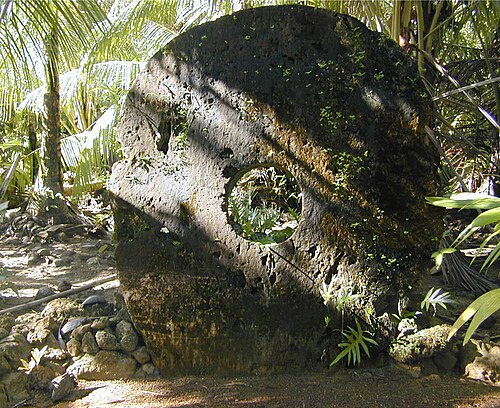 Economics · The Deep Dive
The Island Where Money Sat at the Bottom of the Sea
On the Pacific island of Yap, money came in the form of giant stone wheels, some taller than a person. One of them was lost at sea — and kept being spent anyway.
The connection: Value is what people agree it is — for money and for land.
Economics · The Deep Dive
The Island Where Money Sat at the Bottom of the Sea
On the Pacific island of Yap, money came in the form of giant stone wheels, some taller than a person. One of them was lost at sea — and kept being spent anyway.
The connection: Value is what people agree it is — for money and for land.
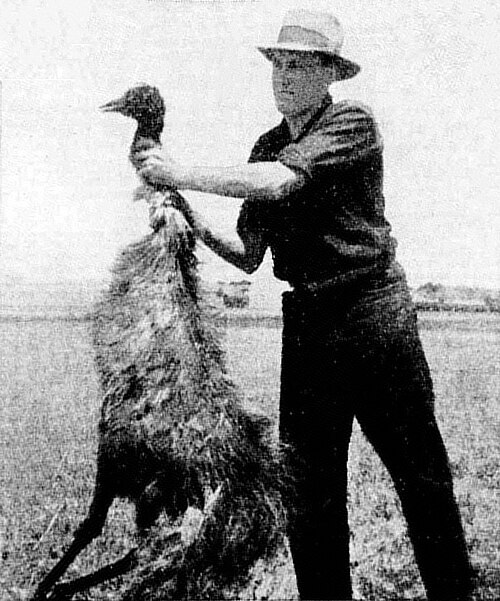 Modern World · The Strange Case
The Emus Won
In 1932, Australia sent soldiers with machine guns to fight a flock of flightless birds. It did not go to plan.
The connection: A place where the wildlife has more say than the government.
Modern World · The Strange Case
The Emus Won
In 1932, Australia sent soldiers with machine guns to fight a flock of flightless birds. It did not go to plan.
The connection: A place where the wildlife has more say than the government.