Technology The Timeline
The Chocolate Bar That Melted in the Lab
The microwave oven was invented by a self-taught engineer who never finished grammar school, standing next to radar equipment, with a snack in his pocket.

[IMAGE: An Amana Radarange countertop microwave oven] (TaurusEmerald / Wikimedia Commons, CC BY-SA 4.0; opens as a separate document)
Some inventions arrive after years of careful planning.
The microwave oven arrived because a man walked past some radar equipment and noticed that his snack had melted.
That's the short version. The longer version is better, because the man in question is one of the most remarkable engineers you've never heard of.
The engineer without a diploma
Percy Spencer was born in Maine in 1894. His father died when he was a baby, and he was raised by an aunt and uncle in poverty. He left grammar school at around 12 to work in a spool mill.
Then he heard that the local paper mill was going to install electricity. Almost nobody in the area understood how it worked. Spencer taught himself — well enough to be hired as one of the people installing it.
He later joined the US Navy, where he learned radio technology, and kept teaching himself everything from calculus to chemistry by reading at night. By the time the Second World War began, he was one of the leading engineers at a Massachusetts company called Raytheon, and one of the world's experts on a device called the magnetron.
The device that won a war
The magnetron generates microwaves — short radio waves — and it was the heart of radar, the technology that let the Allies spot aircraft and ships through darkness and cloud.
The problem was making them. In the early 1940s, magnetrons were painstakingly built by hand. Spencer developed ways to manufacture them far faster, transforming production and helping put radar into Allied ships and planes. The US Navy later honoured him for his wartime contribution.
He wasn't trying to invent a kitchen appliance. He was trying to win a war.
How a snack became an oven
The story has been retold so many times that it has picked up variations, but the core of it — as told by Raytheon and Spencer's family — goes like this.
The road to the Radarange
- c. 1945Spencer is working near an active magnetron and notices that a candy bar in his pocket has melted.
- Soon afterCurious, he holds popcorn kernels near the magnetron. They pop. According to one version of the story, he and a colleague then try an egg, which explodes.
- 1945Raytheon files a patent application for using microwave energy to cook food. It is granted in 1950.
- 1947Raytheon sells the first commercial microwave oven, the Radarange. It is roughly 1.8 metres tall, weighs around 340 kg, needs water cooling, and costs thousands of dollars. It's aimed at restaurants, ships and railways.
- 1967Amana, by then owned by Raytheon, launches a countertop Radarange for home kitchens, priced at around $495.
- 1970s onwardsPrices fall, and the microwave becomes one of the most common appliances on Earth.
What microwaves actually do
There are a lot of myths about microwave ovens, so here's the real picture.
A microwave oven fills its metal box with microwaves at a frequency of about 2.45 gigahertz. Molecules in food that have an uneven distribution of electric charge — water is the main one, though fats and sugars matter too — try to line up with the rapidly flipping electric field. Their jostling produces heat.
Myth: microwaves cook from the inside out. They don't. Microwaves penetrate a few centimetres into food at most. The outer layers heat, and the heat spreads inward by conduction — which is why big dishes have cold middles.
Myth: 2.45 GHz is the "resonant frequency" of water. It isn't. The frequency was chosen partly because it's an internationally allocated band for industrial, scientific and medical use, and because it penetrates food reasonably well.
Myth: microwaving makes food radioactive. Microwaves are non-ionising radiation, like radio waves. They heat food; they don't make it radioactive.
You learned this today!!! YOU LEARNED THIS TODAY !!!
- Percy Spencer, the engineer credited with inventing the microwave oven, left school at around age 12.
- He noticed the heating effect while working on magnetrons, the devices that generate microwaves for radar.
- The first commercial microwave oven, the Radarange of 1947, stood nearly as tall as a person.
- Microwaves don't cook food "from the inside out"; they heat the outer few centimetres, and heat spreads inward.
One more thing
A bolt of lightning can heat the air around it to roughly five times the temperature of the Sun's surface.
→ Read something elseSources & further reading
- Percy Spencer, Wikipedia
- Microwave oven, Wikipedia
- Spencer, P. L. Method of treating foodstuffs. US Patent 2,495,429, US Patent Office, 1950
- Microwave Ovens, U.S. Food and Drug Administration
StoneRed separates fact, hypothesis and speculation. Spotted an error? We'd genuinely like to know.
If you liked this…
 People · The Person
The Man Who Didn't Believe the Computer
Just after midnight on 26 September 1983, a Soviet satellite system reported that American nuclear missiles were on their way. The officer on duty had minutes to decide what to tell Moscow.
The connection: More Cold War-era electronics — this time the kind that nearly ended the world.
People · The Person
The Man Who Didn't Believe the Computer
Just after midnight on 26 September 1983, a Soviet satellite system reported that American nuclear missiles were on their way. The officer on duty had minutes to decide what to tell Moscow.
The connection: More Cold War-era electronics — this time the kind that nearly ended the world.
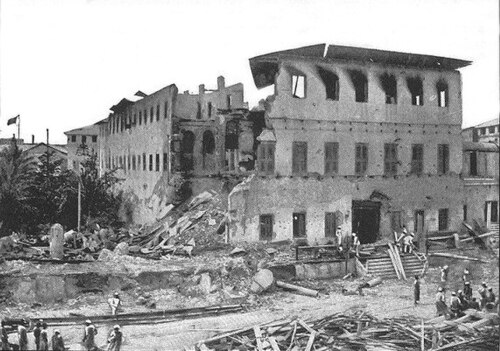 History · The Strange Case
The War That Lasted Less Than an Hour
On a summer morning in 1896, Britain and Zanzibar fought an entire war before most people had finished breakfast. Then came the bill.
The connection: A completely different corner of the archive: history.
History · The Strange Case
The War That Lasted Less Than an Hour
On a summer morning in 1896, Britain and Zanzibar fought an entire war before most people had finished breakfast. Then came the bill.
The connection: A completely different corner of the archive: history.
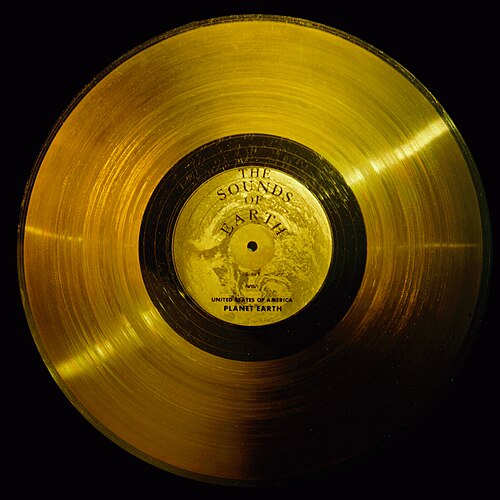 Music · The Story
The Mixtape We Sent to the Stars
In 1977, NASA bolted a gold-plated record to each Voyager spacecraft — music, greetings and sounds of Earth, for anyone who might find it. Chuck Berry made the cut. So did a kiss.
The connection: A completely different corner of the archive: music.
Music · The Story
The Mixtape We Sent to the Stars
In 1977, NASA bolted a gold-plated record to each Voyager spacecraft — music, greetings and sounds of Earth, for anyone who might find it. Chuck Berry made the cut. So did a kiss.
The connection: A completely different corner of the archive: music.