People The Person
The Man Who Didn't Believe the Computer
Just after midnight on 26 September 1983, a Soviet satellite system reported that American nuclear missiles were on their way. The officer on duty had minutes to decide what to tell Moscow.

[IMAGE: Portrait of Stanislav Petrov] (Queery-54 / Wikimedia Commons, CC BY-SA 4.0; opens as a separate document)
![[IMAGE: Portrait of Stanislav Petrov]](https://upload.wikimedia.org/wikipedia/commons/thumb/6/67/Stanislaw-jewgrafowitsch-petrow-2016.jpg/500px-Stanislaw-jewgrafowitsch-petrow-2016.jpg)
At about ten minutes past midnight on 26 September 1983, in a secret bunker south of Moscow, an alarm went off.
On a large screen at the front of the room, a single word lit up in red: LAUNCH.
According to the Soviet Union's new satellite early-warning system, the United States had just fired an intercontinental ballistic missile at the USSR. Moments later, the system reported a second missile. Then a third. Then more — five in all.
The officer in charge that night was a 44-year-old lieutenant colonel named Stanislav Petrov.
His job was simple to describe and almost impossible to do: decide whether the warning was real, and tell his superiors.
He had minutes.
The most dangerous year
To understand what that screen meant, you need to understand 1983.
It was one of the tensest years of the Cold War. Earlier that month, on 1 September, a Soviet fighter had shot down Korean Air Lines Flight 007 after it strayed into Soviet airspace, killing all 269 people on board. Relations between Washington and Moscow were poisonous. Soviet leaders were seriously worried that the United States might be preparing a surprise nuclear first strike.
In that atmosphere, a launch warning wasn't an abstract possibility. It was the thing everyone had been told to expect.
What Petrov actually had to decide
This is often told as the story of "the man who refused to press the button". That isn't quite right, and the real version is more interesting.
Petrov didn't have a button. He wasn't in a position to launch anything. His role was to assess the satellite data and report up the chain of command. If he reported a genuine attack, his superiors would have had to decide whether to retaliate — with very little time, and with a confirmed warning from their own system telling them missiles were already in the air.
His decision wasn't whether to start a war. It was whether to tell the people who could start one that it had already begun.
Why he didn't believe it
Petrov later described sitting frozen for a few seconds while the siren howled. Then he started thinking.
It was too small. He had been trained that an American first strike would be massive — hundreds of missiles, launched at once, to overwhelm Soviet defences. Why would the US start a nuclear war with five?
The system was new. The Oko satellite network had only recently been put into service, and Petrov didn't fully trust it.
Ground radar saw nothing. Radar stations couldn't yet see missiles that far away, just after launch, but nothing was confirming the satellites' story.
He reported the alarm to his superiors as a system malfunction.
Then he waited. If he was wrong, he would know soon enough.
In a 2013 interview with the BBC, Petrov said he'd had "a funny feeling in my gut" about the alert. He admitted he couldn't be certain. He made a judgement and lived with it.
The minutes passed. No missiles arrived.
FACT Established by documentary or physical evidence.
What caused the false alarm
Investigators later concluded that the satellites had mistaken sunlight reflecting off high-altitude clouds for the bright flare of rocket engines. The particular alignment of the sun, the clouds and the satellites' viewing angle had produced exactly the signal the system was designed to look for.
No medal
You might expect the man who may have prevented nuclear war to be showered with honours. He wasn't.
There was an investigation. Petrov's judgement was initially praised, but he was also reprimanded — officially, for failing to record everything properly in the logbook during the incident. Admitting that the new early-warning system had produced such a dangerous false alarm would have been embarrassing for the people who built it.
He left the military the following year, worked as a civilian, and lived quietly in a small flat outside Moscow.
The incident remained secret until the late 1990s, when a retired general wrote about it in his memoirs. Western journalists found Petrov and his story spread. He later received several international awards, including the Dresden Peace Prize in 2013.
Petrov always resisted being called a hero. He said he had simply been doing his job — and that he happened to be the right person in the chair that night.
The months that followed
Petrov's night was only one of the year's near misses. In November 1983, NATO ran a large command exercise called Able Archer 83, which simulated the process of escalating to nuclear war. Some Soviet officials appear to have worried that it might be cover for a real attack. Historians still argue about how close that episode came to disaster.
Why his story matters now
It's easy to think of Petrov's story as Cold War history. But the question he faced is very modern: what do you do when the machine says one thing and your judgement says another?
We now live surrounded by systems that are usually right. Navigation apps, fraud detectors, automated alerts, algorithms that flag and filter and decide. They are fast and they are confident.
Petrov's computer was confident too.
Stanislav Petrov spent most of his life as an ordinary man in an ordinary flat. For a few minutes in 1983, he might have been the most important person on Earth.
He didn't push anything. That was the whole point.
You learned this today!!! YOU LEARNED THIS TODAY !!!
- On 26 September 1983, the Soviet Oko early-warning system falsely reported a US missile launch.
- Lieutenant Colonel Stanislav Petrov judged it a false alarm and did not report it as an attack.
- The false alarm was later traced to sunlight reflecting off high-altitude clouds.
- Petrov did not have a "button"; his job was to judge and report, but a report of attack could have set off a chain of decisions.
- The incident stayed secret until the late 1990s; Petrov died in 2017.
One more thing
There are hundreds of liquid lakes hidden beneath the ice of Antarctica.
→ Read something elseSources & further reading
- Stanislav Petrov, Wikipedia
- 1983 Soviet nuclear false alarm incident, Wikipedia
- Stanislav Petrov: The man who may have saved the world, BBC News, 2013
- Hoffman, David E. The Dead Hand, Doubleday, 2009
- Able Archer 83, Wikipedia
StoneRed separates fact, hypothesis and speculation. Spotted an error? We'd genuinely like to know.
If you liked this…
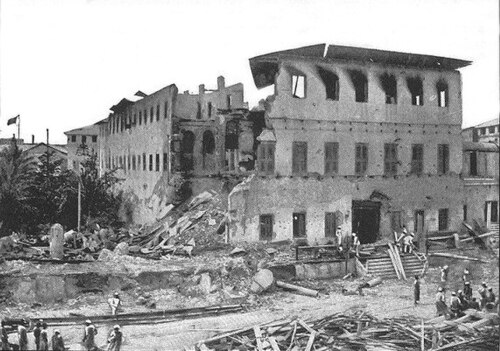 History · The Strange Case
The War That Lasted Less Than an Hour
On a summer morning in 1896, Britain and Zanzibar fought an entire war before most people had finished breakfast. Then came the bill.
The connection: A war that did happen, and was over in 38 minutes. Petrov had even less time.
History · The Strange Case
The War That Lasted Less Than an Hour
On a summer morning in 1896, Britain and Zanzibar fought an entire war before most people had finished breakfast. Then came the bill.
The connection: A war that did happen, and was over in 38 minutes. Petrov had even less time.
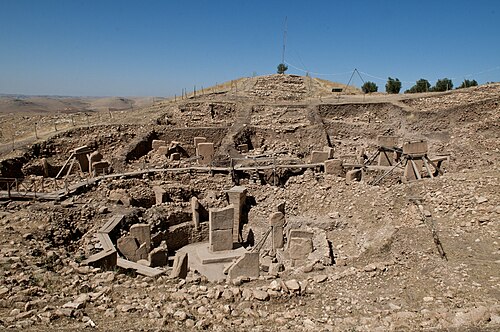 Ancient World · The Deep Dive
The Temple Older Than Farming
On a hilltop in Turkey stand giant carved stone pillars that are around 11,000 years old — older than Stonehenge, older than writing, and possibly older than agriculture itself.
The connection: A completely different corner of the archive: ancient world.
Ancient World · The Deep Dive
The Temple Older Than Farming
On a hilltop in Turkey stand giant carved stone pillars that are around 11,000 years old — older than Stonehenge, older than writing, and possibly older than agriculture itself.
The connection: A completely different corner of the archive: ancient world.
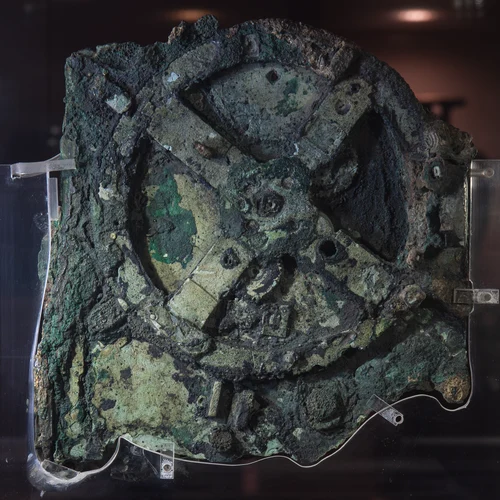 Ancient World · The Deep Dive
The 2,000-Year-Old Computer
In 1901, divers pulled a corroded lump of bronze from an ancient shipwreck. It turned out to be a geared machine for predicting the heavens — and nothing as complex would be built again for more than a thousand years.
The connection: A completely different corner of the archive: ancient world.
Ancient World · The Deep Dive
The 2,000-Year-Old Computer
In 1901, divers pulled a corroded lump of bronze from an ancient shipwreck. It turned out to be a geared machine for predicting the heavens — and nothing as complex would be built again for more than a thousand years.
The connection: A completely different corner of the archive: ancient world.