Ancient World The Story
The City Under the City
In 1963, a man renovating his house in central Turkey knocked through a wall and found a tunnel. It led down into an underground city deep enough to hide thousands of people.
In 1963, a man in the town of Derinkuyu, in central Turkey, was renovating his house. As the story goes, he knocked down a wall in his cellar and found a narrow passage behind it, leading down into the dark.
He followed it. The passage opened into a room. Then another. Then stairs, leading further down, to more rooms and more passages.
What he had found was a city: a vast underground complex, carved by hand into the rock, deep enough and large enough to hide thousands of people.
A land made for digging
Derinkuyu lies in Cappadocia, a region famous today for its strange landscape of cones, pillars and "fairy chimneys". Millions of years ago, volcanoes covered the area in thick layers of ash, which hardened into a soft rock called tuff. Tuff is easy to carve with simple tools, but once exposed to the air it hardens.
People in Cappadocia have been digging into it for thousands of years: houses, pigeon houses, churches and monasteries cut into cliffs and pinnacles. And beneath many of its towns and villages, they dug down.
In Cappadocia, people didn't just live on the land. They lived inside it.
There are dozens of underground settlements in the region, some small, some enormous. Derinkuyu is one of the deepest known.
Going down
Derinkuyu descends through many levels, reaching roughly 85 metres below the surface. The upper floors held places for daily life in times of danger: stables for animals, kitchens blackened with soot, storerooms, wine and oil presses. Lower down were wells, meeting rooms, and what appears to be a chapel and a school-like room with long benches.
Air came down through ventilation shafts, some of them reaching all the way to the deepest levels, keeping the city breathable and at a cool, steady temperature. Wells reached water below without opening to the surface, so attackers could not poison the supply.
Who built it, and why?
Nobody knows exactly when digging began. Some historians think the first chambers may go back to the Phrygians, in the first millennium BCE. The Greek writer Xenophon, around 400 BCE, described people in Anatolia living in underground houses with their animals.
What's clearer is that Derinkuyu was greatly enlarged during the Byzantine era, when Cappadocia was a frontier region. In times of war and raids, whole communities could vanish underground, taking their animals and food with them, and wait for the danger to pass.
FACT Established by documentary or physical evidence.
What we know
Derinkuyu is a real, multi-level underground complex used as a refuge over many centuries. It is part of a UNESCO World Heritage Site and has been open to visitors since the late 1960s.
SPECULATION Possible, unproven, and labelled so you can enjoy it responsibly.
How many people?
It is often said that Derinkuyu could shelter up to 20,000 people along with their livestock. That figure is repeated widely but is hard to verify, and the true number is uncertain. Claims that it connects to the underground city of Kaymaklı, several kilometres away, by a long tunnel are also often repeated and difficult to confirm.
A refuge into modern times
The underground cities were still remembered and used much later. Christian communities in Cappadocia are reported to have used them as refuges into the early twentieth century. After the population exchange between Greece and Turkey in 1923, when Cappadocia's Greek-speaking Christians were forced to leave, many of the underground spaces fell out of use and were forgotten or used only as cellars.
Until a wall came down in 1963.
Visiting
Today, visitors can walk through part of Derinkuyu, ducking through low passages and squeezing down steep stairways cut into the rock, lit by electric lights. Only a portion of the city is open, and much of it is still unexcavated. Even the open levels give a strong sense of what it might have been like to live down there for days or weeks, in lamplight, listening for footsteps above.
You learned this today!!! YOU LEARNED THIS TODAY !!!
- Derinkuyu is a multi-level underground city carved into soft volcanic rock in the Cappadocia region of central Turkey.
- It reaches a depth of roughly 85 metres below the surface.
- It was rediscovered in 1963, reportedly when a local resident broke through a wall during home renovations.
- Huge round stone doors could be rolled across passages from the inside to seal off each level.
- Its earliest phases may date to the first millennium BCE, and it was greatly expanded in the Byzantine era.
One more thing
In experiments, ravens have planned for the future, saving tools they would need later.
→ Read something elseSources & further reading
- Derinkuyu underground city, Wikipedia
- Göreme National Park and the Rock Sites of Cappadocia, UNESCO World Heritage Centre
StoneRed separates fact, hypothesis and speculation. Spotted an error? We'd genuinely like to know.
If you liked this…
 Ancient World · The Deep Dive
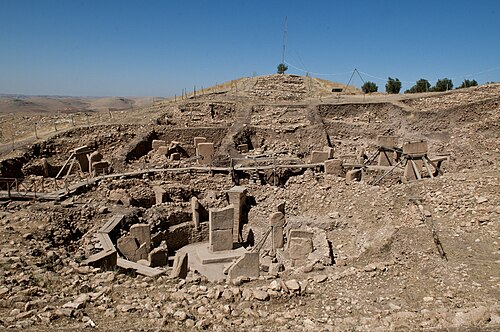
The Temple Older Than Farming
On a hilltop in Turkey stand giant carved stone pillars that are around 11,000 years old — older than Stonehenge, older than writing, and possibly older than agriculture itself.
The connection: More astonishing ancient work in Turkey.
 Science · The Story
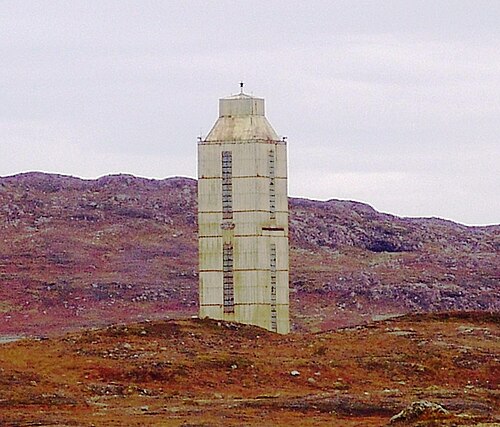
The Deepest Hole Ever Dug
For almost twenty years, Soviet scientists drilled straight down into the Arctic. They reached 12,262 metres, found water where there should be none, and stopped — and a rumour about what they heard down there refuses to die.
The connection: Another journey deep underground.
 Technology · The Timeline
The Chocolate Bar That Melted in the Lab
The microwave oven was invented by a self-taught engineer who never finished grammar school, standing next to radar equipment, with a snack in his pocket.
The connection: A completely different corner of the archive: technology.