Ancient World The Deep Dive
The Temple Older Than Farming
On a hilltop in Turkey stand giant carved stone pillars that are around 11,000 years old — older than Stonehenge, older than writing, and possibly older than agriculture itself.
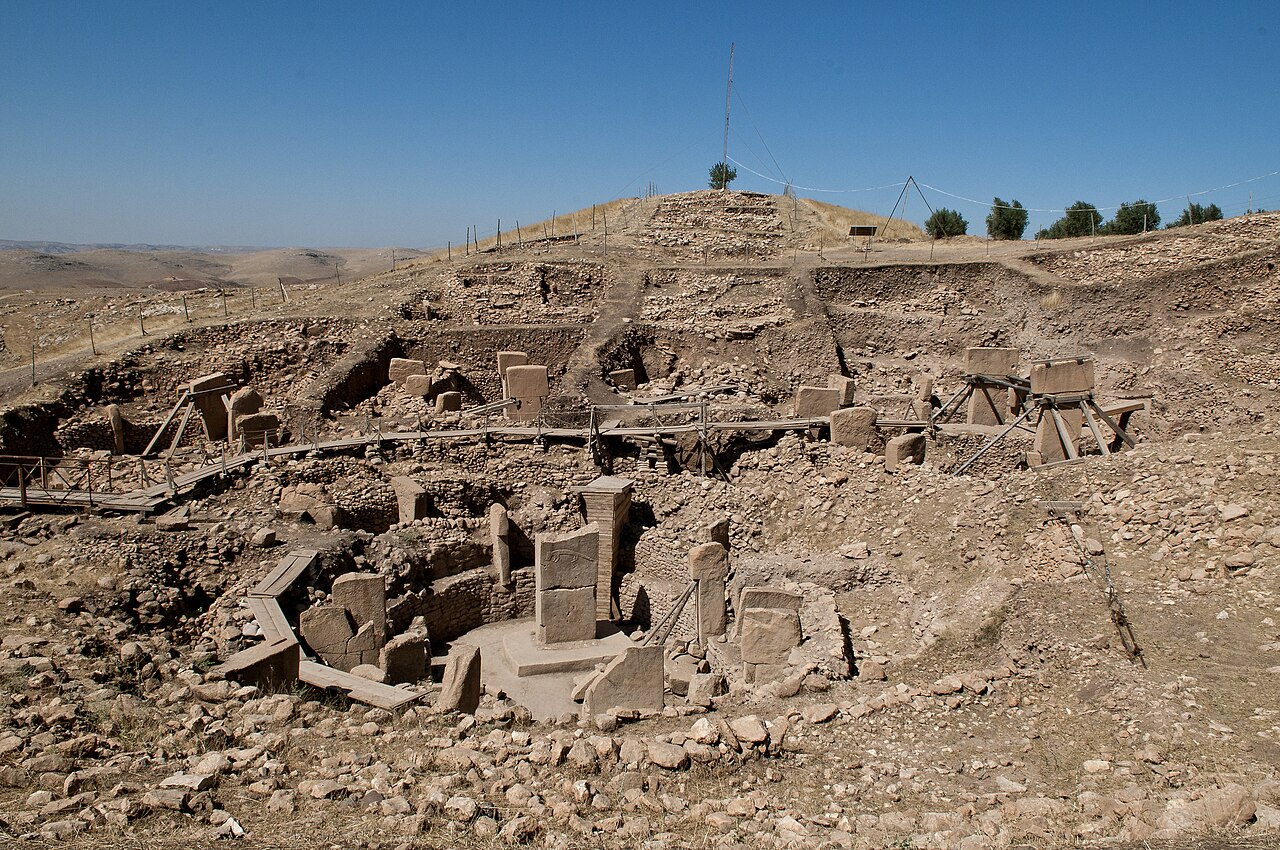
[IMAGE: Carved T-shaped stone pillars in an excavated enclosure at Göbekli Tepe] (Teomancimit / Wikimedia Commons, CC BY-SA 3.0; opens as a separate document)
![[IMAGE: Carved T-shaped stone pillars in an excavated enclosure at Göbekli Tepe]](https://upload.wikimedia.org/wikipedia/commons/thumb/d/d5/G%C3%B6bekli_Tepe%2C_Urfa.jpg/1280px-G%C3%B6bekli_Tepe%2C_Urfa.jpg)
Stonehenge is about 5,000 years old. The Great Pyramid of Giza is about 4,500.
Göbekli Tepe is roughly twice as old as either.
On a hill near the city of Şanlıurfa in south-eastern Turkey, archaeologists have uncovered great circular enclosures of massive T-shaped limestone pillars, some more than five metres tall and weighing many tonnes. The oldest structures date to around 9500 BC.
That's before pottery. Before writing. Before the wheel. Before, as far as we know, farming had really taken hold.
Carved animals
The pillars are not plain. Many are carved with animals in low relief: foxes, wild boars, snakes, cranes, vultures, scorpions, lions. Some of the central pillars have arms carved down their sides, with hands meeting over a belt, as if the pillars themselves were stylised giants.
These are not crude stones. They are sculptures, planned and placed by people who had no metal tools.
Who built it?
The people who built Göbekli Tepe are thought to have been largely hunter-gatherers living in a world of wild cereals and herds of gazelle. Building it would have required organising large groups of people, quarrying, carving and moving huge stones, and feeding everyone while they worked.
HYPOTHESIS A credible explanation that some experts support, not proven.
Temple first, farming second?
The archaeologist Klaus Schmidt, who led excavations from 1995 until his death in 2014, argued that Göbekli Tepe was a ritual centre — a temple — and that the need to feed the crowds who gathered to build it may have helped push people toward farming. It's a fascinating idea that flips the usual story (farming first, then villages, then temples). More recent research has found evidence that people also lived at the site, and debate continues about how it was used.
You learned this today!!! YOU LEARNED THIS TODAY !!!
- Göbekli Tepe, in south-eastern Turkey, has monumental structures dating back to around 9500 BC.
- Its T-shaped limestone pillars, some over five metres tall, are carved with foxes, boars, snakes, vultures and scorpions.
- It was built by people who are thought to have been mainly hunter-gatherers.
- Archaeologist Klaus Schmidt led excavations there from 1995 until his death in 2014.
- It is a UNESCO World Heritage Site.
One more thing
Wombats produce cube-shaped droppings.
→ Read something elseSources & further reading
- Göbekli Tepe, Wikipedia
- Göbekli Tepe, UNESCO World Heritage Centre
- Schmidt, Klaus. Göbekli Tepe: A Stone Age Sanctuary in South-Eastern Anatolia, ex oriente, 2012
StoneRed separates fact, hypothesis and speculation. Spotted an error? We'd genuinely like to know.
If you liked this…
 Ancient World · The Deep Dive
The Concrete That Heals Itself
Modern concrete starts falling apart within decades. Roman harbour walls have been sitting in seawater for two thousand years. In 2023, scientists finally worked out one of the reasons why.
The connection: Humans have always built things meant to last.
Ancient World · The Deep Dive
The Concrete That Heals Itself
Modern concrete starts falling apart within decades. Roman harbour walls have been sitting in seawater for two thousand years. In 2023, scientists finally worked out one of the reasons why.
The connection: Humans have always built things meant to last.
 Ancient World · The Deep Dive
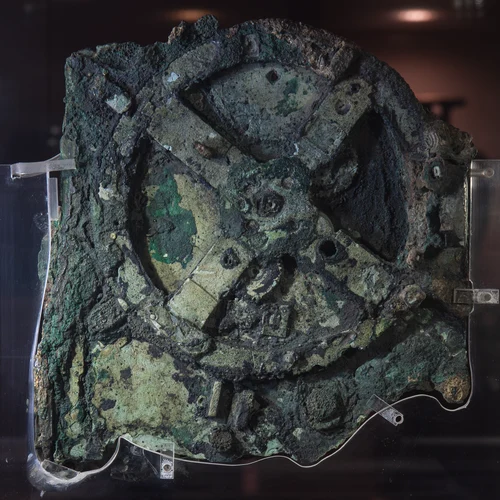
The 2,000-Year-Old Computer
In 1901, divers pulled a corroded lump of bronze from an ancient shipwreck. It turned out to be a geared machine for predicting the heavens — and nothing as complex would be built again for more than a thousand years.
The connection: Ancient people were far more sophisticated than we assume.
Ancient World · The Deep Dive
The 2,000-Year-Old Computer
In 1901, divers pulled a corroded lump of bronze from an ancient shipwreck. It turned out to be a geared machine for predicting the heavens — and nothing as complex would be built again for more than a thousand years.
The connection: Ancient people were far more sophisticated than we assume.
 Technology · The Timeline
The Chocolate Bar That Melted in the Lab
The microwave oven was invented by a self-taught engineer who never finished grammar school, standing next to radar equipment, with a snack in his pocket.
The connection: A completely different corner of the archive: technology.
Technology · The Timeline
The Chocolate Bar That Melted in the Lab
The microwave oven was invented by a self-taught engineer who never finished grammar school, standing next to radar equipment, with a snack in his pocket.
The connection: A completely different corner of the archive: technology.