Geography The Strange Case
The Crater That Has Been Burning for Decades
In the middle of Turkmenistan's Karakum Desert is a hole in the ground full of fire. It has been burning for decades, nobody is completely sure how it started, and locals call it the Door to Hell.
Night falls quickly in the Karakum Desert. The heat of the day drains out of the sand, the sky turns deep blue and then black, and the stars come out by the thousand.
And on the horizon, there is a glow.
Walk towards it and you will hear it before you understand what it is: a low, steady roar, like a jet engine that never stops. Then you reach the edge, and you are looking down into a vast crater whose walls and floor are covered in hundreds of flickering flames. The heat hits your face like an open oven. The air shimmers.
This is the Darvaza gas crater. Locals and visitors call it the Door to Hell.
A hole full of fire
The crater lies in the middle of Turkmenistan, a Central Asian country that is mostly desert and sits on some of the largest natural gas reserves in the world. The pit is roughly 70 metres across — wider than a football pitch is long — and around 20 to 30 metres deep. The nearest village, Darvaza, gave it its name, though the village itself was cleared in 2004.
What burns is natural gas, mainly methane, seeping up through cracks in the rock from deposits beneath. As long as the gas keeps coming, the fire keeps going.
It is not a volcano and it is not lava. It is a gas leak that someone set on fire — and never put out.
How did it start?
The most famous story goes like this. In 1971, Soviet geologists were drilling in the area, looking for oil or gas. Their rig broke through into a cavern full of natural gas, the ground collapsed and the drilling equipment fell into the hole. Worried that the escaping methane would poison the area, the geologists set it alight, expecting it to burn off in a few days or weeks.
It is still burning.
FACT Established by documentary or physical evidence.
What's known
The crater exists, it is fed by natural gas, and it has been burning since at least the 1980s. Its size and general location are well documented.
SPECULATION Possible, unproven, and labelled so you can enjoy it responsibly.
What's uncertain
The tidy 1971 story is surprisingly hard to confirm. No detailed Soviet records of the event have been published. Some Turkmen geologists have said the crater actually collapsed in the 1960s and only caught fire in the 1980s. Whether it was lit deliberately, by accident, or even by lightning, nobody can say for certain.
Fire from the ground, through history
Darvaza is not the only place where gas leaking from the ground burns. At Yanar Dag in Azerbaijan, a hillside has burned for as long as anyone can remember, fed by gas seeping through the sandstone. In the ancient world, such "eternal fires" were sometimes treated as sacred, and the region around the Caspian Sea, rich in oil and gas, has a long history of fire temples and fire worship. What makes Darvaza different is its scale, and that it seems to have been created by modern industry rather than by nature alone.
Into the crater
In 2013, the Canadian explorer and storm chaser George Kourounis did something nobody had done before. Wearing a heat-reflective suit and a breathing apparatus, he was lowered on ropes into the crater to collect soil samples from its floor.
Scientists who analysed the samples found bacteria living in the hot, gas-rich soil at the bottom — microbes that were not found in the soil around the crater. That made the Door to Hell an unlikely natural laboratory for the kinds of extreme environments where life might survive on other planets.
Tourist attraction — or waste?
Turkmenistan is one of the most closed and least visited countries in the world, but the crater has become its most famous sight. Small numbers of travellers camp near the rim to watch it glow at night, and photographs of it spread widely online.
For the government, however, it is also a waste of a valuable resource and a source of pollution. In 2022, the country's leadership said they wanted to find a way to put the fire out, and later reports suggested that the flames had become less intense as gas was captured from nearby wells. Whether it can be fully extinguished — and whether it should be — remains to be seen.
You learned this today!!! YOU LEARNED THIS TODAY !!!
- The Darvaza gas crater is a burning pit in the Karakum Desert of Turkmenistan, often called the Door to Hell or the Gates of Hell.
- It is roughly 70 metres across and around 20 metres deep.
- The fire is fed by natural gas, mostly methane, seeping up from beneath the desert.
- The most common story says it formed when a Soviet drilling rig collapsed into a gas cavern in 1971, but this is not well documented.
- In 2013 the explorer George Kourounis became the first person known to descend to its floor.
One more thing
Hawaiian pizza was invented in Canada, by a Greek-born restaurant owner, in 1962.
→ Read something elseSources & further reading
- Darvaza gas crater, Wikipedia
- Kourounis, George. Expedition to the Darvaza crater, National Geographic, 2013
StoneRed separates fact, hypothesis and speculation. Spotted an error? We'd genuinely like to know.
If you liked this…
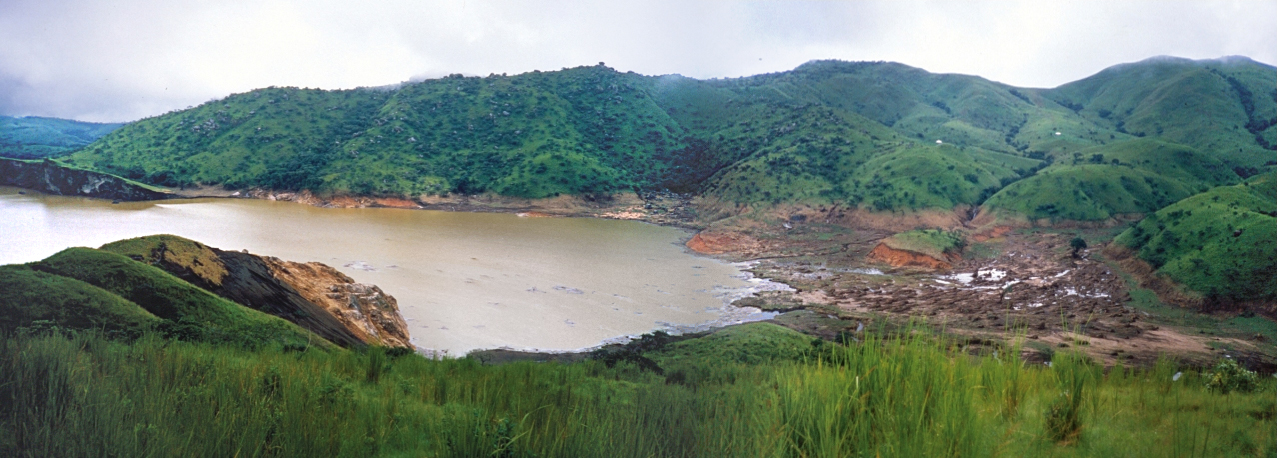 Geography · The Strange Case
The Lake That Exploded
One night in 1986, a peaceful crater lake in Cameroon released an invisible cloud that rolled down into the valleys and killed 1,746 people in their sleep.
The connection: Another place where gas from underground turned deadly.
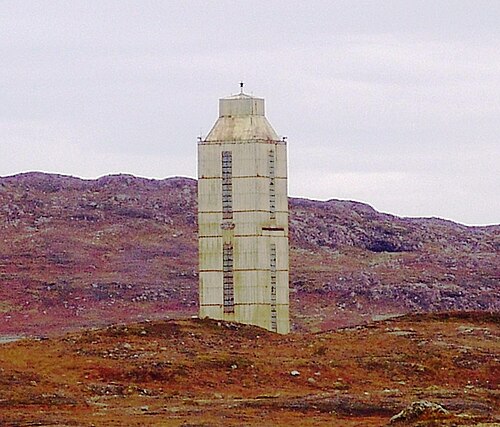 Science · The Story
The Deepest Hole Ever Dug
For almost twenty years, Soviet scientists drilled straight down into the Arctic. They reached 12,262 metres, found water where there should be none, and stopped — and a rumour about what they heard down there refuses to die.
The connection: Another Soviet-era hole with a strange story.
 Psychology · The Question
Why Don't We Remember Being Babies?
You learned to walk, talk and recognise your own face — and you remember none of it. Science is finally starting to explain where those years went.
The connection: A completely different corner of the archive: psychology.