Geography The Strange Case
The Lake That Exploded
One night in 1986, a peaceful crater lake in Cameroon released an invisible cloud that rolled down into the valleys and killed 1,746 people in their sleep.
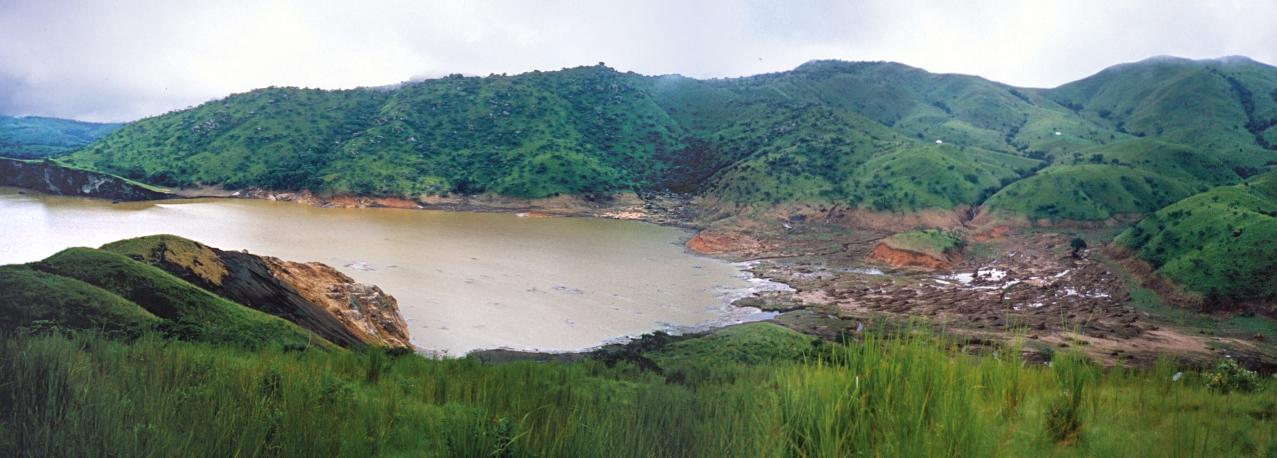
[IMAGE: Panoramic view of Lake Nyos in Cameroon weeks after the 1986 gas eruption] (United States Geological Survey / Wikimedia Commons, Public domain; opens as a separate document)
![[IMAGE: Panoramic view of Lake Nyos in Cameroon weeks after the 1986 gas eruption]](https://upload.wikimedia.org/wikipedia/commons/8/8c/Tml15-16_Nc.jpg)
Lake Nyos sits high in the hills of north-western Cameroon, filling the crater of an old volcano. It's deep, quiet and blue.
On the night of 21 August 1986, people in the villages below heard a rumbling. Some saw a fountain of water rise from the lake. Then, silently, an invisible cloud poured over the crater's rim and flowed downhill into the valleys.
By morning, 1,746 people were dead. So were thousands of cattle. Birds and insects had died too. Many victims were found where they had been sitting or sleeping, with no sign of a struggle.
An invisible killer
The cloud was carbon dioxide. CO₂ is heavier than air, so instead of rising and dispersing, it hugged the ground and flowed like a river of invisible water, pooling in low places and displacing the oxygen. Anyone inside it suffocated within minutes.
The lake hadn't erupted lava or fire. It had erupted gas — the same gas in the bubbles of a fizzy drink.
How does a lake explode?
Lake Nyos sits above volcanic activity. Carbon dioxide seeps up from deep underground and dissolves into the lake's bottom water. Because the lake is deep and very stable, its layers rarely mix, so the gas built up and up under pressure, like a sealed bottle of soda.
FACT Established by documentary or physical evidence.
A limnic eruption
Something — possibly a landslide, a cold rainstorm or wind — disturbed the lake and lifted some deep, gas-saturated water upward. As the pressure dropped, the CO₂ came out of solution in a sudden, violent rush, and the whole lake effectively fizzed over. Scientists call this a limnic eruption. Only two have been recorded: Lake Monoun, also in Cameroon, in 1984, and Lake Nyos two years later.
Defusing a lake
Gas kept building up again. So scientists came up with a remarkably simple fix: since 2001, pipes have been installed reaching deep into the lake. Once the flow is started, the gas-rich water rises up the pipe on its own and sprays harmlessly into the air like a fountain, slowly releasing the pressure.
You learned this today!!! YOU LEARNED THIS TODAY !!!
- On 21 August 1986, Lake Nyos in Cameroon suddenly released a huge cloud of carbon dioxide.
- The gas, heavier than air, flowed down into nearby valleys and killed 1,746 people and thousands of animals.
- The event is called a limnic eruption, and only two have been recorded in modern times.
- The lake's deep water had slowly built up dissolved CO₂ from volcanic sources below.
- Since 2001, pipes have been used to safely vent gas from the lake's depths.
One more thing
Sharks have existed for longer than trees.
→ Read something elseSources & further reading
- Lake Nyos disaster, Wikipedia
- Limnic eruption, Wikipedia
- Kling, G. W. et al. The 1986 Lake Nyos gas disaster in Cameroon, West Africa, Science, 1987
StoneRed separates fact, hypothesis and speculation. Spotted an error? We'd genuinely like to know.
If you liked this…
 Science · The Story
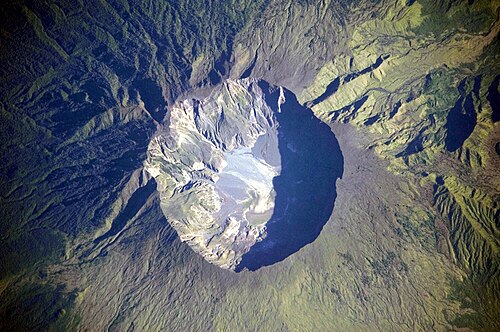
The Year Without a Summer
In 1816, snow fell in New England in June, harvests failed across Europe, and a group of bored writers stuck indoors invented Frankenstein. The cause was a volcano on the other side of the world.
The connection: Volcanoes can kill without lava.
Science · The Story
The Year Without a Summer
In 1816, snow fell in New England in June, harvests failed across Europe, and a group of bored writers stuck indoors invented Frankenstein. The cause was a volcano on the other side of the world.
The connection: Volcanoes can kill without lava.
 History · The Strange Case
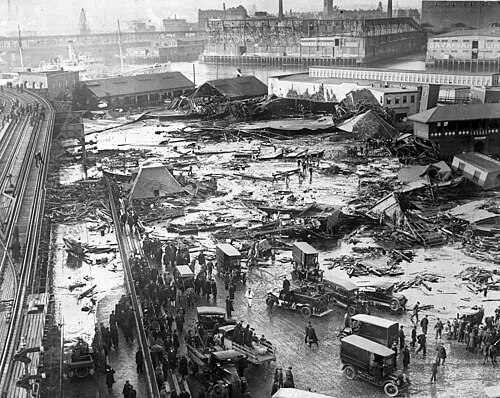
The Day Boston Drowned in Molasses
On a mild January afternoon in 1919, a giant tank burst and sent a wave of syrup through the streets of Boston's North End. It sounds like a cartoon. It killed 21 people.
The connection: A disaster no one imagined could happen — until it did.
History · The Strange Case
The Day Boston Drowned in Molasses
On a mild January afternoon in 1919, a giant tank burst and sent a wave of syrup through the streets of Boston's North End. It sounds like a cartoon. It killed 21 people.
The connection: A disaster no one imagined could happen — until it did.
 People · The Person
The Girl Who Found Sea Dragons
Mary Anning was poor, had little schooling, and was barred from the scientific societies of her day because she was a woman. She also found some of the most important fossils in history.
The connection: A completely different corner of the archive: people.
People · The Person
The Girl Who Found Sea Dragons
Mary Anning was poor, had little schooling, and was barred from the scientific societies of her day because she was a woman. She also found some of the most important fossils in history.
The connection: A completely different corner of the archive: people.