Space The Story
The Day the Sun Set Telegraphs on Fire
In 1859, the biggest solar storm on record lit up skies with auroras as far south as the Caribbean and made telegraph wires spark. If it happened today, it would be a very different story.
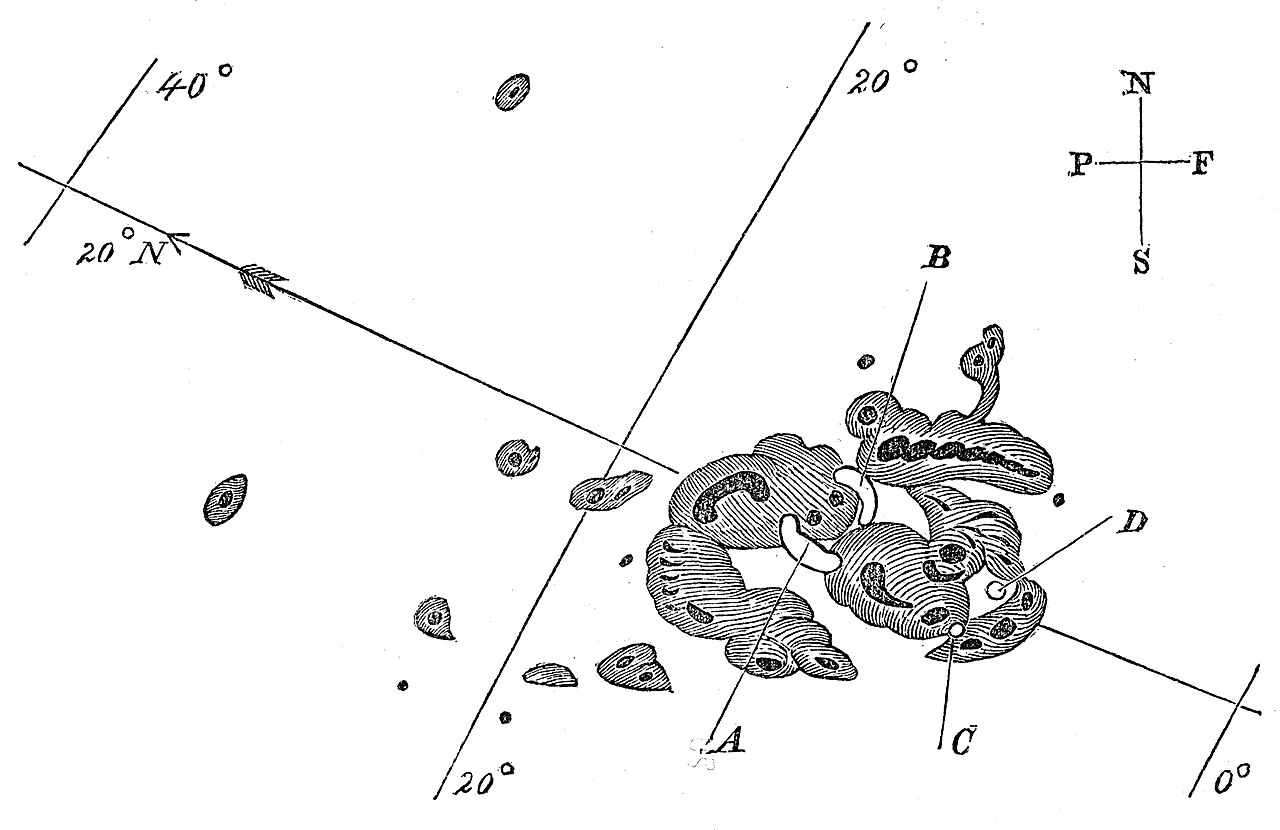
[IMAGE: Richard Carrington’s 1859 drawing of the sunspots where he saw the flare] (Richard Christopher Carrington / Wikimedia Commons, Public domain; opens as a separate document)
![[IMAGE: Richard Carrington’s 1859 drawing of the sunspots where he saw the flare]](https://upload.wikimedia.org/wikipedia/commons/thumb/9/92/Carrington_Richard_drawing_of_1859_sunspots.jpeg/1280px-Carrington_Richard_drawing_of_1859_sunspots.jpeg)
On the morning of 1 September 1859, the English astronomer Richard Carrington was sketching sunspots, projecting an image of the Sun onto a screen. Suddenly, two patches of intensely bright white light appeared among the spots. They brightened, moved, and faded within about five minutes.
He had seen a solar flare — the first ever recorded.
Within a day, Earth found out what it meant.
The sky catches fire
A huge burst of charged particles from the Sun slammed into Earth's magnetic field, triggering the most intense geomagnetic storm on record.
Auroras — normally seen only near the poles — lit up skies across the world. People saw them in places like Cuba, Hawaii and other tropical regions. In parts of the United States, the light was reportedly bright enough to read a newspaper by at night. Some people thought cities were on fire. Some birds began to sing, thinking it was morning.
For a few nights in 1859, the whole planet had the northern lights.
The telegraph goes haywire
The storm induced powerful electrical currents in long wires. And in 1859, the world had just built its first great network of long wires: the telegraph.
Telegraph systems failed across Europe and North America. Operators reported sparks leaping from equipment and paper catching fire. Then came the strangest part.
What if it happened today?
In 1859, the most vulnerable technology was the telegraph. Today we have satellites, GPS, long-distance power lines and transformers, undersea cables and a world that runs on electricity.
FACT Established by documentary or physical evidence.
It almost did
In July 2012, a powerful solar eruption blasted out from the Sun in a direction that missed Earth. Scientists estimated it was comparable in strength to the Carrington storm. Had it happened about a week earlier, Earth would have been in its path.
You learned this today!!! YOU LEARNED THIS TODAY !!!
- On 1 September 1859, astronomer Richard Carrington observed a brilliant solar flare.
- The resulting geomagnetic storm struck Earth within a day and is the most intense on record.
- Auroras were reported far from the poles, including in the Caribbean.
- Telegraph systems failed or sparked, and some operators reportedly sent messages with their batteries disconnected.
- A storm of similar strength today could damage satellites and power grids.
One more thing
Octopuses have three hearts and blue blood.
→ Read something elseSources & further reading
- Carrington Event, Wikipedia
- Carrington, R. C. Description of a Singular Appearance seen in the Sun on September 1, 1859, Monthly Notices of the Royal Astronomical Society, 1859
- Space Weather, NOAA Space Weather Prediction Center
StoneRed separates fact, hypothesis and speculation. Spotted an error? We'd genuinely like to know.
If you liked this…
 Space · The Theory
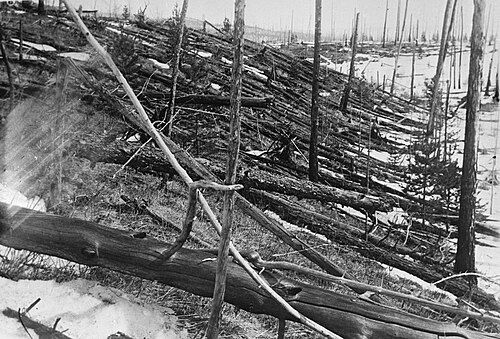
The Explosion That Flattened a Forest
In 1908, something exploded above a remote Siberian forest with the force of a large nuclear weapon. It flattened about 80 million trees. No crater was ever found.
The connection: Space reaches down and touches Earth.
Space · The Theory
The Explosion That Flattened a Forest
In 1908, something exploded above a remote Siberian forest with the force of a large nuclear weapon. It flattened about 80 million trees. No crater was ever found.
The connection: Space reaches down and touches Earth.
 People · The Person
The Man Who Didn't Believe the Computer
Just after midnight on 26 September 1983, a Soviet satellite system reported that American nuclear missiles were on their way. The officer on duty had minutes to decide what to tell Moscow.
The connection: What happens when the technology we trust is overwhelmed.
People · The Person
The Man Who Didn't Believe the Computer
Just after midnight on 26 September 1983, a Soviet satellite system reported that American nuclear missiles were on their way. The officer on duty had minutes to decide what to tell Moscow.
The connection: What happens when the technology we trust is overwhelmed.
 Random · The Question
The Goat Behind Door Number Three
In 1990, a magazine columnist answered a simple puzzle about a game show. Thousands of readers, including mathematicians, wrote in to tell her she was wrong. She wasn't.
The connection: A completely different corner of the archive: random.
Random · The Question
The Goat Behind Door Number Three
In 1990, a magazine columnist answered a simple puzzle about a game show. Thousands of readers, including mathematicians, wrote in to tell her she was wrong. She wasn't.
The connection: A completely different corner of the archive: random.