Cold Cases The Person
The Eleven Days Agatha Christie Disappeared
In December 1926, the world’s future best-selling mystery writer vanished, sparking a nationwide manhunt. She turned up in a spa hotel under someone else’s name — and never explained why.
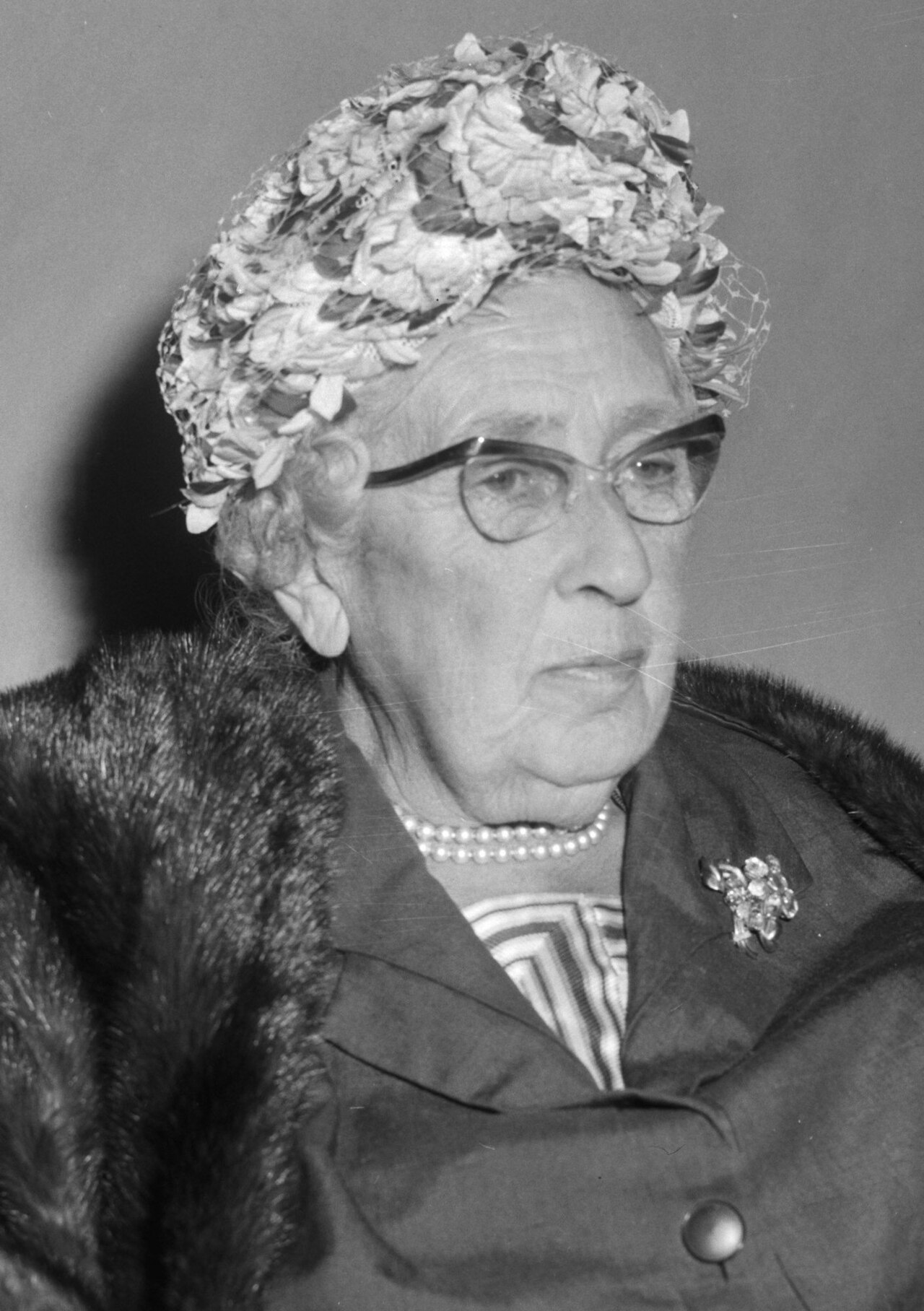
[IMAGE: Agatha Christie in later life, wearing a hat and coat] (Joop van Bilsen, Anefo / Nationaal Archief / Wikimedia Commons, CC0; opens as a separate document)
![[IMAGE: Agatha Christie in later life, wearing a hat and coat]](https://upload.wikimedia.org/wikipedia/commons/thumb/f/f7/Agatha_Christie_in_Nederland_%28detectiveschrijfster%29%2C_bij_aankomst_op_Schiphol_me%2C_Bestanddeelnr_916-8898_%28cropped%29.jpg/1280px-Agatha_Christie_in_Nederland_%28detectiveschrijfster%29%2C_bij_aankomst_op_Schiphol_me%2C_Bestanddeelnr_916-8898_%28cropped%29.jpg)
In 1926, Agatha Christie was thirty-six and already a successful novelist. Earlier that year she had published The Murder of Roger Ackroyd, whose twist ending caused an uproar among readers.
Her personal life was falling apart. Her beloved mother had died. And her husband, Archie, had told her he had fallen in love with another woman, Nancy Neele, and wanted a divorce.
On the evening of Friday 3 December, Christie went upstairs to kiss her sleeping daughter goodnight, got into her car and drove off into the night.
The empty car
The next morning, her car was found abandoned at Newlands Corner, near Guildford in Surrey. It had run off the road down a slope and stopped against bushes. Inside were a fur coat, a small case and an out-of-date driving licence.
There was no sign of Agatha Christie.
What followed was one of the biggest manhunts in British history up to that time. Large numbers of police were joined by thousands of volunteers combing the countryside. A nearby lake known as the Silent Pool was searched. Newspapers put her face on their front pages.
A famous writer of mysteries had vanished, in a way that might have come from one of her own books.
The hotel in Harrogate
On 14 December, eleven days after she disappeared, Agatha Christie was found — alive and well — at the Swan Hydropathic Hotel, a spa hotel in Harrogate, Yorkshire, around 200 miles away.
She had checked in under the name Teresa Neele, from Cape Town. Neele was the surname of her husband's lover. Staff and guests had seen her dancing, playing billiards and reading newspapers — including stories about her own disappearance. Hotel musicians are said to have recognised her and alerted the police.
The explanation that wasn't
Her husband told the press she had lost her memory. Doctors later issued a statement supporting the idea of amnesia.
Christie herself almost never spoke about it. Her autobiography, published after her death in 1976, does not mention the eleven days at all.
FACT Established by documentary or physical evidence.
What's documented
The disappearance, the abandoned car, the search and her discovery at the Harrogate hotel under the name Teresa Neele are all well documented.
SPECULATION Possible, unproven, and labelled so you can enjoy it responsibly.
The theories
Some biographers believe she experienced a genuine "fugue state" — a rare condition in which a person under extreme stress loses their sense of identity and may travel and take on a new one. Others think she meant to embarrass her unfaithful husband, or simply needed to escape. Each theory fits some facts and struggles with others.
The Christies divorced in 1928. Agatha went on to become the best-selling novelist of all time. Her greatest mystery is the one she never solved for us.
You learned this today!!! YOU LEARNED THIS TODAY !!!
- On the night of 3 December 1926, Agatha Christie left her home in Sunningdale, Berkshire, and disappeared.
- Her car was found the next morning abandoned near Newlands Corner in Surrey.
- The search involved large numbers of police and volunteers, and became a national sensation.
- She was found on 14 December at a hotel in Harrogate, Yorkshire, where she had checked in under the name Teresa Neele.
- Christie never publicly explained what happened, and left the episode out of her autobiography.
One more thing
In 1947, engineers found a moth stuck in a relay of the Harvard Mark II computer and taped it into the logbook as the "first actual case of bug being found".
→ Read something elseSources & further reading
- Agatha Christie, Wikipedia
- Thompson, Laura. Agatha Christie: A Mysterious Life, Headline, 2007
StoneRed separates fact, hypothesis and speculation. Spotted an error? We'd genuinely like to know.
If you liked this…
 Cold Cases · The Strange Case
The Woman in Ice Valley
In 1970, hikers in Norway found the burned body of a woman nobody could identify. She had travelled under at least eight false names. Half a century later, we still don’t know who she was.
The connection: Another woman who checked into hotels under a different name.
Cold Cases · The Strange Case
The Woman in Ice Valley
In 1970, hikers in Norway found the burned body of a woman nobody could identify. She had travelled under at least eight false names. Half a century later, we still don’t know who she was.
The connection: Another woman who checked into hotels under a different name.
 Cold Cases · The Strange Case
The Man on Somerton Beach
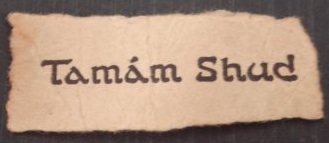
In 1948 a well-dressed stranger was found dead on an Australian beach, with the labels cut from his clothes and a scrap of poetry hidden in his pocket. It took 74 years to learn his name.
The connection: Another case where the newspapers filled the silence with theories.
Cold Cases · The Strange Case
The Man on Somerton Beach
In 1948 a well-dressed stranger was found dead on an Australian beach, with the labels cut from his clothes and a scrap of poetry hidden in his pocket. It took 74 years to learn his name.
The connection: Another case where the newspapers filled the silence with theories.
 Psychology · The Question
Why Don't We Remember Being Babies?
You learned to walk, talk and recognise your own face — and you remember none of it. Science is finally starting to explain where those years went.
The connection: More on the strange ways memory can fail.
Psychology · The Question
Why Don't We Remember Being Babies?
You learned to walk, talk and recognise your own face — and you remember none of it. Science is finally starting to explain where those years went.
The connection: More on the strange ways memory can fail.