Cold Cases The Strange Case
The Woman in Ice Valley
In 1970, hikers in Norway found the burned body of a woman nobody could identify. She had travelled under at least eight false names. Half a century later, we still don’t know who she was.
Isdalen, a steep valley outside the Norwegian city of Bergen, is known locally as "Ice Valley". It is rocky, beautiful and lonely. Over the years, people had come there to die, and some locals called it "Death Valley".
On 29 November 1970, a university lecturer and his two young daughters were hiking there when they noticed a strange smell. Among the rocks they found the body of a woman, badly burned.
Around her lay the remains of her belongings: a melted plastic bottle, a broken watch, earrings, an umbrella. Many items had been deliberately burned. And as the police examined what was left, they discovered something else.
Every label that might identify her had been removed.
The suitcases
A few days later, police found two suitcases at Bergen railway station that belonged to her. Inside were clothes — again with the labels cut out — several wigs, sunglasses, a cosmetic case, money in different currencies, and a notebook.
The notebook contained short lines of letters and numbers in what looked like a code. Investigators later worked out that it recorded dates and places — a record of her travels.
Following those travels, the police pieced together part of her life. She had stayed in hotels across Norway and in other European cities, often for just a few days, and she had used at least eight different names and passports. Hotel staff remembered a well-dressed woman who spoke several languages, kept to herself and sometimes asked to change rooms.
She was careful, multilingual, and always moving. And she had made sure that no one would be able to say who she was.
The verdict
The post-mortem found that she had taken a large quantity of sleeping pills, and that there was soot in her lungs — she had been alive when the fire started.
The police concluded that it was suicide. The case was closed quickly. She was buried in an unmarked grave in Bergen in 1971.
Many people never accepted the verdict. Why remove the labels? Why the false identities? And the timing seemed suggestive: this was the height of the Cold War, and Bergen's region was of military interest. Some witnesses reportedly claimed to have seen her near places where military tests were taking place.
FACT Established by documentary or physical evidence.
What's documented
The discovery, the removed labels, the suitcases, the multiple identities and the coded notebook are all part of the police record.
SPECULATION Possible, unproven, and labelled so you can enjoy it responsibly.
What's guessed
That she was a spy — or a courier, or someone running from something — is a popular theory, but there is no public evidence that settles it. Nobody knows who she was or why she was in Norway.
Science reopens the case
In 2016, Norwegian broadcaster NRK reopened the case with modern forensic science, in a project later made into the podcast Death in Ice Valley with the BBC.
Scientists analysed isotopes in her teeth — chemical traces that reflect the food and water a person consumed as a child. The results suggested she was born around 1930, and that she spent her early childhood in or near southern Germany, possibly around Nuremberg, before moving to a region further west, such as France or the border area with Germany.
A DNA profile was also produced, in the hope that a relative might one day be found.
You learned this today!!! YOU LEARNED THIS TODAY !!!
- On 29 November 1970, a man and his daughters found the badly burned body of a woman in Isdalen, a valley near Bergen, Norway.
- Labels had been removed from her clothes and belongings, and two suitcases she left at Bergen railway station contained wigs and money in several currencies.
- She had travelled around Europe using at least eight false identities.
- Norwegian police concluded she had taken her own life, a verdict many people have doubted.
- Isotope analysis of her teeth, published around 2017–2018, suggested she was born around 1930 and grew up in or near southern Germany before moving west.
One more thing
A bolt of lightning can heat the air around it to roughly five times the temperature of the Sun's surface.
→ Read something elseSources & further reading
- Isdal Woman, Wikipedia
- Death in Ice Valley, NRK and BBC World Service podcast, 2018
StoneRed separates fact, hypothesis and speculation. Spotted an error? We'd genuinely like to know.
If you liked this…
 Cold Cases · The Strange Case
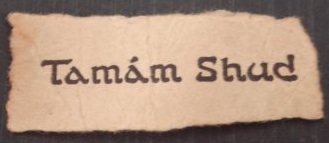
The Man on Somerton Beach
In 1948 a well-dressed stranger was found dead on an Australian beach, with the labels cut from his clothes and a scrap of poetry hidden in his pocket. It took 74 years to learn his name.
The connection: Another stranger with the labels cut out, and a code nobody could read.
Cold Cases · The Strange Case
The Man on Somerton Beach
In 1948 a well-dressed stranger was found dead on an Australian beach, with the labels cut from his clothes and a scrap of poetry hidden in his pocket. It took 74 years to learn his name.
The connection: Another stranger with the labels cut out, and a code nobody could read.
 Mysteries · The Theory
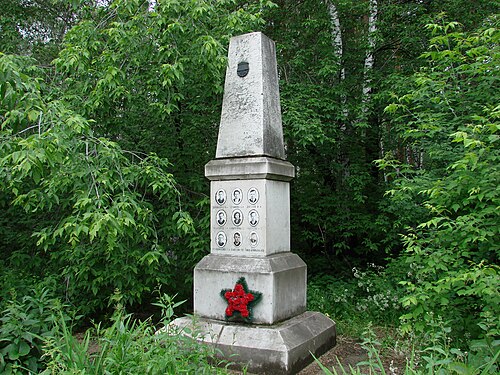
The Tent Cut Open From the Inside
In February 1959, nine experienced hikers died on a mountainside in the Soviet Urals after fleeing their tent into the snow, half-dressed. For sixty years, it fuelled wild theories. Science may finally have the answer.
The connection: Another death in a cold valley that never had a satisfying explanation.
Mysteries · The Theory
The Tent Cut Open From the Inside
In February 1959, nine experienced hikers died on a mountainside in the Soviet Urals after fleeing their tent into the snow, half-dressed. For sixty years, it fuelled wild theories. Science may finally have the answer.
The connection: Another death in a cold valley that never had a satisfying explanation.
 Cold Cases · The Strange Case
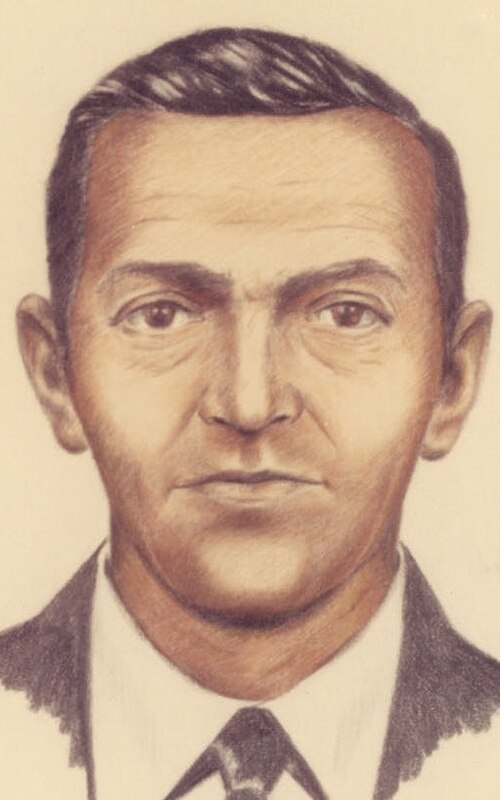
The Hijacker Who Jumped Into the Rain
In 1971 a quiet man in a business suit hijacked a passenger jet, collected $200,000, and stepped out of the back of the plane into a storm at night. Nobody has seen him since.
The connection: Another person who used a false name, and then simply disappeared.
Cold Cases · The Strange Case
The Hijacker Who Jumped Into the Rain
In 1971 a quiet man in a business suit hijacked a passenger jet, collected $200,000, and stepped out of the back of the plane into a storm at night. Nobody has seen him since.
The connection: Another person who used a false name, and then simply disappeared.