Modern World The Strange Case
The Emus Won
In 1932, Australia sent soldiers with machine guns to fight a flock of flightless birds. It did not go to plan.
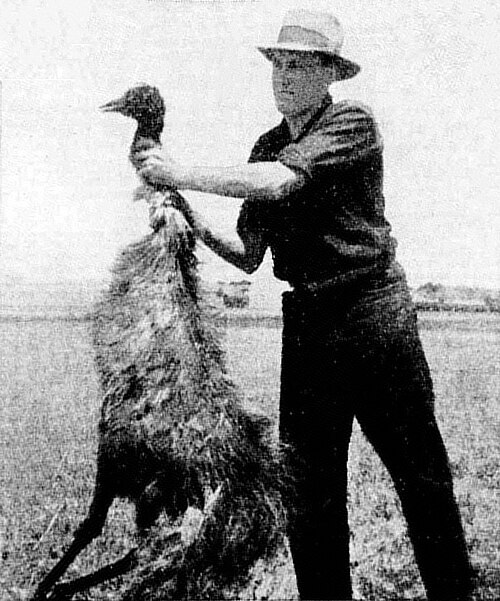
[IMAGE: An emu killed during the 1932 Emu War, held up for the camera] (Unknown author / Wikimedia Commons, Public domain; opens as a separate document)
![[IMAGE: An emu killed during the 1932 Emu War, held up for the camera]](https://upload.wikimedia.org/wikipedia/commons/thumb/b/be/Deceased_emu_during_Emu_War.jpg/500px-Deceased_emu_during_Emu_War.jpg)
In November 1932, the Australian military went to war against an enemy that couldn't fly, didn't have weapons, and could run at around 50 kilometres an hour.
The enemy was the emu. And the emu won.
How do you end up at war with a bird?
After the First World War, Australia offered land in Western Australia to returning veterans so they could become farmers. Many of them ended up growing wheat in marginal country near towns like Campion and Walgoolan.
Then the Great Depression arrived, wheat prices collapsed, and in 1932 a new problem appeared: about 20,000 emus, migrating inland after their breeding season, discovered that freshly cleared farmland was full of water and food.
They ate the crops. They knocked down fences, which let rabbits in to eat the rest.
The farmers were ex-soldiers. They knew what machine guns could do. So they asked the Minister of Defence, Sir George Pearce, for help — and remarkably, he agreed.
The campaign
Major G. P. W. Meredith of the Royal Australian Artillery was put in charge. His force: two soldiers, two Lewis machine guns and 10,000 rounds of ammunition.
It went badly from the start.
The emus refused to behave like an army. When the soldiers approached, the flock scattered into small groups and ran in every direction. When the gunners set up an ambush near a dam where a thousand emus had been spotted, a gun jammed after killing only a handful. The soldiers mounted a gun on a truck to chase the birds — but the truck couldn't keep up on rough ground, and the gunner couldn't aim while bouncing around.
"If we had a military division with the bullet-carrying capacity of these birds, it would face any army in the world." — Major Meredith, as reported in the press
After a week of embarrassing headlines, the soldiers were withdrawn. The emus remained.
Round two
Farmers kept complaining, so the military returned in mid-November for a second attempt that lasted until early December. This time the results were somewhat better.
Meredith reported 986 confirmed kills using 9,860 rounds of ammunition — almost exactly ten rounds per bird — and estimated that around 2,500 more had died of their injuries.
It was not the decisive victory anyone had hoped for. The press had a wonderful time.
What actually worked
In the end, the most effective weapon against the emus wasn't a machine gun. It was paperwork.
A bounty system, paying hunters for each emu killed, proved far more effective. In 1934, over just six months, more than 57,000 bounties were claimed. Later, better fencing did much of the rest.
You learned this today!!! YOU LEARNED THIS TODAY !!!
- The "Emu War" took place in Western Australia in November and December 1932.
- The operation was led by Major G. P. W. Meredith with two soldiers, two Lewis guns and 10,000 rounds of ammunition.
- Meredith reported 986 confirmed kills using 9,860 rounds — about ten bullets per emu.
- Farmers had better results with a bounty system in later years, claiming tens of thousands of bounties.
One more thing
The shortest scheduled passenger flight in the world, between two Orkney islands, is often over in under two minutes.
→ Read something elseSources & further reading
- Emu War, Wikipedia
- Johnson, Murray. "Feathered foes": soldier settlers and Western Australia's "Emu War" of 1932, Journal of Australian Studies, 2006
- Emu, Australian Museum
StoneRed separates fact, hypothesis and speculation. Spotted an error? We'd genuinely like to know.
If you liked this…
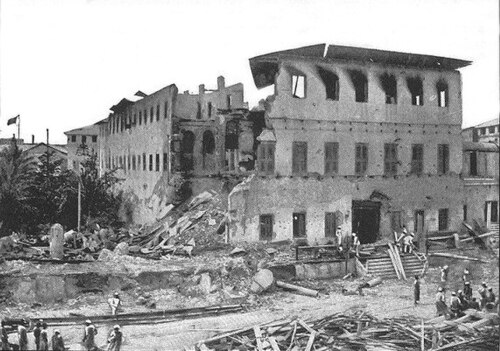 History · The Strange Case
The War That Lasted Less Than an Hour
On a summer morning in 1896, Britain and Zanzibar fought an entire war before most people had finished breakfast. Then came the bill.
The connection: Another short, lopsided war — although this time the side with the guns lost.
History · The Strange Case
The War That Lasted Less Than an Hour
On a summer morning in 1896, Britain and Zanzibar fought an entire war before most people had finished breakfast. Then came the bill.
The connection: Another short, lopsided war — although this time the side with the guns lost.
 Nature · The Story
The Jellyfish That Hits Rewind
When life gets hard, Turritopsis dohrnii doesn't die. It turns back into a baby.
The connection: Nature keeps finding ways to win.
Nature · The Story
The Jellyfish That Hits Rewind
When life gets hard, Turritopsis dohrnii doesn't die. It turns back into a baby.
The connection: Nature keeps finding ways to win.
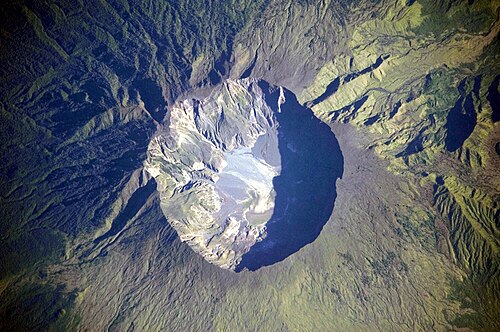 Science · The Story
The Year Without a Summer
In 1816, snow fell in New England in June, harvests failed across Europe, and a group of bored writers stuck indoors invented Frankenstein. The cause was a volcano on the other side of the world.
The connection: A completely different corner of the archive: science.
Science · The Story
The Year Without a Summer
In 1816, snow fell in New England in June, harvests failed across Europe, and a group of bored writers stuck indoors invented Frankenstein. The cause was a volcano on the other side of the world.
The connection: A completely different corner of the archive: science.