Nature The Story
The Fish That Came Back From Extinction
Scientists thought the coelacanth had died out with the dinosaurs. Then, in 1938, a museum curator in South Africa spotted one in a fisherman's catch.
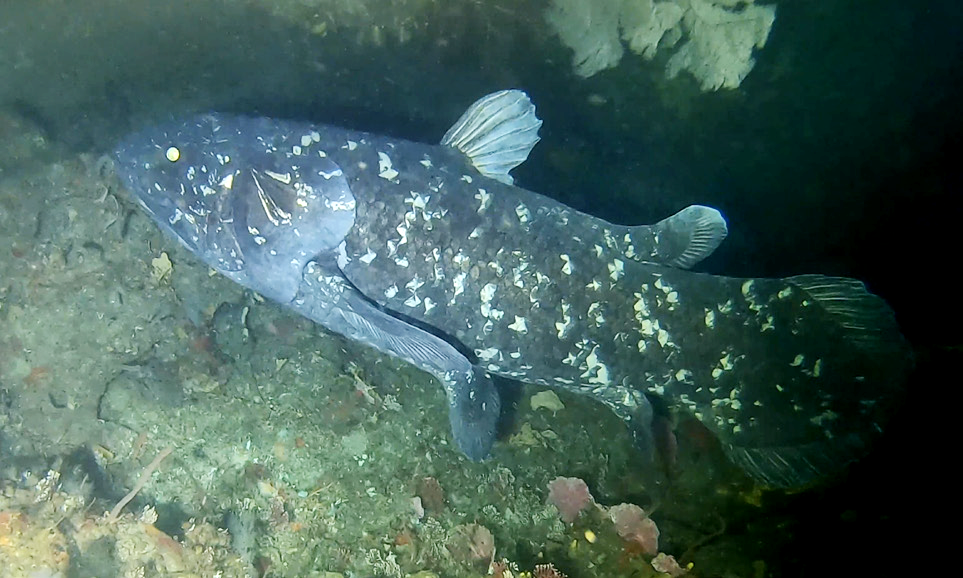
[IMAGE: A coelacanth swimming near the sea floor off South Africa] (Bruce A.S. Henderson / Wikimedia Commons, CC BY 4.0; opens as a separate document)

On 22 December 1938, a trawler docked at East London, on the coast of South Africa. Its captain called the local museum's young curator, Marjorie Courtenay-Latimer, to see if there was anything interesting in the catch.
There was.
Among the sharks and fish was a large blue fish she had never seen before, about 1.5 metres long, with glinting silver flecks and strange, limb-like fins. She later described it as the most beautiful fish she had ever seen.
A fish from the age of dinosaurs
Courtenay-Latimer couldn't identify it, so she sketched it and sent the drawing to J. L. B. Smith, a chemistry lecturer and fish expert. Smith recognised it at once, and couldn't believe it.
It was a coelacanth — a member of an ancient group of fish known only from fossils, believed to have gone extinct around 66 million years ago, when the dinosaurs died out.
It was as if someone had found a living dinosaur in a fish market.
The species was named Latimeria chalumnae, in honour of Courtenay-Latimer and the Chalumna River near where it was caught.
The long search
Unfortunately, the 1938 specimen couldn't be fully preserved; its internal organs were lost. Smith spent fourteen years searching for another, distributing reward posters around the Indian Ocean. In 1952, one was finally caught near the Comoro Islands.
FACT Established by documentary or physical evidence.
Why scientists care
Coelacanths have fleshy, lobed fins supported by bones, which move in an alternating pattern a little like walking. They are related to the group of fish that, hundreds of millions of years ago, gave rise to the first four-legged animals — and eventually to us.
You learned this today!!! YOU LEARNED THIS TODAY !!!
- Coelacanths were known only from fossils and thought to have died out around 66 million years ago.
- In December 1938, museum curator Marjorie Courtenay-Latimer found a living coelacanth in a fishing catch in South Africa.
- The fish was named Latimeria chalumnae in her honour.
- A second species was identified in Indonesia in the late 1990s.
- Coelacanths have fleshy, lobed fins that move in a pattern resembling walking.
One more thing
Bananas are botanically berries. Strawberries are not.
→ Read something elseSources & further reading
- Coelacanth, Wikipedia
- Marjorie Courtenay-Latimer, Wikipedia
- Weinberg, Samantha. A Fish Caught in Time: The Search for the Coelacanth, Fourth Estate, 1999
StoneRed separates fact, hypothesis and speculation. Spotted an error? We'd genuinely like to know.
If you liked this…
 People · The Person
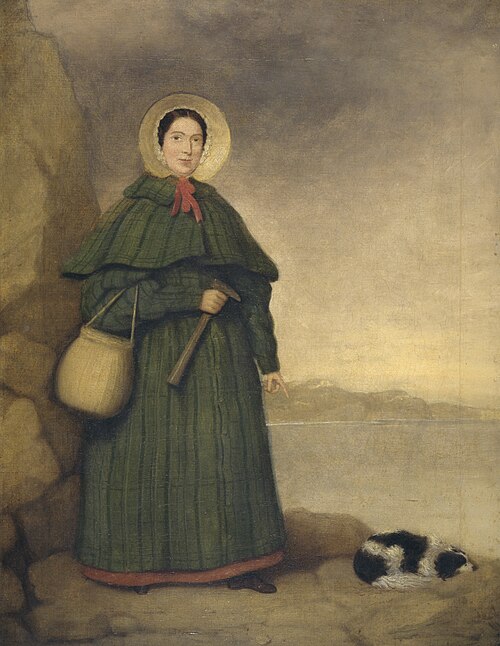
The Girl Who Found Sea Dragons
Mary Anning was poor, had little schooling, and was barred from the scientific societies of her day because she was a woman. She also found some of the most important fossils in history.
The connection: Another woman whose fossil-world discovery changed science.
 Nature · The Story
The Jellyfish That Hits Rewind
When life gets hard, Turritopsis dohrnii doesn't die. It turns back into a baby.
The connection: Some animals just refuse to follow the rules.
 Nature · The Story
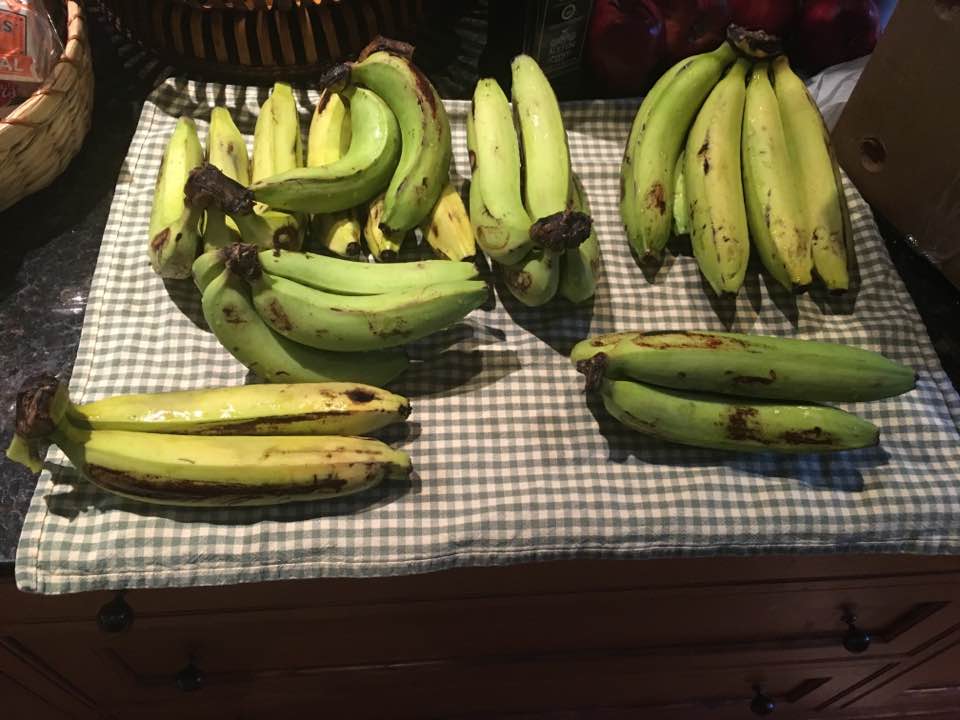
The Banana Your Grandparents Ate
The banana in your kitchen isn't the one people ate in 1940. That one was wiped out by a fungus — and the replacement is under threat too.
The connection: Not everything we think is extinct actually is.