People The Person
The Girl Who Found Sea Dragons
Mary Anning was poor, had little schooling, and was barred from the scientific societies of her day because she was a woman. She also found some of the most important fossils in history.
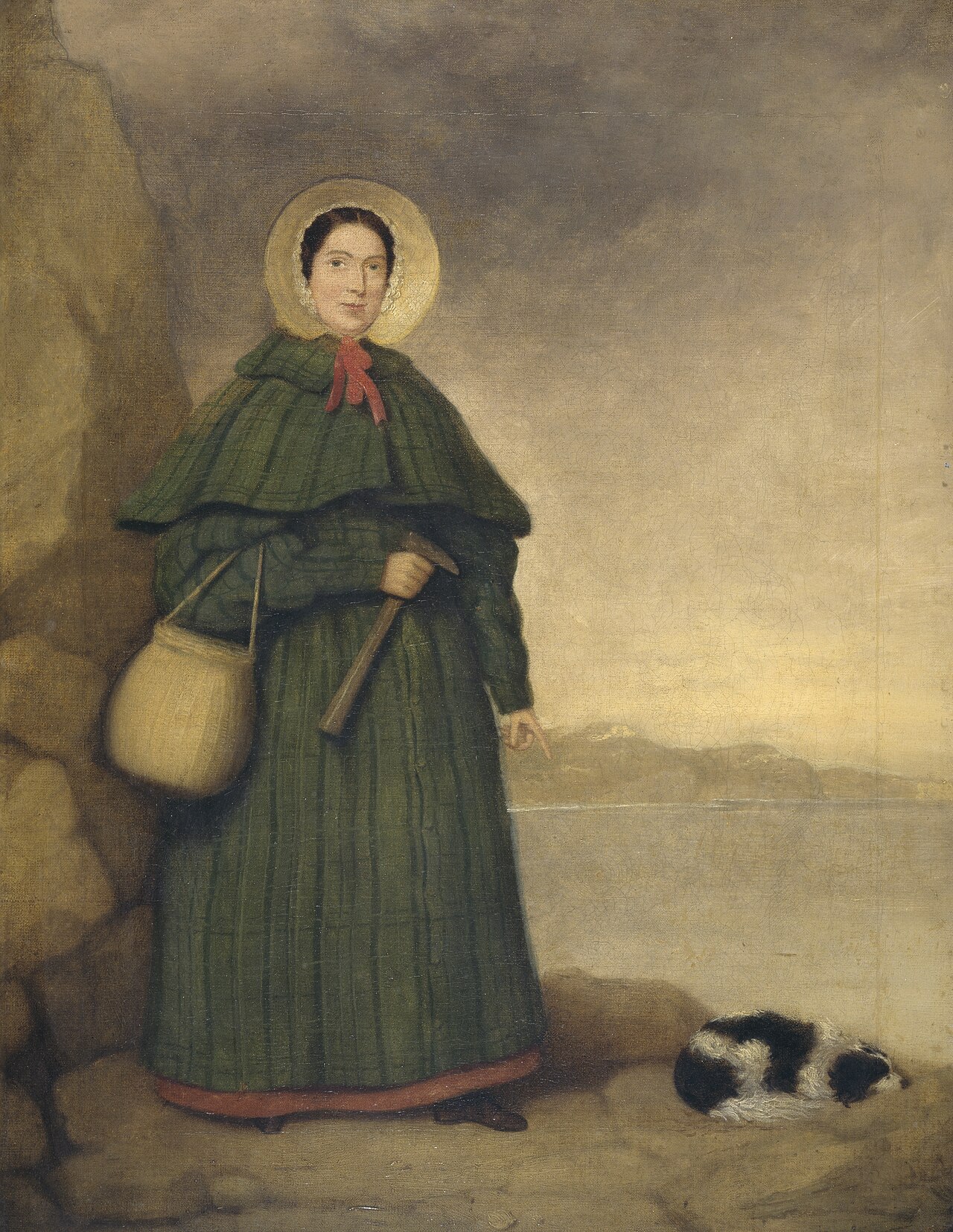
[IMAGE: Painted portrait of Mary Anning with her dog Tray and a geological hammer] (Credited to 'Mr. Grey' in Crispin Tickell's book 'Mary Anning of Lyme Regis' (19 / Wikimedia Commons, Public domain; opens as a separate document)
![[IMAGE: Painted portrait of Mary Anning with her dog Tray and a geological hammer]](https://upload.wikimedia.org/wikipedia/commons/thumb/e/e7/Mary_Anning_painting.jpg/1280px-Mary_Anning_painting.jpg)
On the coast of Dorset in southern England, the cliffs around Lyme Regis crumble. Every winter storm brings down more rock — and with it, the bones of creatures that swam there about 200 million years ago.
Mary Anning grew up on those beaches. Her family was poor. Her father, a cabinet maker, sold fossils — "curiosities" — to tourists, and taught his children to find them. When he died in 1810, the family was left in debt, and fossil hunting became a way to survive.
It was dangerous work. Landslides could bury you. In 1833 a rockfall killed her dog, Tray, inches from her.
The sea dragon
Around 1811–12, Mary's brother Joseph found a strange skull in the cliffs. Mary, still a child, later found much of the rest of the skeleton. It was a creature that looked like a cross between a fish and a lizard, with enormous eyes.
It became known as Ichthyosaurus — "fish lizard". It was one of the first such skeletons to come to the attention of the scientific world, and people found it astonishing: proof that very different creatures had once lived, and then vanished.
In 1823 she found something even stranger: the first complete skeleton of a plesiosaur, with a tiny head on an absurdly long neck. Some experts at first suspected it was a fake. It wasn't.
At a time when many people still believed species could never go extinct, Mary Anning was digging them out of the cliffs.
The credit problem
Anning's knowledge was formidable. Visiting scientists sought her out and consulted her about anatomy and geology. But she was a working-class woman, and the Geological Society of London did not admit women. Her finds were sold to collectors and museums, and the men who described them in scientific papers often didn't mention her.
She noticed. A young visitor recorded her saying that the world had used her ill.
Recognition, finally
Anning died in 1847. The Geological Society, which wouldn't have her as a member, published an obituary of her — highly unusual for a non-member. Today her fossils are prized in museums, and in 2022 a statue of her was unveiled in Lyme Regis.
You learned this today!!! YOU LEARNED THIS TODAY !!!
- Mary Anning (1799–1847) hunted fossils on the cliffs and beaches around Lyme Regis in Dorset, England.
- As a child, with her brother Joseph, she helped uncover the first ichthyosaur skeleton to be widely recognised.
- In 1823 she found the first complete plesiosaur skeleton.
- As a woman, she could not join the Geological Society of London, and her finds were often credited to the men who bought them.
- The tongue-twister "She sells seashells by the seashore" is often said to be about her, but there is no solid evidence for this.
One more thing
The University of Oxford was teaching students before the Aztec capital of Tenochtitlan was founded.
→ Read something elseSources & further reading
- Mary Anning, Wikipedia
- Mary Anning, Natural History Museum, London
- Torrens, Hugh. Mary Anning (1799–1847) of Lyme: the greatest fossilist the world ever knew, British Journal for the History of Science, 1995
StoneRed separates fact, hypothesis and speculation. Spotted an error? We'd genuinely like to know.
If you liked this…
 Nature · The Story
The Jellyfish That Hits Rewind
When life gets hard, Turritopsis dohrnii doesn't die. It turns back into a baby.
The connection: Life in the deep past — and in the present — is stranger than it looks.
Nature · The Story
The Jellyfish That Hits Rewind
When life gets hard, Turritopsis dohrnii doesn't die. It turns back into a baby.
The connection: Life in the deep past — and in the present — is stranger than it looks.
 People · The Person
The Man Who Didn't Believe the Computer
Just after midnight on 26 September 1983, a Soviet satellite system reported that American nuclear missiles were on their way. The officer on duty had minutes to decide what to tell Moscow.
The connection: Another person who changed history without getting credit for it.
People · The Person
The Man Who Didn't Believe the Computer
Just after midnight on 26 September 1983, a Soviet satellite system reported that American nuclear missiles were on their way. The officer on duty had minutes to decide what to tell Moscow.
The connection: Another person who changed history without getting credit for it.
 Geography · The Strange Case
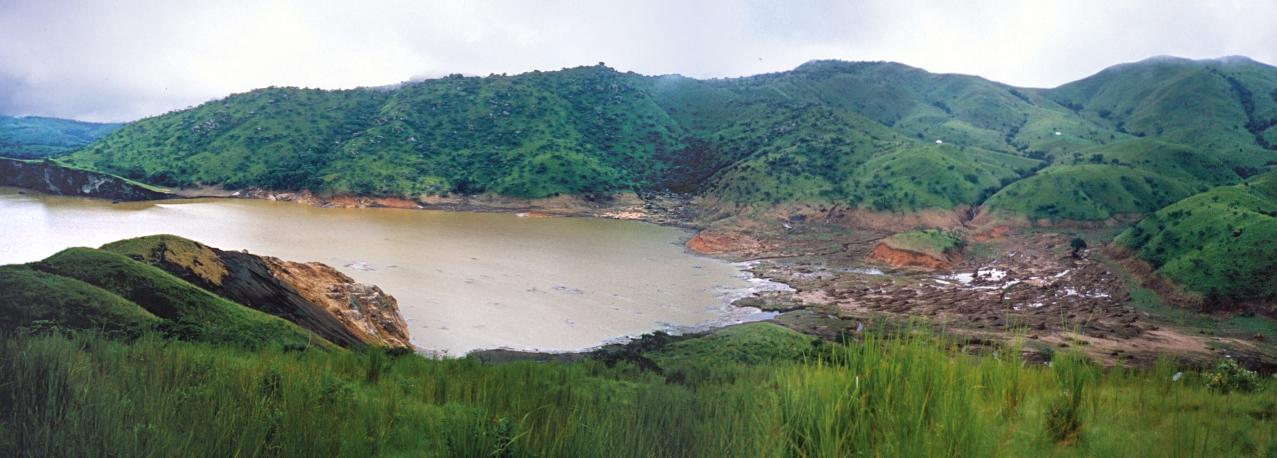
The Lake That Exploded
One night in 1986, a peaceful crater lake in Cameroon released an invisible cloud that rolled down into the valleys and killed 1,746 people in their sleep.
The connection: A completely different corner of the archive: geography.
Geography · The Strange Case
The Lake That Exploded
One night in 1986, a peaceful crater lake in Cameroon released an invisible cloud that rolled down into the valleys and killed 1,746 people in their sleep.
The connection: A completely different corner of the archive: geography.