Science The Story
The Year Without a Summer
In 1816, snow fell in New England in June, harvests failed across Europe, and a group of bored writers stuck indoors invented Frankenstein. The cause was a volcano on the other side of the world.
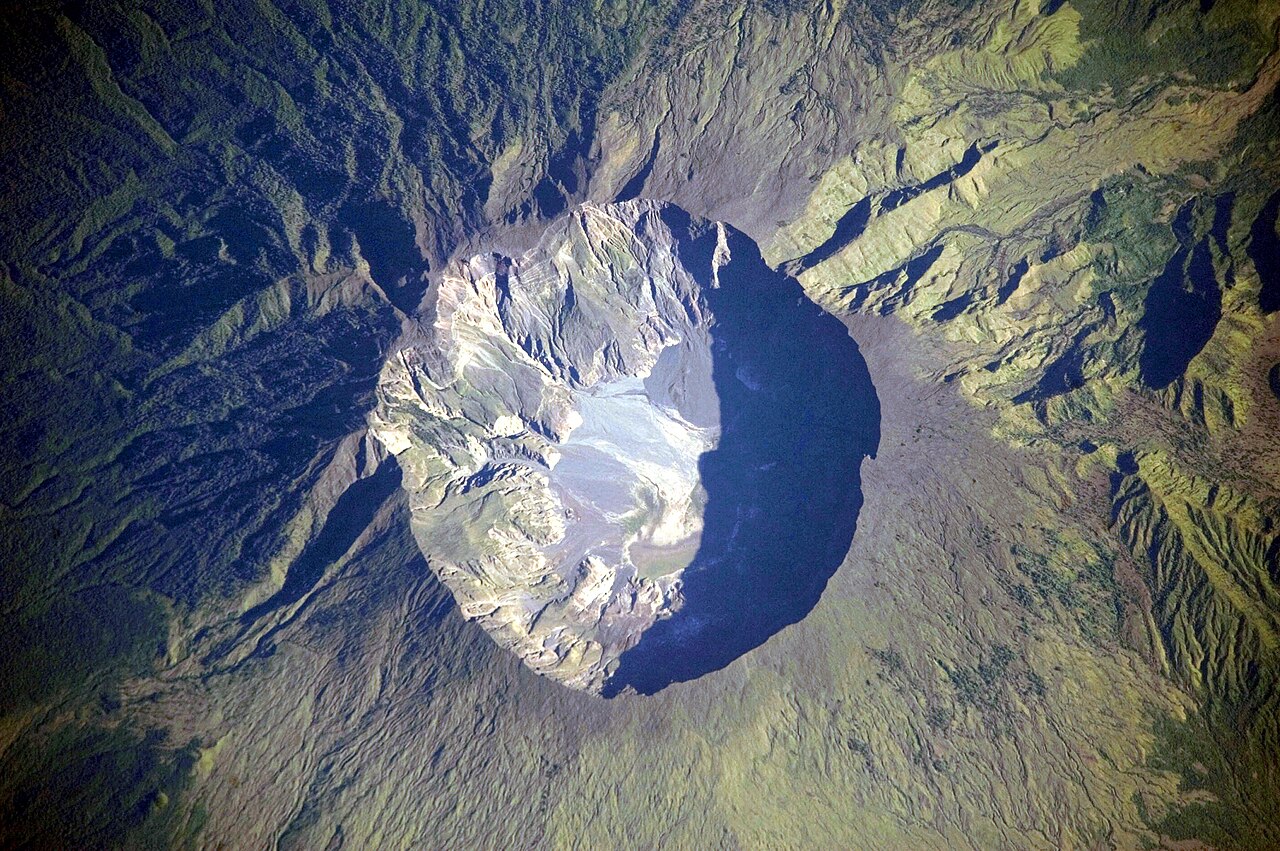
[IMAGE: The vast crater of Mount Tambora on Sumbawa, Indonesia] (This image was taken by the NASA Expedition 20 crew. / Wikimedia Commons, Public domain; opens as a separate document)
![[IMAGE: The vast crater of Mount Tambora on Sumbawa, Indonesia]](https://upload.wikimedia.org/wikipedia/commons/thumb/7/78/Mount_Tambora_Volcano%2C_Sumbawa_Island%2C_Indonesia.jpg/1280px-Mount_Tambora_Volcano%2C_Sumbawa_Island%2C_Indonesia.jpg)
In April 1815, on the island of Sumbawa in what is now Indonesia, Mount Tambora exploded.
It was the largest volcanic eruption in recorded history. The blasts were heard hundreds of kilometres away; people mistook them for cannon fire. Tens of thousands of people on the surrounding islands died, from the eruption itself and from the famine that followed.
But the eruption had a much longer reach. It threw vast amounts of ash and sulphur gas high into the stratosphere, where they spread around the planet and reflected sunlight back into space.
The next year, the world got cold.
Snow in June
In 1816, parts of New England saw snow in June. Frosts killed crops in July and August. In Europe, harvests failed, food prices soared, and hunger and unrest spread. Many people had no idea why: the eruption that caused it had happened a year earlier, on the other side of the world.
1816 went down in history as "the Year Without a Summer" — and, in New England, as "Eighteen-Hundred-and-Froze-to-Death".
The ghost-story contest
That summer, a group of young English writers rented the Villa Diodati on Lake Geneva in Switzerland. Among them were the poet Lord Byron, Percy Shelley, Mary Godwin (soon to be Mary Shelley), and Byron's doctor, John Polidori.
The weather was terrible — cold, dark and stormy. Stuck indoors, Byron proposed a challenge: each of them should write a ghost story.
Mary, eighteen years old, struggled for days. Then, by her own later account, an idea came to her in a waking dream: a scientist kneeling beside the thing he had brought to life.
That idea became Frankenstein, published in 1818. And Polidori's contribution, The Vampyre, became one of the founding works of vampire fiction.
HYPOTHESIS A credible explanation that some experts support, not proven.
Other strange side-effects
Historians have linked the cold years to all sorts of changes: migration westward from New England, and even — in one intriguing but debated idea — Karl Drais's 1817 "running machine", an ancestor of the bicycle, at a time when feeding horses had become expensive. These connections are suggestive, not proven.
You learned this today!!! YOU LEARNED THIS TODAY !!!
- The 1815 eruption of Mount Tambora in Indonesia was the largest volcanic eruption in recorded history.
- Its ash and sulphur cooled the global climate, making 1816 the "Year Without a Summer".
- Snow fell in parts of New England in June 1816, and crops failed across Europe and North America.
- Mary Shelley began writing Frankenstein that summer at the Villa Diodati near Geneva, during a ghost-story contest.
- The same gathering produced John Polidori's The Vampyre, an early classic of vampire fiction.
One more thing
The Moon drifts about 3.8 centimetres further away from Earth every year.
→ Read something elseSources & further reading
- Year Without a Summer, Wikipedia
- 1815 eruption of Mount Tambora, Wikipedia
- Wood, Gillen D'Arcy. Tambora: The Eruption That Changed the World, Princeton University Press, 2014
StoneRed separates fact, hypothesis and speculation. Spotted an error? We'd genuinely like to know.
If you liked this…
 Weird · The Strange Case
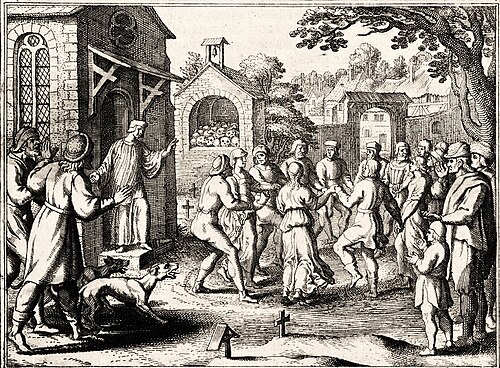
The Summer Strasbourg Couldn't Stop Dancing
In July 1518, a woman stepped into a street and began to dance. Within weeks, dozens — perhaps hundreds — had joined her, and nobody could make them stop.
The connection: Another hungry, frightened summer that produced something strange.
Weird · The Strange Case
The Summer Strasbourg Couldn't Stop Dancing
In July 1518, a woman stepped into a street and began to dance. Within weeks, dozens — perhaps hundreds — had joined her, and nobody could make them stop.
The connection: Another hungry, frightened summer that produced something strange.
 History · The Strange Case
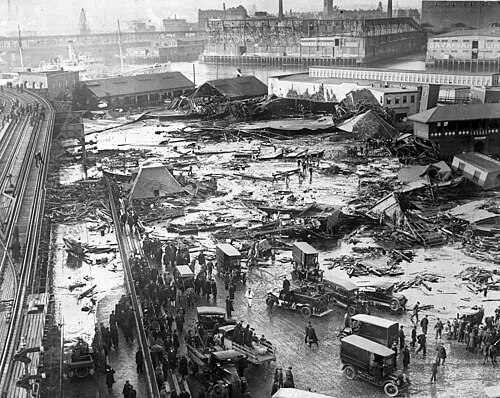
The Day Boston Drowned in Molasses
On a mild January afternoon in 1919, a giant tank burst and sent a wave of syrup through the streets of Boston's North End. It sounds like a cartoon. It killed 21 people.
The connection: Weather turned a disaster into a catastrophe.
History · The Strange Case
The Day Boston Drowned in Molasses
On a mild January afternoon in 1919, a giant tank burst and sent a wave of syrup through the streets of Boston's North End. It sounds like a cartoon. It killed 21 people.
The connection: Weather turned a disaster into a catastrophe.
 Ancient World · The Deep Dive
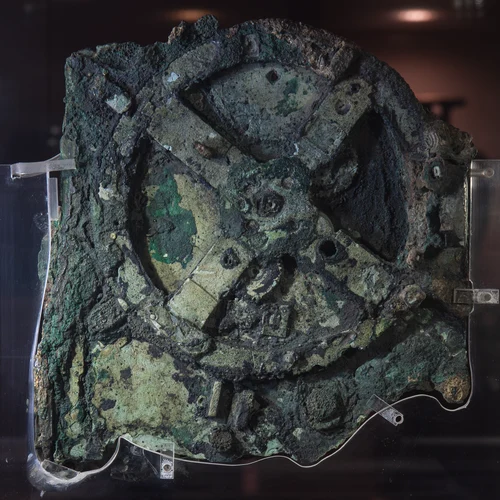
The 2,000-Year-Old Computer
In 1901, divers pulled a corroded lump of bronze from an ancient shipwreck. It turned out to be a geared machine for predicting the heavens — and nothing as complex would be built again for more than a thousand years.
The connection: A completely different corner of the archive: ancient world.
Ancient World · The Deep Dive
The 2,000-Year-Old Computer
In 1901, divers pulled a corroded lump of bronze from an ancient shipwreck. It turned out to be a geared machine for predicting the heavens — and nothing as complex would be built again for more than a thousand years.
The connection: A completely different corner of the archive: ancient world.