Nature The Theory
The Loneliest Whale in the World
Since 1989, ocean microphones have picked up the song of a single whale singing at a frequency no other whale seems to use. It's been called the loneliest whale in the world. The truth is more complicated.
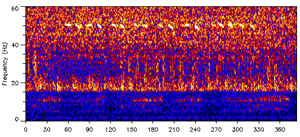
[IMAGE: Spectrogram of the 52-hertz whale’s calls] (NOAA / Wikimedia Commons, Public domain; opens as a separate document)
![[IMAGE: Spectrogram of the 52-hertz whale’s calls]](https://upload.wikimedia.org/wikipedia/commons/f/f7/Akblue52a_256_064c.jpg)
In 1989, researchers at the Woods Hole Oceanographic Institution, listening through US Navy underwater microphones designed to track submarines, noticed something odd: a whale call at around 52 hertz.
That might not sound remarkable. But blue whales usually call at frequencies around 10 to 40 hertz, and fin whales around 20. This voice was higher than any known whale of its kind, and its pattern didn't match any known species.
The researchers, led by William Watkins, tracked the calls for years. Each winter, the voice returned, moving through the North Pacific. It was always alone.
The loneliest whale
When the story reached the press, it struck a nerve. A whale singing at a frequency no other whale uses, swimming the ocean unheard. It became "the loneliest whale in the world", inspiring songs, artworks and a documentary.
A voice in the dark that nobody answers is one of the oldest stories there is.
What we actually know
FACT Established by documentary or physical evidence.
The calls
The 52-hertz calls have been recorded since 1989, following seasonal migration routes. Over the years, the frequency has dropped slightly, which might mean the whale is ageing or growing. The whale itself has never been seen.
HYPOTHESIS A credible explanation that some experts support, not proven.
What is it?
Researchers have suggested it could be a hybrid — for example, between a blue whale and a fin whale — or an individual with an unusual vocal anatomy. Some later recordings have picked up similar calls in different places at the same time, raising the possibility that there is more than one.
SPECULATION Possible, unproven, and labelled so you can enjoy it responsibly.
Is it lonely?
The "loneliest whale" idea assumes other whales can't hear or understand it. Whale hearing covers a wide range of frequencies, so others may well hear it perfectly. Whether it is lonely in any sense a whale would understand, we simply don't know.
You learned this today!!! YOU LEARNED THIS TODAY !!!
- The "52-hertz whale" is an individual whale identified by its unusually high-pitched call, around 52 Hz.
- Its calls were first detected in 1989 using US Navy underwater listening systems.
- Blue whales and fin whales typically call at much lower frequencies.
- The whale has never been seen, and its species is unknown.
- Researchers caution that it may not actually be lonely; other whales may still hear it.
One more thing
Part of the ashes of Fredric Baur, who designed the Pringles can, were buried in a Pringles can.
→ Read something elseSources & further reading
- 52-hertz whale, Wikipedia
- Watkins, W. A. et al. Twelve years of tracking 52-Hz whale calls from a unique source in the North Pacific, Deep-Sea Research Part I, 2004
StoneRed separates fact, hypothesis and speculation. Spotted an error? We'd genuinely like to know.
If you liked this…
 Nature · The Story
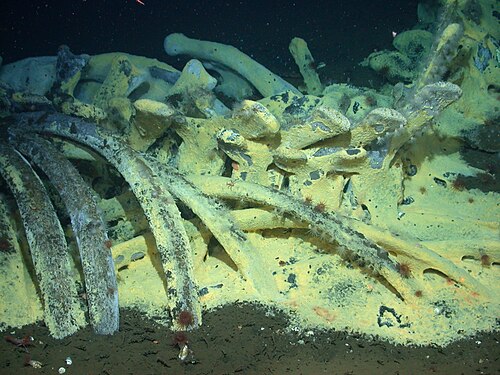
What Happens When a Whale Dies
When a whale sinks to the deep sea floor, its body becomes an oasis that can feed a whole community of strange creatures for decades — including worms that eat bone.
The connection: The ocean is full of whales we rarely see.
Nature · The Story
What Happens When a Whale Dies
When a whale sinks to the deep sea floor, its body becomes an oasis that can feed a whole community of strange creatures for decades — including worms that eat bone.
The connection: The ocean is full of whales we rarely see.
 Music · The Story
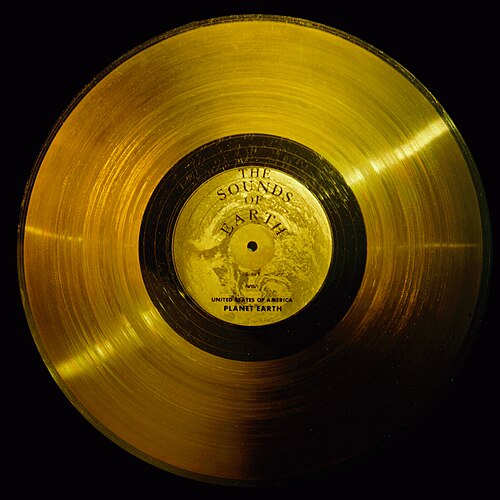
The Mixtape We Sent to the Stars
In 1977, NASA bolted a gold-plated record to each Voyager spacecraft — music, greetings and sounds of Earth, for anyone who might find it. Chuck Berry made the cut. So did a kiss.
The connection: Whale song made it onto the Golden Record.
Music · The Story
The Mixtape We Sent to the Stars
In 1977, NASA bolted a gold-plated record to each Voyager spacecraft — music, greetings and sounds of Earth, for anyone who might find it. Chuck Berry made the cut. So did a kiss.
The connection: Whale song made it onto the Golden Record.
 Psychology · The Question
The Pill That Works Even When You Know It's Fake
Sugar pills can make people feel better. That much is familiar. The stranger finding is that, in some studies, they help even when patients are told exactly what they are.
The connection: A completely different corner of the archive: psychology.
Psychology · The Question
The Pill That Works Even When You Know It's Fake
Sugar pills can make people feel better. That much is familiar. The stranger finding is that, in some studies, they help even when patients are told exactly what they are.
The connection: A completely different corner of the archive: psychology.