Nature The Story
What Happens When a Whale Dies
When a whale sinks to the deep sea floor, its body becomes an oasis that can feed a whole community of strange creatures for decades — including worms that eat bone.
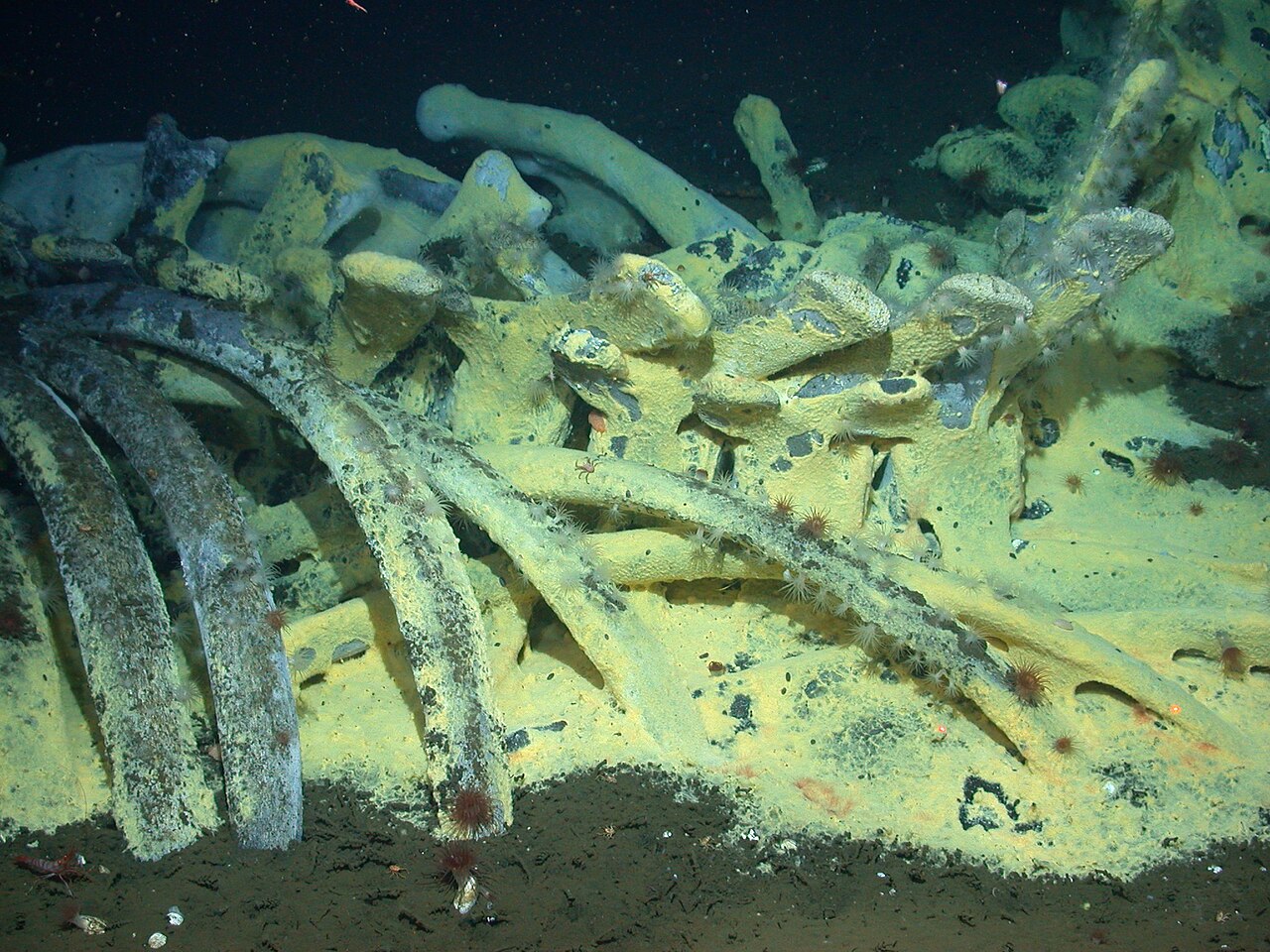
[IMAGE: A whale skeleton on the deep sea floor covered in scavenging animals] (Craig Smith NOAA / Wikimedia Commons, Public domain; opens as a separate document)
![[IMAGE: A whale skeleton on the deep sea floor covered in scavenging animals]](https://upload.wikimedia.org/wikipedia/commons/thumb/1/1a/Whalefall_hires.jpg/1280px-Whalefall_hires.jpg)
When a great whale dies at sea, it usually sinks. Down past the sunlit water, down past where light runs out, sometimes thousands of metres, until it settles on the cold, dark sea floor.
The deep sea is mostly a desert. Food arrives as a slow drizzle of "marine snow" — flakes of dead plankton and waste drifting down from above. Then, suddenly, tens of tonnes of meat, fat and bone land in one place.
Scientists call it a whale fall. For the creatures nearby, it's a banquet that lasts for years.
Stage one: the scavengers
Within days, the scavengers arrive. Hagfish — eel-like creatures that produce astonishing amounts of slime — burrow into the flesh. Sleeper sharks, crabs and amphipods tear at it. Over months, they can strip away most of the soft tissue.
Stage two: the colonisers
Next come smaller animals — worms, snails and crustaceans — which feed on the remaining scraps and on the nutrient-rich sediment around the bones.
Stage three: the bone-eaters
Now the strangest part. The skeleton is still packed with fats and oils. Bacteria break these down, producing chemicals that support whole communities of other microbes and animals — similar to the life around deep-sea hydrothermal vents.
One whale's death can feed a community of creatures for decades.
FACT Established by documentary or physical evidence.
How long it lasts
Studies of whale falls, including carcasses deliberately sunk by scientists for observation, show the stages can take years, and the bone-based community can persist for decades depending on the whale's size and the conditions.
You learned this today!!! YOU LEARNED THIS TODAY !!!
- A sunken whale carcass on the sea floor is called a whale fall.
- A single whale fall can support deep-sea life for years to decades.
- Scavengers like hagfish and sleeper sharks strip the soft tissue first.
- Osedax, nicknamed "zombie worms", have no mouth or gut and feed on bone with the help of bacteria.
- Some animals have been found only on whale falls.
One more thing
Sharks have existed for longer than trees.
→ Read something elseSources & further reading
- Whale fall, Wikipedia
- Smith, C. R. & Baco, A. R. Ecology of whale falls at the deep-sea floor, Oceanography and Marine Biology: An Annual Review, 2003
- Osedax, Wikipedia
StoneRed separates fact, hypothesis and speculation. Spotted an error? We'd genuinely like to know.
If you liked this…
 Nature · The Rabbit Hole
The Alien in the Aquarium
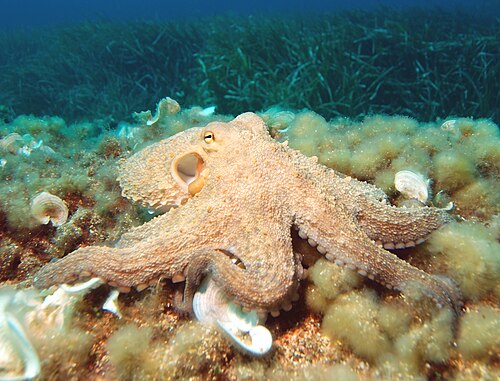
Octopuses have three hearts, blue blood and most of their neurons in their arms. They solve puzzles, recognise faces and escape from tanks. They might be the closest thing to an alien intelligence on Earth.
The connection: The deep sea is full of minds and bodies unlike ours.
Nature · The Rabbit Hole
The Alien in the Aquarium
Octopuses have three hearts, blue blood and most of their neurons in their arms. They solve puzzles, recognise faces and escape from tanks. They might be the closest thing to an alien intelligence on Earth.
The connection: The deep sea is full of minds and bodies unlike ours.
 Nature · The Story
The Jellyfish That Hits Rewind
When life gets hard, Turritopsis dohrnii doesn't die. It turns back into a baby.
The connection: Death in the ocean isn't always the end.
Nature · The Story
The Jellyfish That Hits Rewind
When life gets hard, Turritopsis dohrnii doesn't die. It turns back into a baby.
The connection: Death in the ocean isn't always the end.
 Science · The Story
The Year Without a Summer
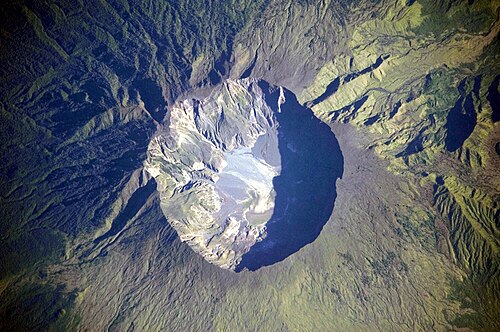
In 1816, snow fell in New England in June, harvests failed across Europe, and a group of bored writers stuck indoors invented Frankenstein. The cause was a volcano on the other side of the world.
The connection: A completely different corner of the archive: science.
Science · The Story
The Year Without a Summer
In 1816, snow fell in New England in June, harvests failed across Europe, and a group of bored writers stuck indoors invented Frankenstein. The cause was a volcano on the other side of the world.
The connection: A completely different corner of the archive: science.