History The Deep Dive
The Steel That Was Forgotten
For centuries, swords made of Damascus steel were famous for their strength and their swirling, water-like patterns. Then the art of making them was lost. Modern scientists have found clues hidden in the metal, including structures thousands of times thinner than a hair.
Look closely at an old Damascus blade, and you will see something like flowing water frozen in metal. Dark and light lines swirl along the steel in waves, ripples and ladders. The patterns aren't painted or engraved. They are part of the metal itself.
For centuries, these blades were legendary. Stories told of swords so sharp they could cut a silk scarf as it fell, and strong enough to cut through other swords. Some of those tales were exaggerations. But the blades really were exceptional for their time.
And then, gradually, nobody could make them any more.
Steel from India
Damascus steel did not come from Damascus, at least not originally. The raw material was a special kind of steel made in India and Sri Lanka, known in English as wootz.
Wootz was made in small clay containers called crucibles. Iron and carbon-rich materials such as wood or leaves were sealed inside and heated in a furnace for a long time. The iron absorbed carbon and melted, forming small, round ingots of high-carbon steel. This method was used in South Asia from at least the early centuries AD, and possibly earlier.
The ingots were traded across the Middle East, where smiths forged them into blades. The city of Damascus, in Syria, was one of the great centres of this trade, and the blades came to be known by its name in Europe. Some historians think the name may also come from an Arabic word relating to the watery pattern.
The patterns weren't decoration. They were the visible sign of the steel's hidden structure.
What made it special
Ordinary steel with a lot of carbon tends to be hard but brittle. Steel with little carbon is tough but soft. Damascus blades managed to combine a very hard edge with a body that could flex without breaking.
The secret lay in the way the steel was made and forged. Wootz contained a high level of carbon, which formed tiny, hard particles of iron carbide, called cementite. During careful forging at relatively low temperatures, these particles lined up in bands. The bands of hard carbide in a softer steel matrix gave the blade both its strength and its pattern.
Getting this right was extremely difficult. Forging too hot would dissolve the carbides and ruin the pattern. The smiths had to work within narrow temperature ranges, without thermometers, judging by the colour of the glowing metal.
FACT Established by documentary or physical evidence.
Not the same as modern "Damascus"
Many knives sold today as "Damascus steel" are made by a different method called pattern welding, in which layers of different steels are forged together and folded to create patterns. They can be beautiful, but they are not made the same way as historic wootz blades.
A lost art
By the 18th and 19th centuries, the production of true Damascus blades had largely stopped. The exact reasons are debated. Trade routes changed, and the supply of wootz ingots may have dwindled. The knowledge may have been passed only from master to apprentice and simply died out. European scientists in the 19th century, including the famous chemist Michael Faraday, studied wootz and tried to recreate it, but no one fully reproduced the classic blades.
HYPOTHESIS A credible explanation that some experts support, not proven.
The vanishing impurity
In the 1990s, the American metallurgist John Verhoeven and the bladesmith Alfred Pendray studied old blades and attempted to recreate them. They found that tiny amounts of certain elements, especially vanadium, were crucial. These impurities helped the carbide particles form bands during forging. Using steel with the right trace elements, they produced blades with patterns closely resembling the originals. They proposed that the Indian ore deposits used for wootz contained these impurities, and when those particular sources ran out, the smiths could no longer get the same results, even if they followed the same methods.
Nanotechnology in a sword
In 2006, a team of researchers at the Technical University of Dresden in Germany examined a sample from a 17th-century Damascus sabre using a high-powered electron microscope. Their results, published in the journal Nature, caused a sensation.
Inside the steel, they found carbon nanotubes — tiny tubes made of carbon atoms, thousands of times thinner than a human hair — and wires of cementite. Nanotubes are associated with modern materials science and are known for remarkable strength.
Not everyone agrees on how much the nanotubes mattered, and only a few samples have been analysed. But the discovery shows how sophisticated ancient materials could be, even when the people making them didn't understand the science.
Legends and reality
Like many legendary objects, Damascus blades gathered myths. Stories that the blades were quenched in the bodies of slaves or by riding with them through cold air appear in some accounts, but there is no good evidence for them. The truth was craft, chemistry and the right ore from the right place.
Today, researchers and bladesmiths continue to experiment with crucible steel, and some have produced blades very close to the historic originals. The secret is no longer fully lost — but it took modern metallurgy, microscopes and decades of work to begin rediscovering what master smiths once knew by eye and by hand.
You learned this today!!! YOU LEARNED THIS TODAY !!!
- Damascus steel was a type of steel used for blades in the Middle East, famous for its wavy, water-like surface patterns.
- It was made from ingots of crucible steel, often called wootz, produced in India and Sri Lanka.
- The traditional technique was lost, probably by the 18th or 19th century.
- A 2006 study of a 17th-century Damascus sabre found carbon nanotubes and nanowires in the steel.
- Modern researchers have recreated similar patterns using steel containing small amounts of elements such as vanadium.
One more thing
In Switzerland, animal-welfare rules say social animals such as guinea pigs shouldn't be kept alone.
→ Read something elseSources & further reading
- Damascus steel, Wikipedia
- Reibold, M. et al. Carbon nanotubes in an ancient Damascus sabre, Nature, 2006
- Verhoeven, J. D., Pendray, A. H. and Dauksch, W. E. The key role of impurities in ancient Damascus steel blades, JOM, 1998
StoneRed separates fact, hypothesis and speculation. Spotted an error? We'd genuinely like to know.
If you liked this…
 Ancient World · The Deep Dive
The Concrete That Heals Itself
Modern concrete starts falling apart within decades. Roman harbour walls have been sitting in seawater for two thousand years. In 2023, scientists finally worked out one of the reasons why.
The connection: Another ancient material scientists are still decoding.
 Weird · The Strange Case
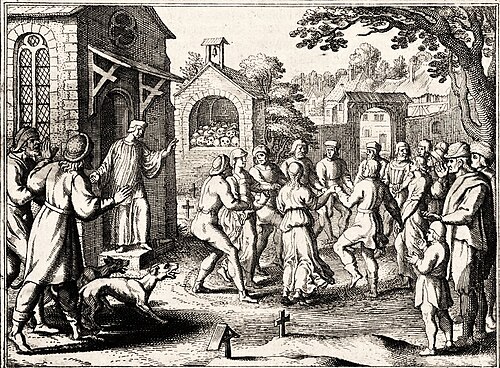
The Summer Strasbourg Couldn't Stop Dancing
In July 1518, a woman stepped into a street and began to dance. Within weeks, dozens — perhaps hundreds — had joined her, and nobody could make them stop.
The connection: A completely different corner of the archive: weird.
 Nature · The Rabbit Hole
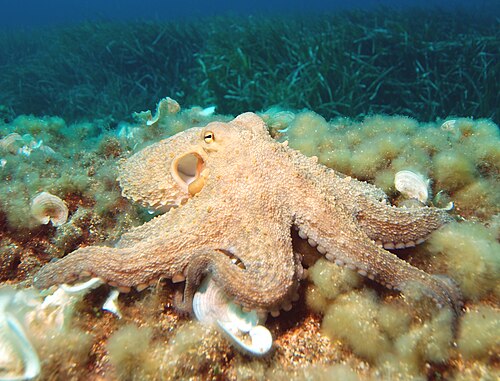
The Alien in the Aquarium
Octopuses have three hearts, blue blood and most of their neurons in their arms. They solve puzzles, recognise faces and escape from tanks. They might be the closest thing to an alien intelligence on Earth.
The connection: A completely different corner of the archive: nature.