History The Deep Dive
The Year Civilisation Fell
Around 1200 BC, the great kingdoms of the eastern Mediterranean — the Hittites, the Mycenaeans, the trading city of Ugarit — fell one after another. Cities burned, writing was forgotten and trade collapsed. Historians are still arguing about why.
More than three thousand years ago, the eastern Mediterranean was a connected world. Egypt was ruled by mighty pharaohs. The Hittites controlled an empire in what is now Turkey. In Greece, Mycenaean kings ruled from palaces with storerooms full of oil and wine. On the coast of Syria, the city of Ugarit was a bustling trading port.
These kingdoms wrote letters to each other, exchanged gifts and traded goods across the sea. They arranged royal marriages and signed peace treaties.
Then, within a few decades around 1200 BC, much of this world fell apart.
The fall
The Hittite capital, Hattusa, was abandoned and burned, and the empire disappeared. In Greece, the great Mycenaean palaces — Mycenae, Pylos, Tiryns — were destroyed or abandoned. Ugarit was burned and never rebuilt. Cities in Cyprus, Syria and Canaan were destroyed.
Egypt survived, but it was weakened and lost its territories in the Levant. The international trade network that had linked these societies collapsed.
In a few decades, empires that had lasted for centuries were gone.
The Sea Peoples
Egyptian records describe invaders called the Sea Peoples, a confederation of groups who arrived by land and sea. On the walls of his temple at Medinet Habu, Pharaoh Ramesses III recorded his victory over them in a great battle, around 1177 BC. The inscriptions describe how they had already overrun other lands: "No land could stand before their arms."
Who were the Sea Peoples? Nobody knows for sure. They may have come from the Aegean, Anatolia, Sicily, Sardinia or elsewhere. Some may have been refugees fleeing disaster rather than invaders. One group, called the Peleset, are often identified with the Philistines, who later settled on the coast of Canaan.
Why did it happen?
For a long time, historians blamed the Sea Peoples. But today, most think the invasions were a symptom of a larger crisis, not its only cause. Several factors may have combined.
HYPOTHESIS A credible explanation that some experts support, not proven.
Drought and famine
Studies of ancient pollen, lake sediments and cave formations suggest that the region suffered a long period of drought around this time. Crop failures would have caused famine. Hittite texts mention grain shortages, and Egypt sent grain to help.
HYPOTHESIS A credible explanation that some experts support, not proven.
Earthquakes
Some researchers have suggested that a series of earthquakes, sometimes called an "earthquake storm", struck the region over decades, damaging cities. Evidence of earthquake damage has been found at some sites, though not all.
HYPOTHESIS A credible explanation that some experts support, not proven.
Rebellion and the end of trade
The palace societies depended on long-distance trade, especially for tin, needed to make bronze from copper. If trade routes were disrupted, the economy could falter. Inequality and unrest inside the kingdoms may have led to revolt.
The archaeologist Eric Cline argues that the collapse was a "perfect storm": many problems hitting interconnected societies at once, so that the failure of one helped bring down the others.
A connected world
The Uluburun shipwreck, discovered off the coast of Turkey in 1982, shows how connected the Late Bronze Age world was. The ship, which sank in the late 14th century BC, carried about ten tonnes of copper from Cyprus, a tonne of tin from far away, glass ingots, ebony, ivory, jewellery and goods from at least seven different cultures.
FACT Established by documentary or physical evidence.
The cost of connection
Being connected can make a system strong in good times and fragile in bad ones. When one part fails, the effects can spread through the whole network.
The dark age
After the collapse, Greece entered a period historians call the Greek Dark Ages. The Mycenaean writing system, Linear B, was forgotten. Population dropped, and large buildings and long-distance trade became rare.
Writing returned to Greece centuries later, around the 8th century BC, with the Greek alphabet, adapted from the Phoenician script. Out of the ruins came new societies: the Greek city-states, the Phoenician trading cities and, eventually, the world of Homer, who sang about the heroes of a lost age.
You learned this today!!! YOU LEARNED THIS TODAY !!!
- The Late Bronze Age collapse was a period around 1200 to 1150 BC when many societies in the eastern Mediterranean and Near East declined or collapsed.
- The Hittite Empire collapsed, the Mycenaean palaces of Greece were destroyed and the city of Ugarit in Syria was destroyed.
- Egyptian records describe attacks by groups called the Sea Peoples, whom Pharaoh Ramesses III fought around 1177 BC.
- In Greece, writing (Linear B) fell out of use, and centuries passed before writing returned with the Greek alphabet.
- Proposed causes include drought, earthquakes, invasions, rebellion and the breakdown of trade networks — probably several at once.
One more thing
Cleopatra lived closer in time to the Moon landing than to the building of the Great Pyramid of Giza.
→ Read something elseSources & further reading
- Late Bronze Age collapse, Wikipedia
- Cline, Eric H. 1177 B.C.: The Year Civilization Collapsed, Princeton University Press, 2014
- Drake, Brandon L. The influence of climatic change on the Late Bronze Age Collapse and the Greek Dark Ages, Journal of Archaeological Science, 2012
StoneRed separates fact, hypothesis and speculation. Spotted an error? We'd genuinely like to know.
If you liked this…
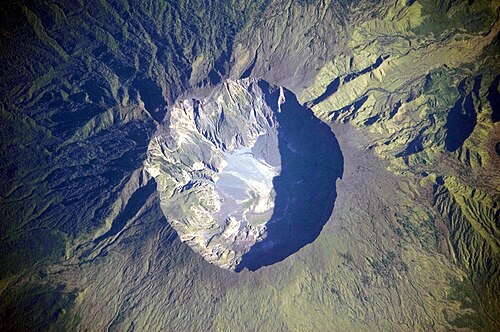 Science · The Story
The Year Without a Summer
In 1816, snow fell in New England in June, harvests failed across Europe, and a group of bored writers stuck indoors invented Frankenstein. The cause was a volcano on the other side of the world.
The connection: Another time climate shook civilisation.
 Technology · The Timeline
The Chocolate Bar That Melted in the Lab
The microwave oven was invented by a self-taught engineer who never finished grammar school, standing next to radar equipment, with a snack in his pocket.
The connection: A completely different corner of the archive: technology.
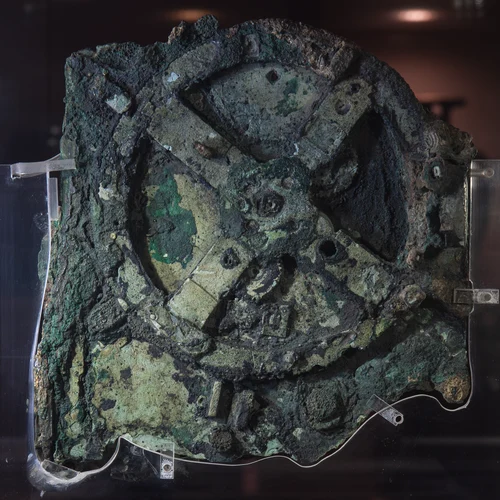 Ancient World · The Deep Dive
The 2,000-Year-Old Computer
In 1901, divers pulled a corroded lump of bronze from an ancient shipwreck. It turned out to be a geared machine for predicting the heavens — and nothing as complex would be built again for more than a thousand years.
The connection: A completely different corner of the archive: ancient world.