Art The Rabbit Hole
Why Medieval Knights Keep Fighting Snails
Open certain 13th- and 14th-century manuscripts and you'll find armoured knights in desperate combat with garden snails. It's one of art history's best running jokes — and it goes much deeper than snails.
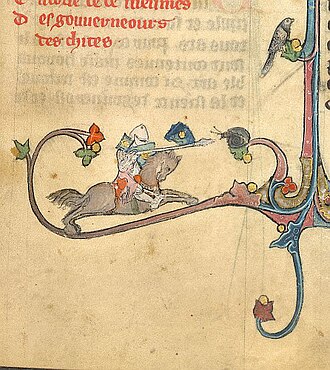
[IMAGE: Medieval manuscript illustration of an armoured knight charging at a snail] (From a manuscript of Brunetto Latini’s Li Livres dou Tresor / Wikimedia Commons, Public domain; opens as a separate document)
![[IMAGE: Medieval manuscript illustration of an armoured knight charging at a snail]](https://upload.wikimedia.org/wikipedia/commons/thumb/d/dd/L3706_-_Chevalier_chargeant_un_escargot.jpg/330px-L3706_-_Chevalier_chargeant_un_escargot.jpg)
Start with a single fact.
In the margins of some medieval manuscripts — beautiful, expensive books, copied by hand, often full of prayers and psalms — there are drawings of knights fighting snails.
Not dragons. Not lions. Snails.
The knights are in full armour, with lances, swords and shields. Sometimes they charge bravely. Sometimes they kneel and beg for mercy. Sometimes the snail appears to be winning.
That's the fact. Now let's go down the hole.
Level 1: How common is this?
More common than you'd think.
In 1962, the art historian Lilian Randall published a study called The Snail in Gothic Marginal Warfare. She had found around 70 examples of knight-versus-snail combat in some 29 manuscripts, most of them made within a few decades around the year 1300, largely in northern France and Flanders.
So this wasn't one bored scribe's private joke. It was a trend. A meme, seven centuries before the word existed.
Level 2: But why snails?
Nobody left a note explaining it. So scholars have argued about it ever since.
The Lombard theory. Randall's own suggestion was that the snail represented the Lombards — northern Italians who were prominent as bankers and moneylenders in France at the time, and who were stereotyped (unfairly) as cowardly. In some texts the snail sits right next to passages mentioning Lombards. A snail retreats into its shell; a "cowardly" Lombard might be mocked the same way.
The resurrection theory. Others point out that snails disappear into their shells in winter and emerge again in spring, and that the snail could be a symbol of the Resurrection — though that's harder to square with being attacked by knights.
The cowardly knight theory. Perhaps the joke isn't on the snail at all. A knight terrified of a snail is a knight who isn't very brave. In an age that idealised chivalry, a picture of a knight kneeling before a garden pest is pure satire.
The social-climbing theory. Some have read the snail as a symbol of the lower classes, rising up — slowly — against the nobility.
Probably the honest answer is: different artists meant different things, and some of them simply copied a joke that was going around because it was funny.
A knight terrified of a snail is a knight who isn't very brave — and that may be the whole joke.
Level 3: The snails have company
Once you start looking at medieval margins, snails turn out to be the least strange thing there.
These playful margin pictures are often called drolleries, and they include:
- Rabbits hunting humans, sometimes armed with bows and axes.
- Monkeys dressed as bishops, doctors and knights.
- Hybrid creatures — half human, half bird, half fish, often with faces on their bottoms.
- People playing musical instruments that are, on closer inspection, made of other people.
- Behaviour so rude that some 19th-century collectors scraped or painted over it.
This was the "world turned upside down" — a medieval comic tradition in which the weak defeat the strong, animals behave like people, and the normal order of things is turned on its head.
Level 4: Why put jokes in a holy book?
This is the real puzzle. Many of these drawings appear in psalters — books of psalms used for prayer — and in religious and legal texts. They were expensive, carefully commissioned objects.
So why fill them with farting monsters and murderous rabbits?
HYPOTHESIS A credible explanation that some experts support, not proven.
Margins as a safe place for chaos
The art historian Michael Camille argued that the margin was where medieval culture put everything that didn't belong in the centre — the comic, the obscene, the monstrous. The sacred text sat in the middle of the page, in order, while the margins hummed with disorder. The disorder made the order mean something.
HYPOTHESIS A credible explanation that some experts support, not proven.
Memory aids
Strange and funny images are memorable. Some scholars think vivid marginal images helped readers remember and find passages — like bookmarks you can't forget.
HYPOTHESIS A credible explanation that some experts support, not proven.
Just for fun
The people who commissioned these books were often wealthy laypeople who wanted personal, entertaining objects. Artists may simply have been giving customers what they liked: a laugh while they prayed.
Level 5: Then the snails disappear
Here's the strangest part of the rabbit hole.
Around the middle of the 14th century, the knight-and-snail motif fades away almost as suddenly as it appeared. It had a lifespan of a few decades — a fashion, like any other.
The bottom of the hole
Here's where we land.
Medieval people are often imagined as solemn and humourless, kneeling in cold churches, fearing God and plague. Their books tell a different story. In the margins of their holiest texts, they drew rabbits jousting, monkeys playing bagpipes and knights losing fights to snails.
The snails were never really about snails. They were about the most human thing of all: the urge to doodle something ridiculous next to something serious, and hope someone else gets the joke.
You learned this today!!! YOU LEARNED THIS TODAY !!!
- Dozens of medieval manuscripts, mostly from around 1290 to 1310, contain drawings of knights fighting snails.
- Art historian Lilian Randall catalogued around 70 examples in a 1962 study.
- Randall suggested the snails might mock the Lombards, who were associated with moneylending and stereotyped as cowardly.
- These comic margin drawings are often called drolleries, and many are far ruder than snails.
- Medieval readers seem to have enjoyed jokes in the margins of even the most serious religious books.
One more thing
Octopuses have three hearts and blue blood.
→ Read something elseSources & further reading
- Randall, Lilian M. C. The Snail in Gothic Marginal Warfare, Speculum, 1962
- Randall, Lilian M. C. Images in the Margins of Gothic Manuscripts, University of California Press, 1966
- Camille, Michael. Image on the Edge: The Margins of Medieval Art, Reaktion Books, 1992
- Marginalia, Wikipedia
- Medieval Manuscripts Blog, British Library
StoneRed separates fact, hypothesis and speculation. Spotted an error? We'd genuinely like to know.
If you liked this…
 Mysteries · The Theory
The Book Nobody Can Read
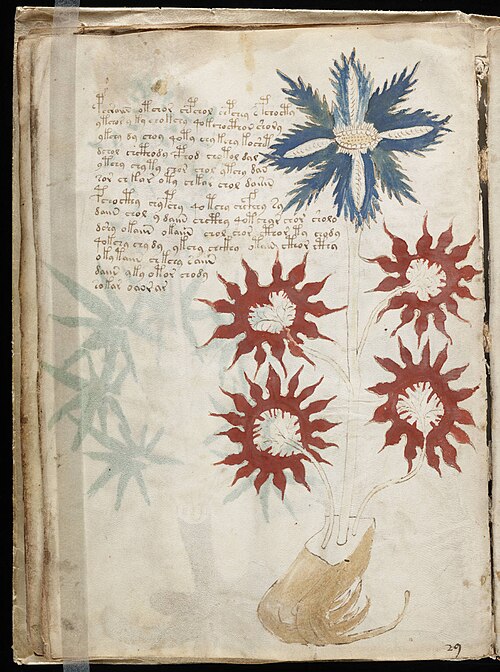
Six centuries old, written in an unknown script, illustrated with plants that don't exist. The Voynich Manuscript has defeated wartime codebreakers, linguists and computers. Here is what we actually know.
The connection: If the margins of readable books are this strange, imagine a book where nothing is readable.
Mysteries · The Theory
The Book Nobody Can Read
Six centuries old, written in an unknown script, illustrated with plants that don't exist. The Voynich Manuscript has defeated wartime codebreakers, linguists and computers. Here is what we actually know.
The connection: If the margins of readable books are this strange, imagine a book where nothing is readable.
 Weird · The Strange Case
The Summer Strasbourg Couldn't Stop Dancing
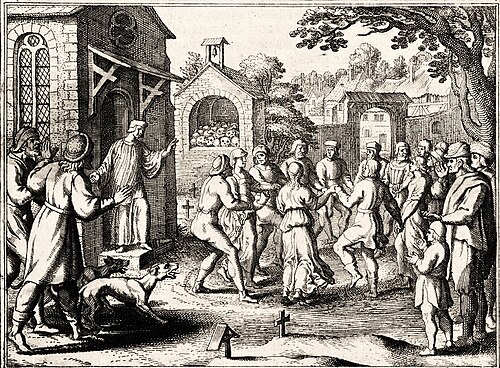
In July 1518, a woman stepped into a street and began to dance. Within weeks, dozens — perhaps hundreds — had joined her, and nobody could make them stop.
The connection: The late medieval world had a sense of the absurd — and sometimes the absurd was real.
Weird · The Strange Case
The Summer Strasbourg Couldn't Stop Dancing
In July 1518, a woman stepped into a street and began to dance. Within weeks, dozens — perhaps hundreds — had joined her, and nobody could make them stop.
The connection: The late medieval world had a sense of the absurd — and sometimes the absurd was real.
 Random · The Story
best "spots" in boston
The Orgin of the best "Spots in Boston MA"
The connection: A completely different corner of the archive: random.
Random · The Story
best "spots" in boston
The Orgin of the best "Spots in Boston MA"
The connection: A completely different corner of the archive: random.